Site Map > 2002-03 Budget Overview
Search | Home
| Help
  
Budget Priorities
Next Steps
in Welfare Reform
Recognising
and improving the capacity of people with disabilities
|
|
Since 1990, the number of people receiving
the Disability Support Pension (DSP) has more than doubled.
One in nine Australians aged between 50 and 64 years presently
receive DSP. Many people receiving DSP are less self-reliant
than they could be with a better combination of assistance,
incentives and participation requirements.
|
DSP recipients have doubled
since 1990
|
|
As part of Next Steps in welfare reform,
the Government will give greater focus to improving the
work capacity of people with disabilities. It will provide
over 73,000 new places over three years in disability
employment services, rehabilitation services, the Job
Network, education and training and the Personal Support
Programme.
|
more new places for employment
assistance and training
|
|
Beginning in July 2003, DSP eligibility
will be restricted to people with limited work capacity
(people who are unable to work for 15 hours or more per
week rather than people unable to work 30 hours per week
as is currently the case). Centrelink will be able to
consider whether a person could benefit from a broader
range of services, including employment and rehabilitation
assistance, to assist in reskilling for employment.
Most people affected by the changes who
are unable to obtain work, or are undertaking work-related
support programmes, will be eligible for Newstart Allowance.
Changes to the DSP eligibility criteria should result
in net savings of around $336 million over four years.
|
changed eligibility to Disability
Support Pension for people able to work at least 15 hours
per week
|
|
Commonwealth Expenditure
on Assistance to People with Disabilities
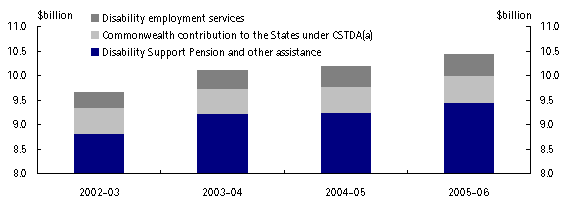
(a) Includes funding under the Commonwealth-State-Territory
Disability Agreement (CSTDA) of $105.3 million in 2002-03,
$107.3 million in 2003-04, $109.4 million in 2004-05 and
$111.6 million in 2005-06 to assist States and Territories
to address unmet need for disability services.
|
|