Site Map > 2002-03 Budget Overview
Search | Home
| Help
  
Strong and
Stable Terms of Trade
Defying history, Australia's
terms of trade - the prices Australia receives for its
exports relative to the prices paid for imports - has
improved during the recent world slowdown. This has helped
to increase real incomes in Australia and reduce inflationary
pressures. Over recent years, the terms of trade has become
more stable.
|
|
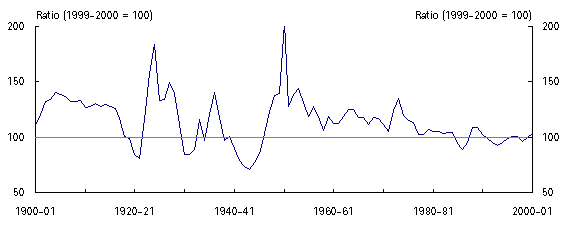
the terms of trade has historically
been highly unstable and declining
|
Australia faced highly unstable and declining
terms of trade through its history, driven by swings in
world economic activity and declining commodity prices.
The terms of trade, real income and inflation tended to
move together.
|
|
but with greater stability
and relative strength in recent years
|
In recent years, Australia's terms of trade
has been more stable and relatively robust. Since 1999,
the terms of trade has increased despite the world economic
downturn. This helped the Australian economy stay strong
in 2001. In addition, rising terms of trade now tend to
reduce rather than increase inflation.
|
|
because of internationalisation,
diversification of exports and falls in import prices
|
This dramatic change in terms of trade
movements stems from greater internationalisation of the
economy, increasing diversification of exports and significant
falls in import prices, especially information and communications
technology goods.
|
|
the terms of trade should
remain more stable than in earlier decades and relatively
strong
|
These favourable developments in the terms
of trade can be credited to a more dynamic and competitive
private sector. This follows substantial and continued
microeconomic reform in an environment of sound macroeconomic
policy. While the future path of the terms of trade remains
uncertain, it is likely to be more stable and stronger
than otherwise.
|
|
Terms of Trade
|
|