


Department of the Treasury
- Departmental Financial Statements
- Notes of Administered Activity
- Notes to the Financial Statements
- Appendix 1: Departmental and administered revenue
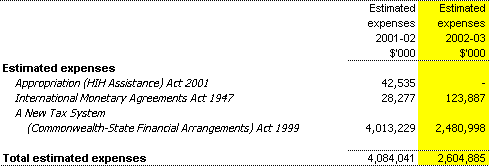
- Appendix 2: Estimates of expenses from special appropriations
Section 3: Budgeted financial statements
The budgeted financial statements have been prepared in accordance with the goods and services tax (GST) accounting guidelines of the Urgent Issues Group (UIG) of the Australian Accounting Standards Board. The UIG consensus requires that expenses and assets be accounted for net of recoverable GST, revenues be accounted for net of GST payable and that cash flows and accounts payable and receivable be reported gross. Appropriations are thus net of recoverable GST amounts.
Departmental Financial Statements
Budgeted departmental statement of financial performance
This statement provides a picture of the expected financial results for the Department of the Treasury by identifying full accrual expenses, revenues and capital use charge, which highlights whether the Department is operating at a sustainable level.
Budgeted departmental statement of financial position
This statement shows the financial position of the Department of the Treasury. It helps decision-makers to track the management of assets and liabilities.
Budgeted departmental statement of cash flows
Budgeted cash flows, as reflected in the statement of cash flows, provide important information on the extent and nature of cash flows by categorising them into expected cash flows from operating activities, investing activities and financing activities.
Departmental capital budget statement
Shows all planned departmental capital expenditure (capital expenditure on non-financial assets), whether funded either through capital appropriations for additional equity or borrowings, or from funds from internal sources.
Departmental non-financial assets - summary of movement
Shows budgeted acquisitions and disposals of non-financial assets during the budget year.
Notes of Administered Activity
Note of budgeted administered financial performance
This note identifies the main revenues and expenses administered on behalf of the Government. It also discloses administered revenues from government and transfers to the Public Account.
Note of budgeted administered financial position
This note shows the assets and liabilities administered on behalf of the Government.
Note of budgeted administered cash flows
This note shows cash flows administered on behalf of the Government.
Note of administered capital budget
This note shows details of planned administered capital expenditure.
Table 3.1: Budgeted Departmental Statement
of Financial Performance
for the period ended 30 June
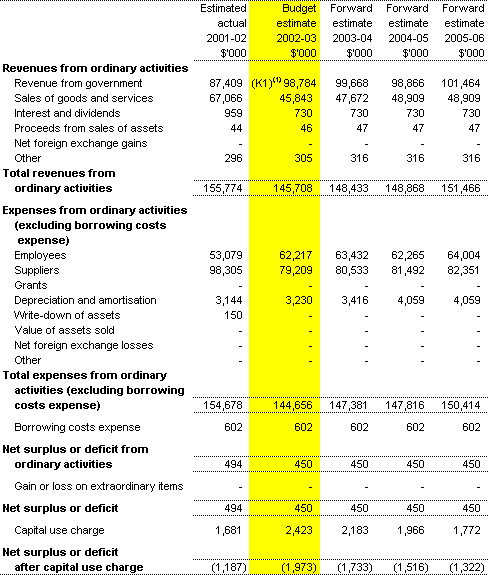
(1) K1 - shows the link back to Table 1.1.
Table 3.2: Budgeted Departmental Statement
of Financial Position
as at 30 June
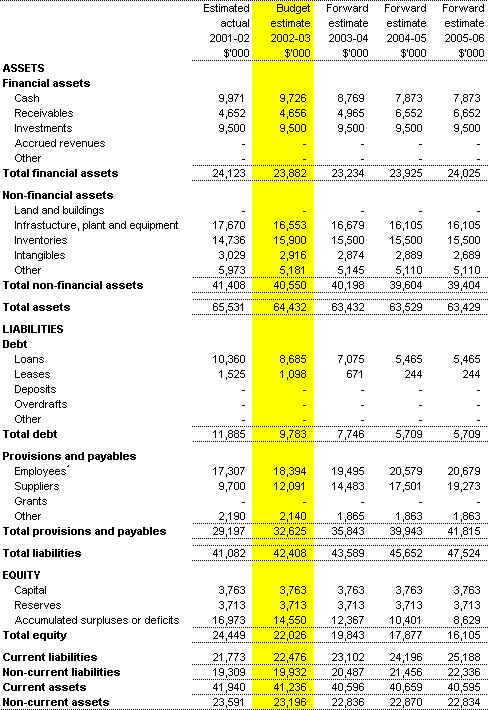
* No provision has been made for accrued leave entitlements for ATO officers transferred to Department of the Treasury as part of the taxation law design function.
Table 3.3: Budgeted Departmental Statement
of Cash Flows
for the period ended 30 June
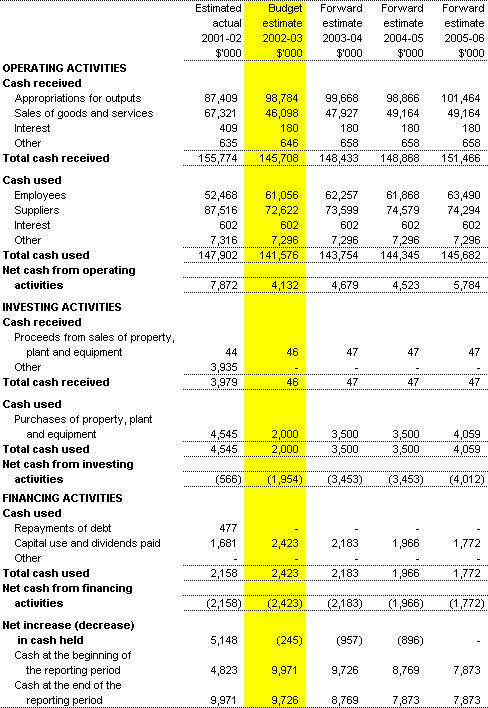
Table 3.4: Departmental Capital Budget Statement
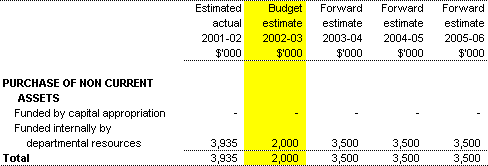
Table 3.5: Departmental Non-financial Assets - Summary of Movement (Budget year 2002-03)
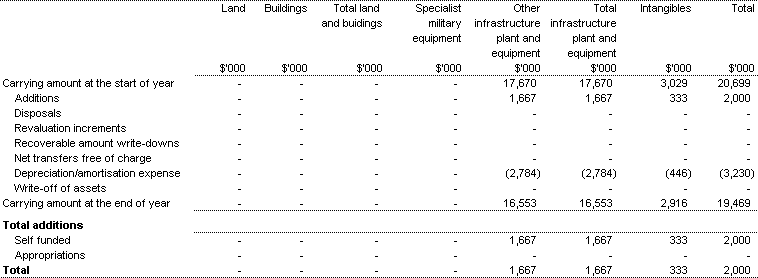
Table 3.7: Note of Budgeted Financial Performance Administered on behalf of Government for the period ended 30 June
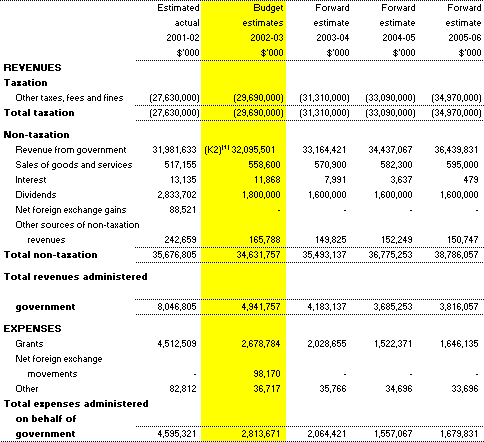
(1) K2 - shows the link back to Table 1.1.
Table 3.8: Note of Budgeted Financial Position Administered on behalf of Government as at 30 June
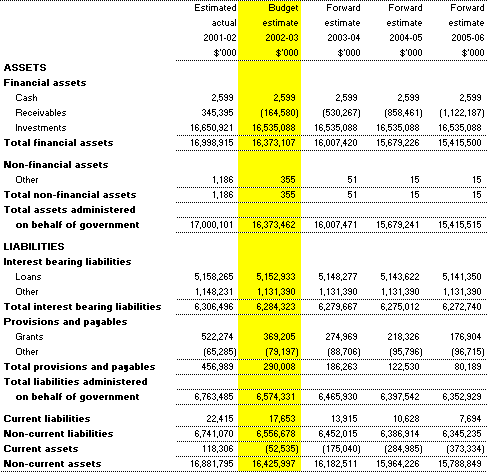
Table 3.9: Note of Budgeted Administered Cash
Flows
for the period ended 30 June
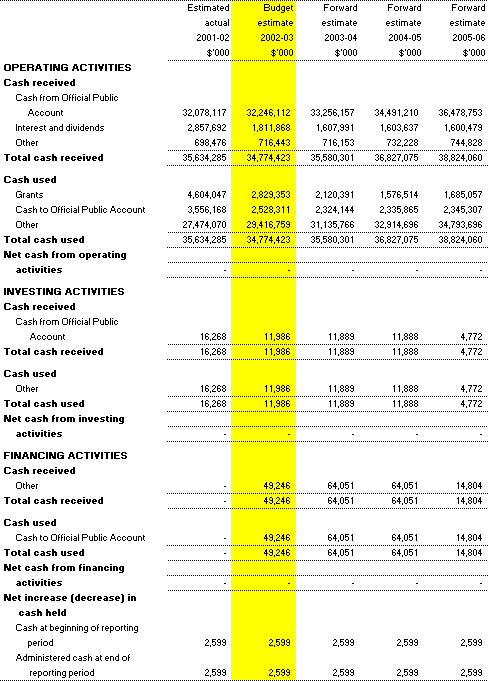
Table 3.10: Note of Administered Capital Budget
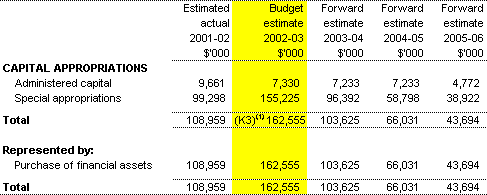
(1) K3 - shows the link back to Table 1.1.
Notes to the Financial Statements
Basis of accounting
The Department of the Treasury's budget statements have been prepared on an accrual basis in accordance with historical cost convention, except for certain assets which are at valuation.
All financial information presented in the statements represents the net cost to the Commonwealth; the figures are exclusive of any GST which may be payable by the Commonwealth and which is recoverable as an input tax credit.
Departmental and administered financial statements
Under the Commonwealth's accrual budgeting framework, and consistent with Australian Accounting Standards, transactions that agencies control (departmental transactions) are separately budgeted for and reported on from transactions agencies do not have control over (administered transactions). This ensures that agencies are only held accountable for the transactions over which they have control.
Departmental assets, liabilities, revenues and expenses in relation to an agency are those which are controlled by the agency. Departmental expenses include employee and supplier expenses and other administrative costs, which are incurred by the agency in providing its goods and services.
Administered items are revenues, expenses, assets or liabilities which are managed by an agency on behalf of the Government according to set Government directions. Administered expenses include subsidies, grants, and personal benefit payments and administered revenues include taxes, fees, fines and excises.
Royal Australian Mint
The Department of the Treasury's departmental budget statements are aggregated to include the financial operations of the Royal Australian Mint (RAM). Any profit earned by RAM, taking into account working capital requirements, is returned to the Commonwealth.
Seignorage is collected by RAM on behalf of the Commonwealth. Seignorage represents the difference between the face value of coinage sold to the Reserve Bank of Australia and its cost of production to RAM. Seignorage is treated as an administered item within the Department of the Treasury budget statements.
Capital use charge
A capital use charge is levied on the Department of the Treasury to reflect the cost of the Commonwealth's investment in the Department of the Treasury. It is levied on the closing balance of departmental net assets (equity) at a rate of 11 per cent.
Funding for the capital use charge is included in the departmental price of outputs appropriation. The capital use charge is accounted for as a `below operating result line' expense.
GST revenue payments
For constitutional reasons the GST is levied by the Commonwealth, and can therefore be technically considered Commonwealth revenue under the reporting standards. However the clear policy intent of the Intergovernmental Agreement on the Reform of Commonwealth-State Financial Relations (the IGA) is that it is a State tax collected by the Commonwealth in an agency capacity. Accordingly, GST payments are treated as negative revenue in these financial statements representing the transfer of taxes to State and Territory Governments. This fully offsets GST revenue recorded by the Australian Taxation Office so that at a consolidated level the GST is not recorded as Commonwealth revenue.
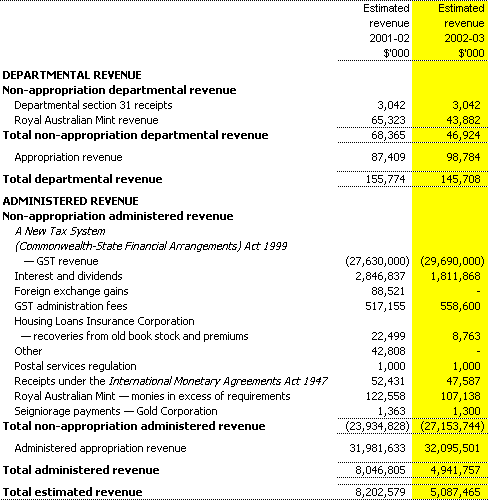
Appendix 1: Departmental and administered revenue
Departmental and administered revenue
Appendix 2: Estimates of expenses from special appropriations
Estimates of expenses from special appropriations