



Chapter 2: Key Achievements and
Strategic Objectives
Atmosphere
The Government is committed to Australia making its appropriate and responsible contribution to greenhouse gas reduction. This year it will make decisions that will provide a framework for action well beyond the Kyoto commitment period.
Energy policy is a pressing issue for Australia and in 2003 Ministers, supported by a high level energy task force within the Department of the Prime Minister and Cabinet, will develop a strategic plan for Australia's long-term energy policy. The plan will support economic growth and development while protecting the environment. The Council of Australian Governments' review of energy market directions led by the Honourable Warwick Parer has already provided recommendations in relation to stationary energy. Developing and implementing a government response to the Parer review will provide an opportunity for the Government to consolidate the achievements so far and build momentum for future practical reforms.
A major challenge in 2003 will be to bring together related greenhouse policy issues, including energy, transport, and the Government's current reviews of the Ozone Protection Act 1989 and the Renewable Energy (Electricity) Act 2000.
Australia's Climate Change Forward Strategy
In 2003-04 the Government will continue to develop Australia's Climate Change Forward Strategy to address climate change and combat greenhouse gas emissions over the coming decades. This is well beyond the scope envisaged under the Kyoto Protocol. There will be ongoing consultations with business, and governments at all levels have been engaged in the review of the existing National Greenhouse Strategy. The Forward Strategy will ensure the best and least costly way forward for Australia. Four elements underpin the development of Australia's forward climate change strategy:
- Australia will strive for a more comprehensive global response to climate change;
- Australia will position itself to maintain a strong and internationally competitive economy with a lower greenhouse signature;
- domestic policy settings will balance flexibility with sufficient certainty to allow key decisions on investment and technology development, and also emphasise cost effectiveness; and
- Australia will implement policies and programmes to deal with the consequences of climate change.
Committed response to greenhouse
The best scientific data available show that global climate change is a reality. Global surface temperatures have risen by more than 0.6°C since 1900; the global sea level has risen by between 10 and 20 centimetres during the last 100 years. Average maximum temperatures during the recent drought were the highest on record. Australia is responding to climate change both domestically and internationally.
Through its commitment of almost $1 billion, the Howard Government aims to reduce Australia's contribution to climate change and mitigate the effects of climate change that are inevitable. A balanced range of policy responses has been developed through the Australian Greenhouse Office - the world's first national agency that is devoted specifically to tackling greenhouse gas emissions.
Tackling greenhouse at home
Howard Government actions over the last six years have already been effective in addressing greenhouse gas emissions, a necessary step towards managing climate change. Examples include voluntary industry programmes such as the Greenhouse Challenge, mandatory requirements such as the Renewable Energy (Electricity) Act 2000, and grant programmes to support the development and uptake of renewable energy technology.
Funding for programmes to combat climate change will continue as the Howard Government formulates its longer-term strategy on greenhouse gas abatement. In particular, the Government will extend the Photovoltaic Rebate Scheme for a further two years, providing funding of $5.8 million in 2003-04 for rebates for the installation of photovoltaic systems. This additional commitment to the scheme recognises that it has been very effective at promoting the growing renewables industry and enabling a direct greenhouse response by the community. Australia's world leading Cities for Climate Protection programme will also continue. This important local action programme, which assists councils and communities across Australia to reduce their greenhouse gas emissions, has been allocated a further $2.7 million in 2003-04.
Without these and other actions Australia's greenhouse gas emissions would have increased to 122 per cent of 1990 levels by the end of the decade, and even more without reductions in emissions from land use changes since 1990.
A high level panel is reviewing the Commonwealth legislation that set up the mandatory renewable energy target. The target commenced in April 2001 and requires the sourcing of 9,500 gigawatt hours of extra renewable electricity per year by 2010. This will be enough power to meet the residential electricity needs of four million people. The panel, with its mix of industry, academic and government policy skills and experience, will report later in 2003 and its findings will be considered in formulating national energy policy and the development of Australia's forward strategy on climate change.
The Government sponsored Australia's first conference to explore the possible impacts of climate change in late 2002, and what adaptations may be required as a result of these impacts. Some of these impacts are outlined in the new Australian Greenhouse Office publication, Living with Climate Change.
Major emission achievements
The 2002 Greenhouse Gas Emissions Projections indicated that Australia is now within striking distance of its target of limiting greenhouse emissions as agreed at Kyoto. The next projections are to be released in 2003-04.
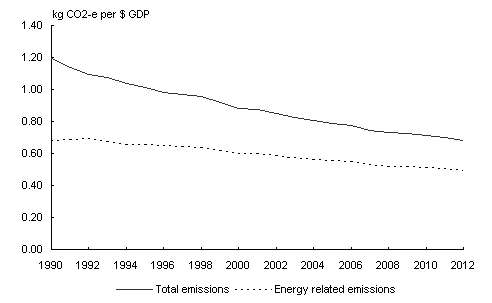
A major step forward for the Australian community has been to successfully decouple its economic growth from its growth in greenhouse emissions. The most recent National Greenhouse Gas Inventory showed Australia's greenhouse emissions grew by 2.1 per cent in 2000, while the economy grew by 4.3 per cent. Emissions per dollar Gross Domestic Product (GDP) were 24 per cent lower in 2000 than in 1990.
Chart 2.1: Greenhouse gas emissions per $ of GDP, 1990 to 2012
The Inventory was also significant in that it included, for the first time, accurate emissions from land use change, using data from the $12 million National Carbon Accounting System (NCAS). Developed two years ahead of schedule and with capabilities extending far beyond its initial scope, it represents a major achievement for Australian scientists. The NCAS is widely acknowledged as the cutting edge of world carbon accounting, as recently affirmed by a leading NASA scientist who stated that to the best of his knowledge this multi-temporal data set is the most robust, continental scale Earth observation data set of its type ever assembled.
Pursuing a global response
Internationally, the Government is working to put in place a global response that includes all major emitters, and to bring about the greenhouse reductions necessary to restrain climate change.
Action on climate change is being pursued with strategic and trade partners as well as through wider international forums.
The Climate Action Partnership established in 2002 with the United States of America is focusing on practical projects. These include the exchange of experience on the research and development of hydrogen fuel cell and clean coal technologies, and facilitating the installation of sustainable remote power in developing countries. In 2003-04 the Government will expand bilateral cooperation to other countries and continue to develop projects under the Climate Action Partnership.
Through its participation in the Australia-US Climate Action Partnership, the Government will help Pacific Island countries to build capacity to deal with seasonal to interannual climate variability and, in the longer term, climate change. Commencing in 2002-03, the Government has allocated $2.2 million over three years towards the implementation of this project.
Extending ozone protection
Controls on ozone depleting substances will be extended to synthetic greenhouse gases in 2003 with the introduction of the Ozone Protection and Synthetic Greenhouse Gas Management Bill, providing a nationally consistent approach through Commonwealth control of their use and management.
This step is necessary because, since 1990, Australian industry has used increasing amounts of synthetic greenhouse gases in various processes including as a replacement for ozone depleting substances. The greenhouse effect of synthetic gases can be up to 24,000 times greater than carbon dioxide and, if left unchecked, synthetic gases will increasingly add to Australia's total emissions of greenhouse gases.
Promoting air quality
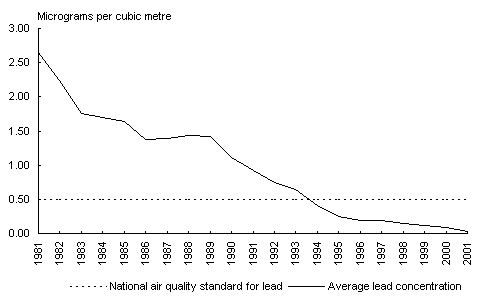
Latest data confirm the findings of the State of the Environment Report 2001 that air quality in our cities and towns is improving. The health of urban Australians and their general lifestyle will continue to improve as the Government implements further reforms for cleaner air. These reforms include developing national standards for air pollutants and fuel quality, legislative controls on fuel quality, and implementing national strategies to address transport, residential and industrial emissions.
In concert with improvements to vehicle emissions standards, the Government's Fuel Quality Standards Act 2000, which came into effect in January 2002, is expected to save the Australian community more than $3.4 billion by 2020 in avoided air pollution-related health costs. The Act progressively mandates the quality of fuel supplied in Australia and paves the way for the introduction of vehicles with improved engine technology and tighter emissions controls. The new standards are expected to cut the major pollutants associated with respiratory and cardiovascular diseases by up to 76 per cent in metropolitan areas by 2015.
As part of its programme of introducing fuel quality standards on a progressive basis, the Federal Government will move to set a 10 per cent limit for the blend of ethanol in petrol. The Government will also be introducing amendments to the Fuel Quality Standards Act 2000 to allow it to require labelling of ethanol blends at the petrol bowser.
Chart 2.2: National average lead concentrations in Australian capital cities,
1981 to 2001
Under the Diesel National Environment Protection Measure, the Government will reduce emissions from vehicles by sponsoring emissions testing - resulting in the repair of the worst polluting vehicles.
In 2003-04 the Government will continue to enforce the quality standards for petrol and diesel under the Act, and further refine the fuel quality standards for petrol and diesel. In accordance with the Government's commitment under the Measures for a Better Environment package, the Ultra Low Sulphur Diesel Excise Differential will be implemented from 1 July 2003 to encourage the early uptake of ultra low sulphur diesel. This measure involves an excise increase of 1 cent per litre commencing 1 July 2003 on diesel with a sulphur content greater than 50 parts per million (ppm) and a further 1 cent per litre increase on 1 January 2004. The measure will ensure that Australia continues to realise improved environmental benefits from evolving emission controls and fuel efficiency technologies.
The Government will also introduce the environmental component of the Energy Grants (Credits) Scheme which will include:
- payment of a grant for production or import of diesel containing 10 ppm or less sulphur content for 2 years from 1 January 2007 funded by an increase in customs/excise duty for all diesel; and
- payment of a grant for production or import of premium unleaded petrol containing 50 ppm or less sulphur content for 2 years from 1 January 2006 funded by an increase in customs/excise duty for all petrol.
The initiative, including the additional excise rates required to fund the proposal, will be reviewed in the period prior to the implementation to ensure that it aligns with the timing of the new fuel standards and market conditions.
The Government will include Liquefied Natural Gas (LNG) and biodiesel as alternative fuels under the on-road component of the Energy Grants (Credits) Scheme.
The Government will also develop fuel quality standards for alternative fuels and begin to implement the standard for Liquified Petroleum Gas (LPG), set standards for biodiesel and Compressed Natural Gas (CNG).
In 2003-04 the Government will work with State and Territory governments to review the Air Quality National Environmental Protection Measure with a view to assessing the practicability of setting further standards for sulphur and ozone pollutants. This work will complement the new standard for fine particles to be agreed in 2003. Fine particles have been identified as particularly injurious to human health. The Government is also seeking to implement a new National Environment Protection Measure for toxic pollutants that will set standards for five carcinogenic and injurious air pollutants.
The Government will continue to provide national leadership in the management of fine particle pollution. The Launceston Wood Heater Replacement Programme will be extended to June 2004. Since 2001 this Programme has helped to halve the number of times the city has exceeded national air quality standards for particles.
Biodiversity and land
One of the top priorities of this Government is to halt two centuries of decline in our native vegetation that has led to so much of our biodiversity loss, salinity, poor water quality and soil erosion. This is a top priority of the Natural Heritage Trust, the National Action Plan for Salinity and Water Quality, and the Environment Protection and Biodiversity Conservation Act 1999 (EPBC Act). Under the two flagship natural resource programmes, the Howard Government has negotiated significant and lasting institutional reforms through bilateral agreements with State and Territory governments. These reforms underpin Government investment in priority environmental issues identified locally by regional community-based groups. The EBPC Act provides protection for biodiversity of national significance.
Natural Heritage Trust
Since 1996, the Natural Heritage Trust has been instrumental in raising awareness and understanding of environmental issues and improving the ways in which we manage our natural resources.
With Natural Heritage Trust and related programme funding, almost 420,000 Australians have worked on more than 14,000 practical on-ground projects to clean up beaches, reduce erosion, improve the health of our land and waterways, reduce air pollution, increase the productivity of agricultural lands, and afford greater protection to our native vegetation and threatened species.
The Government will focus biodiversity conservation programmes on cost-effective actions to sustain natural systems and biodiversity, and giving priority within regions with biodiversity hotspots to investing in actions which conserve biodiversity.
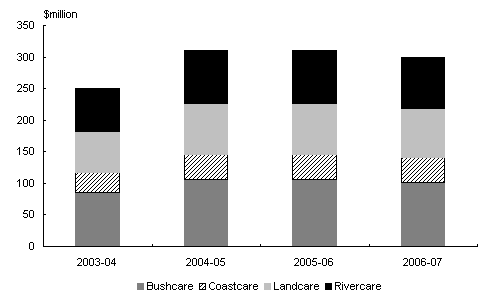
The Government has committed $2.7 billion to the Natural Heritage Trust. Under the extension of the Natural Heritage Trust, investment will be at three levels - national, regional and local - and through four programmes:
- Landcare - reverses land degradation and promotes sustainable agriculture, thereby increasing the profitability, competitiveness, and sustainability of Australian agricultural industries;
- Bushcare - conserves and restores habitat for our unique native flora and fauna that underpin the health of our landscapes and provides for the sustainability of ecosystems;
- Rivercare - improves water quality and environmental condition in our river systems and wetlands, and provides reliable allocations for human uses and for industry; and
- Coastcare - protects our coastal catchments, ecosystems and the marine environment, provides for the sustainable development of coastal and marine resources, and enhances coastal area amenity.
The Natural Heritage Trust supports national priorities such as additions to the National Reserve System, Indigenous Protected Areas, recovery planning for endangered species, major water quality infrastructure projects, national data management and communication, as well as statewide matters that cross over State and regional boundaries. A Strategic Plan for national level investment under the Natural Heritage Trust will be supported with plans for investment, monitoring and evaluation.
At the local level, over 1800 projects have been supported by the Australian Government Envirofund worth $20 million in 2002-03, with another $10 million made available for a special drought recovery round. The Government's commitment to Envirofund will continue with an additional $20 million in 2003-04.
Chart 2.3: Natural Heritage Trust expenditure (estimated), 2003-04 to 2006-07
National Action Plan for Salinity and Water Quality
For the first time in Australia's history, the Howard Government has achieved, through the Intergovernmental Agreement on the National Action Plan for Salinity and Water Quality, agreement on regulatory reforms for water and land use. This will work towards securing government investments and motivating best practice in land and water resource management.
The Prime Minister committed $700 million of Commonwealth funding to the National Action Plan at the Council of Australian Governments meeting of November 2000. Through the Intergovernmental Agreement on the National Action Plan, this was matched by the State and Territory governments to give a total commitment of $1.4 billion over seven years.
Under the National Action Plan, the Commonwealth Government has agreed to invest over $76 million on foundation funding, priority actions and capacity building activities, principally in Victoria, South Australia, Queensland and New South Wales.
These significant investments are a concrete demonstration of the Howard Government's long-term commitment to addressing dryland salinity and declining water quality issues in 21 of the worst affected regions in the country. These are two of the most serious resource management issues threatening Australia's rural industries, regional communities and our unique environment.
Regional plans lead the way
Through the National Action Plan and the regional component of the Natural Heritage Trust, the Howard Government aims to establish a three-way partnership between the Commonwealth, States and regional communities. The aim is to empower and motivate regional communities to use coordinated and targeted actions to address the natural resource management issues they face and tackle their underlying causes.
These major environmental programmes recognise that regions are the most effective scale at which the community can address environmental issues. It is communities who must support, adopt and implement regional natural resource management plans.
The Government will commit a further $113 million in 2003-04 to help communities and landholders develop and implement integrated regional natural resource management plans. Such plans are the basis for investments under the Natural Heritage Trust and National Action Plan. These natural resource management plans will be accredited by the end of 2003-04. A Commonwealth Regional Natural Resource Management Team is ensuring that investment from the Natural Heritage Trust and the National Action Plan is targeted efficiently, with a single comprehensive regional plan for each of the 21 priority regions.
A network of facilitators and coordinators will be well resourced to retain and enhance the skills developed over the first phase of the Natural Heritage Trust, support the community through the Envirofund and assist regional bodies in developing plans and funding proposals.
Progress on recovery plans
Government progress in combating biodiversity decline will continue through its commitment to developing recovery plans for nationally listed threatened species and ecological communities, particularly by working in partnership with State and Territory governments. The Government will also consider regional biodiversity 'hot spots' across Australia for priority action under the Natural Heritage Trust.
Since 1996, the Government has implemented 146 recovery plans for 180 nationally listed threatened species and 10 ecological communities listed under the EPBC Act. The total commitment exceeds $32 million. Projects have included protection for the endangered Northern Bettong, the Bathurst Copper Butterfly, the Black-eared Miner and the Helmeted Honey-eater.
Migratory waterbirds
The Government continues to lead the world in protecting and conserving migratory waterbirds and their habitat. A partnership of government and community interests has been funded to protect and rehabilitate important migratory shorebird sites.
An outcome of the World Summit on Sustainable Development will see Australia and Japan leading the way in the Asia-Pacific region to strengthen international cooperation for migratory waterbird conservation. The Government is also working with the Government of the Republic of Korea to finalise a formal bilateral Agreement on Migratory Birds.
Furthering our knowledge base
Australia continues to be a world leader in managing, presenting and utilising biodiversity knowledge. Commonwealth support for taxonomy and bioinformatics through the Australian Biological Resources Study, the pioneering Australia's Virtual Herbarium, and the Centre for Plant Biodiversity Research have positioned Australia in the vanguard of bioinformatics worldwide.
The Government has committed $12.4 million over four years to maintain the currency of the Australian Biological Resources Study's biodiversity knowledge base, further our knowledge of micro-organisms, and communicate that knowledge to land managers and others with an increasing emphasis on online delivery.
Combating weeds and pests
Since 1996, the Howard Government has committed $18 million under the Natural Heritage Trust to combat weeds and feral animals that threaten Australia's environment and natural resources. There have been some outstanding successes during that time, particularly in world heritage areas and Commonwealth national parks. The Government's impressive list of achievements includes virtual elimination of Mimosa pigra and the African Big-headed Ant from Kakadu National Park, the control of the Crazy Ant on Christmas Island, and the eradication of feral cats from Macquarie Island.
In 2003-04 the Government will develop plans to address ecological threats posed by pigs and by beak and feather disease to native parrots. Research will continue on ways to combat invasive species, such as biological control agents, and model field projects for the removal of weeds.
A commitment of more than $10 million in 2003-04 will be used to develop a scientifically based bio-security risk assessment process that is designed to prevent newly imported species becoming weeds. This measure will permit safe trading while protecting Australia's plant, animal and human health, and the environment. The Minister for the Environment and Heritage will also continue to provide advice under the Gene Technology Act 2000. This Act controls the release of genetically modified organisms into the environment, which if uncontrolled, may result in gene pool pollution and weediness.
Protecting native vegetation
The Government is making significant progress in achieving a truly national and sustainable approach to native vegetation management. The Howard Government through the National Action Plan for Salinity and Water Quality has secured commitments from all States to prevent land clearing in priority regions where it would lead to unacceptable land or water degradation. The Government is committed to the national goal to reverse the decline in the extent and quality of Australia's native vegetation, and has agreed targets with most States and Territories through the National Objectives and Targets for Biodiversity Conservation 2001-2005. Through the Framework for the Extension of the Natural Heritage Trust all governments have agreed to implement measures to prevent all clearing of endangered and vulnerable vegetation communities and critical habitat for threatened species, and limit broadscale clearing to those instances where regional biodiversity objectives are not compromised.
Eighty percent of land clearing in Australia occurs in Queensland. The Government recognises the important national implications of current Queensland land clearing rates and maintains its offer of financial assistance to Queensland to reduce the very high rates of land clearing.
In 2003-04 the Howard Government will invest in priority native vegetation management actions identified in regional plans by regional, community-based groups. The plans will identify on-ground actions to reverse the continuing decline in the condition of our native vegetation and increase revegetation, integrating multiple objectives including biodiversity conservation, salinity mitigation, greenhouse gas abatement, improved land stability and enhanced water quality.
Increasing protection through National Reserve
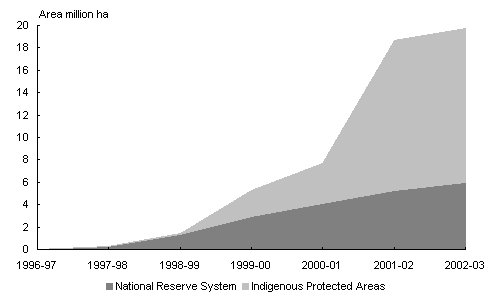
Since 1996, with an investment of $76 million, the Government has increased the size of the National Reserve System by nearly one third with the addition of nearly 18 million hectares of land-based protected areas to reserves.
The Howard Government recognises that land conservation and management is not the sole jurisdiction of Governments and has initiated efforts to increase the involvement of individuals, conservation groups and Indigenous communities. Since 1998, the Government has provided $15 million of support for the purchase of over 30 properties by non-government organisations covering more than 800,000 hectares.
The introduction of the Indigenous Protected Area Programme in 1996 has seen the declaration of 17 Indigenous Protected Areas covering over 13.8 million hectares. Each area is planned and managed by their Indigenous owners and now make up approximately 17 per cent of the terrestrial protected area estate - a remarkable contribution in a very short space of time. In 2003-04 another two Indigenous Protected Areas will be added to the National Reserve System.
The Government has also changed tax laws to encourage greater conservation on private land. In 2000, the Government took action to provide an income tax deduction for gifts of property valued at more that $5,000; to allow a deduction to be spread over five years if the gift is made to an environment or heritage organisation; and provide a capital gains tax exemption for gifts of property left in a will to an eligible organisation.
The Government recognises that additions to reserves per se are not sufficient to protect environmental, economic and social values - reserves must also be comprehensive, adequate, representative and well managed. Establishing priorities for the development of the National Reserve System is undertaken within a bioregional (IBRA) framework. The Government has funded investigations through the National Land and Water Resources Audit on Landscape Health and Terrestrial Biodiversity which provide new information on the status of Australia's biodiversity. These investigations provide, for the first time, a comprehensive overview at a continental level on current levels of protection for biodiversity and major threatening processes and will be used to inform priority setting for wider biodiversity conservation measures.
Chart 2.4: Comprehensive, adequate and representative areas added to the National Reserve System, 1996-97 to 2002-03
Sustainable forest benefits
Australia is regarded as a world leader in the protection and sustainable management of forests. A key part of this has been the Commonwealth's Regional Forest Agreement process, which has resulted in 10 agreements over 11 regions in four states. The agreements are made between the Commonwealth and State governments for a period of 20 years. They provide a blueprint for the management of Australia's forests and the basis for an internationally competitive and ecologically sustainable forest products industry. Since 1996, the Government has invested around $328 million to ensure the success of these arrangements.
Australia's reputation in forestry management will be further enhanced from the use of a new Australian Forestry Standard, recognised by Standards Australia in 2003. This will support sustainable forest management and certification and give Australian forest industries greater access to export markets.
In 2003-04 the Government's Farm Forestry Programme will continue to provide incentives to land holders to incorporate commercial tree growing on cleared agricultural lands. Farm forestry provides multiple benefits including a reduction in land degradation, lowering of water tables, pollination services, and carbon sequestration whilst producing a cash crop.
Building on Green Corps success
The Government's youth development and environmental training programme Green Corps has provided training opportunities for 8,740 young people who have propagated and planted almost eight million trees, built 3,100 kilometres of fencing, removed 33,000 hectares of weeds, collected 6,300 kilograms of native seeds and constructed or maintained 4,750 kilometres of walking track.
The Howard Government will continue to support this programme with a commitment of $120.4 million over five years. This will deliver 170 projects each year, to build on the success of the programme in terms of environmental, heritage and youth development outcomes.
Coasts and oceans
Australia's unrivalled reputation as a world leader in oceans management will continue through the Howard Government's use of a range of strategies to promote, support and implement the conservation and ecologically sustainable use of Australia's coasts and oceans. Examples include the use of legislation such as the EPBC Act and the Environment Protection (Sea Dumping) Act 1981; funding programmes under the Natural Heritage Trust; declaration of protected areas; and cooperative arrangements with State and Territory governments and stakeholders.
In the 2003-04 Budget, the Government has committed $18.2 million over two years for the implementation of Australia's Ocean Policy, which includes initiatives such as regional marine planning, identification of marine protected areas, and strategic environmental assessments of Commonwealth and export fisheries.
Regional marine planning
In 2003-04 the Government will finalise the first regional marine plan for the South-east Marine Region, covering Australia's ocean waters off Victoria, Tasmania and eastern South Australia, far south New South Wales and Macquarie Island. This plan will become the model for the management of our ocean territory right around the continent. The Government will continue the regional marine planning process in the ocean territory around the Torres Strait, Gulf of Carpentaria and Eastern Arafura Sea.
High quality science is essential for regional marine planning. In 2003-04 the Government will establish an Oceans Policy Science Advisory Group. An Oceans Board of Management, with representatives from across the Commonwealth, will oversee the National Oceans Ministerial Board's three-year work plan.
Establishing Marine Protected Areas
In 2003-04 the Government will progress the identification and selection of a system of representative Marine Protected Areas within the South-east Marine Region as part of the Regional Marine Planning process for that area.
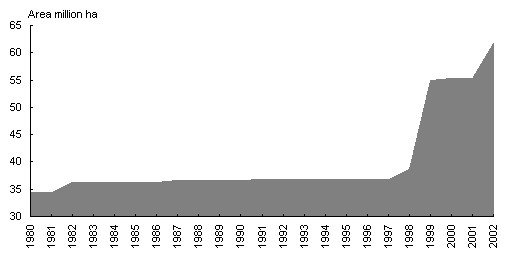
The Government will also continue to develop and implement management plans for Australia's 13 Commonwealth Marine Protected Areas, including the Heard Island and McDonald Island Marine Reserve. This Reserve is the world's largest fully protected marine reserve and it protects the habitat and food sources of some of the world's most spectacular sea going creatures, including the Southern Elephant Seal, the Subantartic Fur Seal, and several penguin species.
Chart 2.5: Marine Protected Areas in Commonwealth waters,
1980 to 2002 (Total area)
Advancing sustainable fisheries
By the end of 2003, the Government will have completed all of the strategic environmental assessments of the Commonwealth and state export fisheries, under the EPBC Act. Already the assessment process has caused a change in management practices across Australia's commercial fisheries, with a shift from largely target species focused management to a more ecosystem-based management approach. Assessment decisions are also providing increased certainty for fishery operators, processors and exporters as well as increasing opportunities for entry into export markets.
The Government has committed $53.2 million over four years to support research that will help Australia's fisheries industry improve its environmental performance.
For 2003-04 the Government has committed new funds of $12 million to strengthen Australia's surveillance and enforcement capacity against illegal fishing in the Australian fishing zone at Heard and McDonald Islands to ensure the protection of marine resources including the Patagonian Toothfish. The Government will continue to ensure that patrols of Australia's marine border are undertaken to report sea and wildlife mortality, oil pollution and environmental damage.
Protecting marine species
The Government will continue to provide international leadership on the protection of whales. In 2003-04 the Government through the National Whale Recovery Group will seek to progress the establishment of a South Pacific Whale Sanctuary and permanent ban on commercial whaling. The Government will be encouraging South Pacific nations to consider the benefits of a regional arrangement for whales under the Convention on Migratory Species.
Threatened seals and sharks will be the focus of national recovery groups in 2003-04, while the Government continues work to protect seabirds and turtles with the Albatross and Giant Petrel Recovery Team, the Longline Fishing Threat Abatement Plan Team, and the Turtle Recovery Team. Sharks and seabirds will benefit from more sustainable fishing practices, with the development of national plans of action for sharks and seabirds. A management regime will be developed to help stop marine pests entering Australian waters through ships' ballast waters or fouled hulls, with an estimated expenditure of $920,000 over the next four years.
Safeguarding the Great Barrier Reef
The Great Barrier Reef is the world's largest World Heritage and marine protected area. It makes a major contribution to the local, regional and national economy as well as being of key social significance to the region and the nation. Since 1996, the Government has committed over $147 million to address critical issues affecting the Great Barrier Reef Marine Park and World Heritage Area including issues of water quality, coastal development, fisheries, tourism, conservation and biodiversity.
A particular threat to the Great Barrier Reef is the impact of land use on the quality of water entering the Reef. In 2003-04 the Government will announce the Great Barrier Reef Water Quality Protection Plan, which outlines a strategy to halt and reverse the decline in water quality entering the Great Barrier Reef within ten years.
The Government will also protect the Great Barrier Reef from offshore threats. In 2003, following extensive scientific review and public consultation, the Government will complete the rezoning of the Marine Park. The number and size of Green Zones - no take areas - in the Park will be expanded to ensure that critical habitats are adequately protected in perpetuity.
Sustaining coastal catchments
The impact of urban sprawl on coastal land and water quality is a major concern for the Government. In consultation with State and Territory governments, the Commonwealth has identified a number of coastal issues that would benefit from national cooperation. These include sustainable coastal resource use, opportunities and threats regarding climate change and threats to coastal environments and natural resources. In 2003-04 the Government will identify what can be done under these themes to achieve agreed outcomes.
Water quality in urban rivers and their estuaries is a strong focus of Natural Heritage Trust investment. The Coastal Catchments Initiative will identify 'hot spots' and a range of measures to improve their water quality under the framework of a water quality improvement plan for each site. This significant initiative will see partnerships created between all levels of government, industry and landowners as well as community interests in the identified areas.
Inland waters
There are few issues more important to our nation than the efficient and effective use of our scarce water resources. The Government will work to improve the environment whilst sustaining regional and rural communities and investors.
To ensure the sustainable management, rehabilitation and conservation of Australia's rivers and waterways, the Government is using a range of mechanisms. These include protecting internationally important wetlands through the EPBC Act; funding programmes under the Natural Heritage Trust; participating in policy development in a number of areas, in particular in the Murray-Darling Basin and Lake Eyre Basin; and supporting research on river health and community involvement in water quality monitoring.
The Government has committed $350 million through the Natural Heritage Trust on measures to improve our water quality, whilst addressing broader structural issues through the reform of Australia's water policy.
There is an urgent need for greater certainly over water access rights and better water trading regimes. In 2003-04 the Government will work with the States and Territories to establish a transparent and coherent set of nationally recognised water property rights that will deliver the best outcome for the environment and assurance for irrigators and other users. Incentives to improve the performance of irrigated agriculture through better farm management and infrastructure will also be pursued.
Restoring the Murray-Darling Basin
Another key water issue is the restoration of river health to the Murray-Darling System. This area is the food basket of Australia, accounting for more than 40 per cent of the nation's gross value of agricultural production.
Consumption of water from the Murray-Darling System is unsustainable. The river and its associated ecosystems are suffering from the effects of over-extraction, regulation and over-development. In 2003-04, the Commonwealth will support a trial water trading project, on-ground works such as salt interceptions works and the installation of fish ways, and progress the Living Murray Initiative - a strategy to return additional flows to the Murray River.
In 2003-04 a further step towards restoring environmental flows in both the Murray and Snowy Rivers will be taken by pursuing the establishment of a Joint Government Enterprise between the Commonwealth Government and the New South Wales and Victorian Governments. The three Governments have agreed to a target of up to 70 gigalitres of new environmental flows in the River Murray and up to 212 gigalitres in the Snowy River. The proposal aims to achieve these targets by facilitating water efficiency projects in the Murray-Darling Basin.
Recovering the Great Artesian Basin
The Great Artesian Basin is one of the largest groundwater systems in the world. For a major portion of Australia's arid zone it is the main and sometimes only reliable source of water.
Capping of bores and piping in strategic areas of the Great Artesian Basin will help save water and recover water pressure, benefiting both the pastoral industry and the environment. The Government will provide $9.4 million for this programme in 2003-04 to achieve sustainable use of this important groundwater resource.
Human settlements
A growing challenge for the Government is to minimise the environmental impact of Australia's cities and towns - and to help make these built environments ecologically sustainable.
Since 1996, the Government has sought to match Australia's remarkable period of economic growth with an increased commitment to the sustainable management of our environment. To achieve this the Government has set national air quality standards and worked closely with industry and local government to improve environmental performance.
The Australian community rates environmental protection as of very high importance. The Government will continue to pursue standard setting for air quality and vehicle emissions, seek reform on waste issues of national significance, and to address air quality issues through broader Government energy and transport policy.
Cooperation and partnerships
Through the Environment Protection and Heritage Council, the Howard Government has achieved an unprecedented level of cooperation and shared responsibility between governments on nationally significant environment protection and heritage issues.
Chemicals policy, air quality, waste streams and national heritage policy are areas in which the Government will achieve major outcomes through the Council in 2003-04. For example, the Commonwealth and Clean Up Australia joined retail giants such as Coles, BiLo and Woolworths in the 2003 'Bag Yourself a Better Environment' month, working with other retailers and the community to reduce, reuse and recycle the 6.9 billion plastic bags Australians use each year.
In 2003-04 the Government will lead the Environment Protection and Heritage Council in implementing further measures to minimise impacts of plastic bags on the environment, including the possible introduction of standards for degradable plastic carry bags.
Recognising that green business is good business, the Government encourages industry to take voluntary action to minimise waste and improve environmental performance through partnerships such as the National Packaging Covenant and eco-efficiency agreements, through which industry associations promote eco-efficiency to their members.
The Government has entered into 25 eco-efficiency agreements with industry associations throughout Australia and these partnerships will continue in 2003-04, with a particular focus on agricultural sectors.
Government partnerships will continue to encourage industry and consumer action on dealing with waste from packaging, hazardous chemicals, electrical goods, cigarette butts, conversion of waste to re-use and recycling, waste to energy and waste tyres and end-of-life vehicles.
The Product Stewardship (Oil) Act 2000 came into operation in 2001, introducing a levy on oil to fund benefit payments to encourage greater recycling of waste oil. Since then, the scheme has increased oil recycling by 24 per cent. In addition, the Government has issued grants valued at more than $5 million to 240 local governments to install over 400 waste oil collection facilities. In 2003-04, the Government, in collaboration with peak oil industry bodies, will examine the viability of a market based tradeable credits system for waste oil.
Household water use
The drought of 2002-03 brought home to householders across urban and regional Australia the need for all Australians to use our water responsibly. Australian households use the second largest share of all mains water after agriculture -approximately 16 per cent - with the toilet and shower together using approximately 40 per cent of that amount.
In 2003-04 the Government will continue to work with State and Territory governments to reduce urban water consumption, protect urban water catchments and work towards the possible introduction of a mandatory National Water Efficiency Labelling Scheme for white goods and products such as taps and shower heads.
Environment Protection and Biodiversity Conservation Act 1999 (EPBC Act)
The EPBC Act was established by the Howard Government to provide, for the first time in Australia's history, a truly national framework for environment protection and biodiversity conservation. The Act allows the Commonwealth to demonstrate national leadership in a manner that respects the role of the States in delivering on-ground natural resource management.
The operation of the EPBC Act has resulted in improved environmental outcomes in a wide range of significant development proposals, partly because the Act has encouraged proponents to discuss how their proposals can avoid, as far as possible, impacts on matters of national environmental significance.
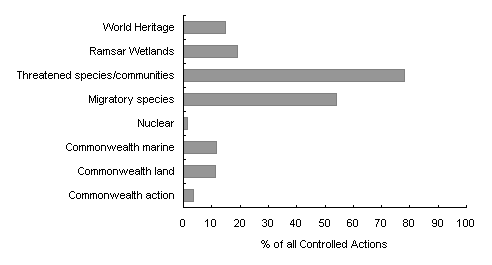
Since its commencement in July 2000 the EPBC Act has substantially increased protection for matters of national environmental significance. The chart shows the distribution of matters of national environmental significance that have been assessed for the 222 actions that have triggered the EPBC Act since its commencement.
Chart 2.6: Matters of national environmental significance triggered under the EPBC Act
In 2003-04 the Government will further improve the operation of the EPBC Act by:
- providing increased guidance to potential users of the Act: with more guidelines on what actions are likely to have a significant impact; more assistance in the referrals stage; providing information on the standards of information required; targeted awareness raising activities; and practical assistance on the operation of the Act in particular sectors and regions;
- increasing public reporting on the operation of the Act, particularly in relation to trends and compliance activity;
- strengthening monitoring and review arrangements to ensure that conditions attached to approvals and specified manner requirements are met; and
- increasing the enforcement capacity of Environment Australia.
Natural and cultural heritage
As our nation matures, Australians can look to our heritage in developing a strong national identity and cohesive sense of purpose. This will help us better understand and contribute to the present and shape the future. To understand what it is that makes us 'distinctively' Australian, we should all have the opportunity to know our nationally significant heritage places, stories, anniversaries and people.
The Howard Government is committed to providing that opportunity. Over the next four years, additional funding of $13.3 million will be invested in a new heritage initiative, Distinctively Australian - the Government's new initiative to engage the Australian community in protecting our nationally significant heritage places and experiencing Australia's origins, history and values. Funding for the initiative is conditional on the passage by Parliament of the new legislation. Existing funding for the Australian Heritage Commission of $39.3 million will also be available to support this initiative on the passage of the new legislation.
Distinctively Australian is based upon the Government's new heritage legislation (currently before Parliament) that establishes the National Heritage List. This List will comprise the places of Australia's greatest national significance. For the first time, places of national heritage significance will be protected to the full extent of Commonwealth powers to ensure that they are maintained at a level appropriate to their national importance.
Through a public nomination process, the Australian community will be asked to help build the National Heritage List by putting forward the places that they consider of greatest significance to the nation. The List will include places that are of natural, Indigenous and historic heritage value, which authentically reflect the diversity of our national inheritance.
Discussion and celebration of the stories, values and great national issues surrounding these places will be as important as the listing of the places themselves. Distinctively Australian will seek to ensure that this is aided through partnerships with educational, media, creative and community organisations throughout Australia. Economic benefits will also be realised for regional communities through increased domestic and international heritage tourism to nationally significant places.
Through Distinctively Australian, we will better appreciate that we have a common heritage that embraces the many different origins and perspectives of contemporary Australians.
Historic Sydney foreshore lands
Australia's historic Sydney foreshore lands comprise some of the finest open space on Sydney Harbour. The area includes many buildings and sites of national, historical and military significance, but as restricted Commonwealth lands these sites have been closed to the public for generations. From 2003-04 the Government will make a net investment of $115.5 million over 8 years in decontaminating and rehabilitating the lands, conserving buildings and infrastructure, and returning the lands to the community as national heritage assets.
The sites include defence lands at Middle Head-Georges Heights, the former Army Maritime School at Chowder Bay, Woolwich Dock, Cockatoo Island, the former Marine Biological Research Station at Watsons Bay, the former Artillery School at North Head, the Macquarie Lightstation at Vaucluse and Snapper Island.
Protecting World Heritage
Australia's 14 World Heritage places play a central part in informing our national identity - a unique natural and cultural legacy that we are morally bound to pass on to future generations. A benefit is the boost that our World Heritage places afford our economy through tourism while protecting biodiversity.
In 2003 the international World Heritage Committee will consider Purnululu National Park in the east Kimberley region of Western Australia for inscription on the World Heritage List. The Committee will also assess the nomination of the Royal Exhibition Building and Carlton Gardens in Melbourne for inscription in June 2004.
The Government is also undertaking consultations for the development of future possible nominations including a series of Indigenous rock art sites, convict sites, the Sydney Opera House, and Cooloola (Queensland).
The Government continues to support strengthening of the management of Australia's World Heritage properties. Through the establishment of new Advisory Committees, consultative arrangements are now in place for community, scientific and technical advice on the management of two World Heritage properties - the Central Eastern Rainforest Reserves and Australian Fossil Mammal Sites (Riversleigh and Naracoorte).
The Government is also providing regional leadership in the management of World Heritage properties through cooperative activities under the Asia Pacific Focal Point programme. Under the Government Sector Linkages Programme, Australia and Indonesia are working together for planning and management capacity building for the Lorentz National Park World Heritage property in West Papua, Indonesia.
Conserving national heritage
The Government will continue to help community groups and local government preserve their heritage places. Cultural Heritage Projects Programme funding in 2003-04 will help to preserve historic homesteads, courthouses, goals, bridges, convict roads, significant Aboriginal sites, and many other historic and Indigenous places.
In 2002-03, $3.6 million in grants to 64 projects around Australia were provided under the Cultural Heritage Projects Programme. Projects supported include identification of Indigenous rock art sites in Nitmiluk National Park (Northern Territory), and refurbishment of the Perth Town Hall (Western Australia). Funding has also been provided to 168 historic hotels in rural and regional areas to restore historic features under the Conservation of Rural and Regional Hotels programme.
To better protect Australia's nationally significant heritage objects and allow them to be enjoyed by the Australian community, the Government will provide up to $500,000 per annum for the National Cultural Heritage Account, established under the Protection of Movable Cultural Heritage Act 1986.
The Antarctic
Australia has a strong commitment to the protection of the Antarctic. We are a claimant to 42 per cent of the continent, and we are a party to both the Antarctic Treaty and the Convention on the Conservation of Antarctic Marine Living Resources. The Government's efforts have seen significant progress in achieving protection of the Antarctic environment through conducting world-leading Antarctic scientific research, developing ways to minimise environmental impacts, remediating past work sites and attempts to combat illegal fishing.
Scientific programme
The Government is making a major contribution to understanding the Antarctic's role in influencing global climate systems, with a commitment of $23.5 million over seven years to help the new Antarctic Climate and Ecosystems Cooperative Research Centre undertake scientific research. Specific projects include broadening the knowledge base for sustainable management of Antarctic and Southern Ocean fisheries and ecosystems; delivering systems for operational prediction of Southern Ocean currents and sea ice conditions; and increasing the reliability of predictions of sea level rise for Australia and neighbouring nations for use in coastal zone management and other planning considerations.
The Australian Government convenes the international Regional Sensitivity to Climate Change in Antarctic Terrestrial and Limnetic Ecosystems programme. This programme furthers the understanding of the effects of climate change on Antarctic biotas and ecosystem functioning. In 2003-04 a major field research programme will involve simultaneous research at four subantarctic islands by Australian, French and South African scientists.
Antarctic airlink
Scoping work will continue in 2003-04 to investigate the possibility of revolutionising access to the Antarctic for scientists through a proposed intercontinental air link between Australia and Casey Station and other Australian stations and field locations. Successful trial preparations of an ice and compressed snow runway near Casey Station were completed in the summer of 2002-03.
Illegal, unreported and unregulated fishing
Australia continues to lead efforts through the Commission for the Conservation of Antarctic Marine Living Resources to stop illegal, unreported and unregulated fishing in the Southern Ocean. This includes the Government's new Budget measure surveillance and protection in the Southern Ocean that will combat illegal fishing of the Patagonian Toothfish around the World Heritage-listed Heard and McDonald Islands.
Environmental management system
Australia is the first national operator amongst the Antarctic Treaty parties to implement an environmental management system certified to the International Standard ISO 14001. As part of this, the Government has commissioned two 300-kilowatt wind turbines at Mawson Station in the first serious attempt to obtain significant electricity supply by wind generation in the Antarctic.
The environmental impacts of abandoned waste disposal sites and practical methods to remediate them have also been investigated. In 2003-04 the Government will remove waste materials from the old Thala Valley tip site near Casey Station.
Meteorology
The Government's Bureau of Meteorology contributes to Australia's social, economic, cultural and environmental goals by providing critical weather, climate, hydrological and oceanographic services and by undertaking research into environment-related issues such as global climate change, stratospheric ozone depletion, air quality and water resources management.
Natural disaster warning
The Bureau's Environmental Emergency Response Service was recently upgraded and the system will be further enhanced to make predictions at finer scales. The Service uses computer models to predict the dispersion patterns for smoke and ash from bushfires and the atmospheric spread of hazardous pollutants from extreme events.
Meteorological and hydrological information are important inputs to effective natural disaster management, particularly in relation to mitigating the impacts on vulnerable environments, such as the influence of the marine environment on coastal lowlands and taking account of impacts of tropical cyclones and storm surges on agriculture and coastal resources.
Public weather information
The Bureau's website continues to be a valuable community resource for a wide range of meteorological and related information. Typically, the site receives between five and eight million hits a day, a large proportion of which are associated with access to radar data.
Science supporting policy development
Finding new solutions to environmental issues will improve the quality of life for all Australians.
In 2002 the Government announced Australia's first set of national research priorities, with An Environmentally Sustainable Australia as one of Australia's key research priorities. This agenda will focus and coordinate the Government's current investment in environmental and natural resources management research, including:
- geo-scientific research in the Australian Antarctic and Southern Oceans, coastal waterways and estuaries, monitoring of dryland salinity, water quality and sea temperatures, and mapping of the geomorphology of the Australian marine jurisdiction;
- Cooperative Research Centres for: Greenhouse Accounting; Carbon Dioxide Emissions; Biological Control of Pest Animals; Australian Weed Management; Coastal Zone, Estuary and Waterway Management; Catchment Hydrology; Freshwater Ecology; Water Quality and Treatment; Plant Based Management of Dryland Salinity; Tropical Savannas; the Great Barrier Reef World Heritage Area and Torres Strait; Sustainable Tourism; Tropical Rainforest Ecology and Management; and Antarctic Climate and Ecosystems;
- application of nuclear related technologies for the protection and enhancement of the environment;
- marine scientific research including predicting climate change impacts upon marine biodiversity, sustainable development of tropical marine resources, water quality of the Great Barrier Reef, conservation of marine biodiversity and deriving benefits from marine biotechnology;
- scientific research into climate change and variability, stratospheric ozone depletion, ecosystems, biodiversity taxonomy, sustainable natural resource management and sustainable cities, air quality, vegetation and water resources management;
- the progressive documentation of Australia's biodiversity through Australia's Biological Resources Study; and
- Australia's Antarctic Science Programme.
Harnessing the market
Incentive and market-based instruments have the potential to deliver improved environmental outcomes at significantly lower cost. Rather than prescribing behaviour or technology use, incentive and trading-based instruments reward innovation and allow greater flexibility in achieving environmental objectives.
The Government views as a priority innovative market based programmes that will help incorporate in decisions on natural resource management the value of our soil, water and biodiversity and the services they provide to us.
While economic instruments are a promising new addition to existing natural resource management tools, there are significant gaps in knowledge and other impediments which limit our ability to apply them to what are often complex environmental issues.
Under the National Action Plan for Salinity and Water Quality, the Government will provide $10 million over 8 years for the Market Based Instruments programme. The first phase of the programme will involve 10 pilot projects covering the use of trading mechanisms, auctions and price signals to change behaviour.
Water trading offers opportunities to water users to maximise the value of Australia's water resources. The Government is progressing the development through COAG of a nationally agreed set of principles for water entitlement and allocation. This involves working through the complex social, scientific and regulatory design issues in order to achieve robust, sustainable outcomes over the long term.
The Government is also investigating options for using market based instruments to cost-effectively manage industrial and domestic waste streams, including a separate study for a market based tradeable credits system for waste oil.
A range of environmental taxation incentives have been introduced by this government to encourage gifting to the environment (see page 40).
Assessing environmental policy and programmes
The Government has a strong commitment to monitoring the effectiveness and efficiency of environmental policy and interventions. In 2003-04 the Government will continue to support the:
- annual collation, analysis and publication of statistics on resource use;
- National Pollutant Inventory - a public Internet database providing information on types and estimated amounts of pollutant emissions from industrial and non-industrial sources to air, land and water around Australia;
- State of the Environment Reporting - a five-yearly report on the condition and prospects of the Australian environment;
- National Carbon Accounting System - a data system that underpins reporting on Australia's greenhouse gas emissions, the National Greenhouse Gas Inventory and Kyoto Protocol; and
- National Land and Water Resources Audit - provides a framework for ongoing monitoring of Australia's land and water resources.
International leadership and assistance
Oceans management, ozone protection, protection of wetlands, trade in hazardous waste, chemicals management, and the protection of biodiversity are just some areas in which Australia provides international leadership.
In our own region, closer working relations with Papua New Guinea, Indonesia and the Pacific are leading to better protection of the environment, ecosystems and species Australia shares with our neighbours. Work on implementation of the Johannesburg Plan of Implementation arising from the World Summit on Sustainable Development (WSSD) will produce a more sustainable future in Australia and globally. We will also support a number of voluntary partnerships that were announced at WSSD covering issues such as ocean resources, sustainable land management, energy, climate change, forestry and health.
Addressing sound environmental management is fundamental to the Government's international aid objective of poverty reduction and sustainable development. A substantial portion of the Government's international aid programme supports bilateral, regional and multilateral activities that directly address environmental issues in developing countries.
In 2003-04, the Government will provide an estimated $95 million for activities that directly address environmental problems in developing countries, with an additional $225 million of indirect expenditure. Priorities include promoting the environmental needs of the Asia-Pacific region in international forums and implementing improved environmental management guidance through the overseas aid provisions of the EPBC Act. The Government will continue to support multilateral efforts to address global environment concerns by contributing to the Global Environment Facility and the Montreal Protocol Multilateral Fund.
Australia will continue to take a leadership role in helping developing country partners to build their capacity to manage and plan water resources through the Government's water aid policy of 'Making every drop count'. This includes supporting an integrated water management project in Vietnam's Mekong Delta, supporting the Australian Water Research Facility to undertake research on water issues in the Asia-Pacific region, in addition to working with the World Bank on water supply and security programmes and a WSSD partnership on the establishment of a Water and Coastal Resources Management Facility.
The Government will promote Australia as a leader in water resources management through its commitment of $6.7 million over four years to support the establishment of an International Centre of Excellence in Water Resources Management.
The Government funds agricultural research as part of Australia's international aid programme. In 2003-04 the Government's investment in international agricultural research will include $1.2 million on research projects that aim to reduce and mitigate environmental damage from agricultural practices; work towards the sustainable management of natural resources such as forests, soils and water supplies and marine fisheries; enhance and protect genetic resources associated with agriculture; and control threats to native environments from pests such as weeds and insects.
Environmental taxation concessions and incentives
The Government provides a package of taxation concessions and incentives to encourage the community to participate in the conservation and sustainable development of the natural environment. These concessions and incentives provide:
- a donor, who has donated a gift of $5,000 or more to an environmental organisation or the National Trust, the opportunity to claim the donation against their tax returns over a five-year period;
- a capital gains tax exemption for gifts of property left in a will to an eligible organisation;
- income taxation concessions for landowners entering conservation covenants with eligible organisations;
- environmental organisations with deductible gift recipient status through the Register of Environmental Organisations;
- a tax deduction for expenditure on environmental impact statements and remediation;
- a tax offset for capital expenditure on soil conservation, prevention of land degradation and related measures; and
- the funding of payments to businesses involved in sustainable recycling and the reuse of waste oil by the imposition of a levy on lubricating oils and similar products.
Practical reconciliation - Indigenous engagement in conservation
The Government is committed to addressing the aspirations and interests of Australia's Indigenous people through symbolic and practical reconciliation. A key precept of ecologically sustainable development is respect for the rights and interests of Indigenous peoples. The Government is a world leader in integrating Indigenous land ownership, Indigenous knowledge and conservation, particularly in our World Heritage property management responsibilities.
Since 1996, 17 Indigenous Protected Areas covering 13.8 million hectares have been declared. Through the Indigenous Protected Areas programme the Government supports Indigenous landholders to manage their lands using traditional knowledge and management practices. The Indigenous Land Management Facilitators increase Indigenous access to the Natural Heritage Trust and they are an important link between Indigenous people and the Government.
Managed by the Government, two of Australia's best known natural and cultural icons - Kakadu and Uluru-Kata Tjuta National Parks - continue to set international best practice for working with Indigenous owners. External revenue raised through entry fees provides significant income for the traditional owners, and contributes to the management of these Parks.
In 2003-04 the Government will further progress practical reconciliation in nature conservation reserves by:
- expanding the role of traditional owners and relevant Indigenous enterprises that provide park services and increase the representation of Indigenous staff in senior management positions in jointly managed parks;
- declaring a further two Indigenous Protected Areas;
- clarifying and further improving the joint management arrangements between the Government and the Wreck Bay Aboriginal Community Council, Jervis Bay, Australian Capital Territory; and
- working with the Northern Territory government to improve services to the Mutitjulu community in Uluru Kata Tjuta National Park and to increase the participation and involvement of Indigenous people in Northern Territory national parks.
Greening of government - leading by example
The Government leads by example when it comes to environmentally responsible actions. Commonwealth Government activities are largely office based, but like any business operations, they can impact upon land, air, water and biodiversity. The Government is also a major landholder, and a significant purchaser of goods and services worth $16 billion each year.
The Commonwealth Government has made significant progress on minimising its environmental footprint.
- 100 per cent of all Commonwealth Departments of State and Parliamentary Departments have Environmental Management Systems in place or under development to manage environmental risk and to measure and improve environmental performance, saving both resources and costs.
- More than 50 per cent of all emissions from Government operations are covered by partnership agreements under the Greenhouse Challenge Programme, a voluntary agreement between government, industry, and government agencies to abate greenhouse gas emissions.
- An environmental purchasing guide and checklists are nearing completion to help Commonwealth purchasing officers take environmental costs and benefits into account when purchasing goods and services.
- Guidance is being provided to Government departments and agencies on 'triple bottom line' or Public Environmental Reporting that reflects social and environmental, as well as traditional economic and financial parameters.
- An annual whole-of-government report on total energy use in government operations allows all Government departments and agencies to review their energy use and performance. The last report demonstrated that since 1997-98 the Government's energy consumption and greenhouse gas emissions had fallen by 14.2 per cent and 11.2 per cent respectively.
In 2003-04 the Government will continue to pursue best corporate environmental practice.
Setting the standard
In 2003, the Department of Defence will release the Commonwealth Government's first Public Environment Report.
The Department of Defence is entrusted with the stewardship of more than three million hectares of the Australian continent. As a significant user of the land, the waters in and surrounding Australia and the air space over it, the Department of Defence has set itself the goal of minimising its footprint on the environment through setting the standard for best practice environmental management.
Utilising an environmental management system framework, the Department of Defence is putting in place a comprehensive environment and heritage management programme. Key elements of this programme include measures to: reduce greenhouse gas emissions; improve energy efficiency; manage environmental pests and weeds; aid the recovery of endangered species; undertake environmental research activities; manage and protect heritage places; and remediate contaminated sites.
In 2003-04 the Government has committed $30.3 million to continue and further develop Defence's extensive programme of environment activities.