|
The Commonwealth Budget – Overview 2003-04 |
|
|
Sustaining first rate health services |
|
|
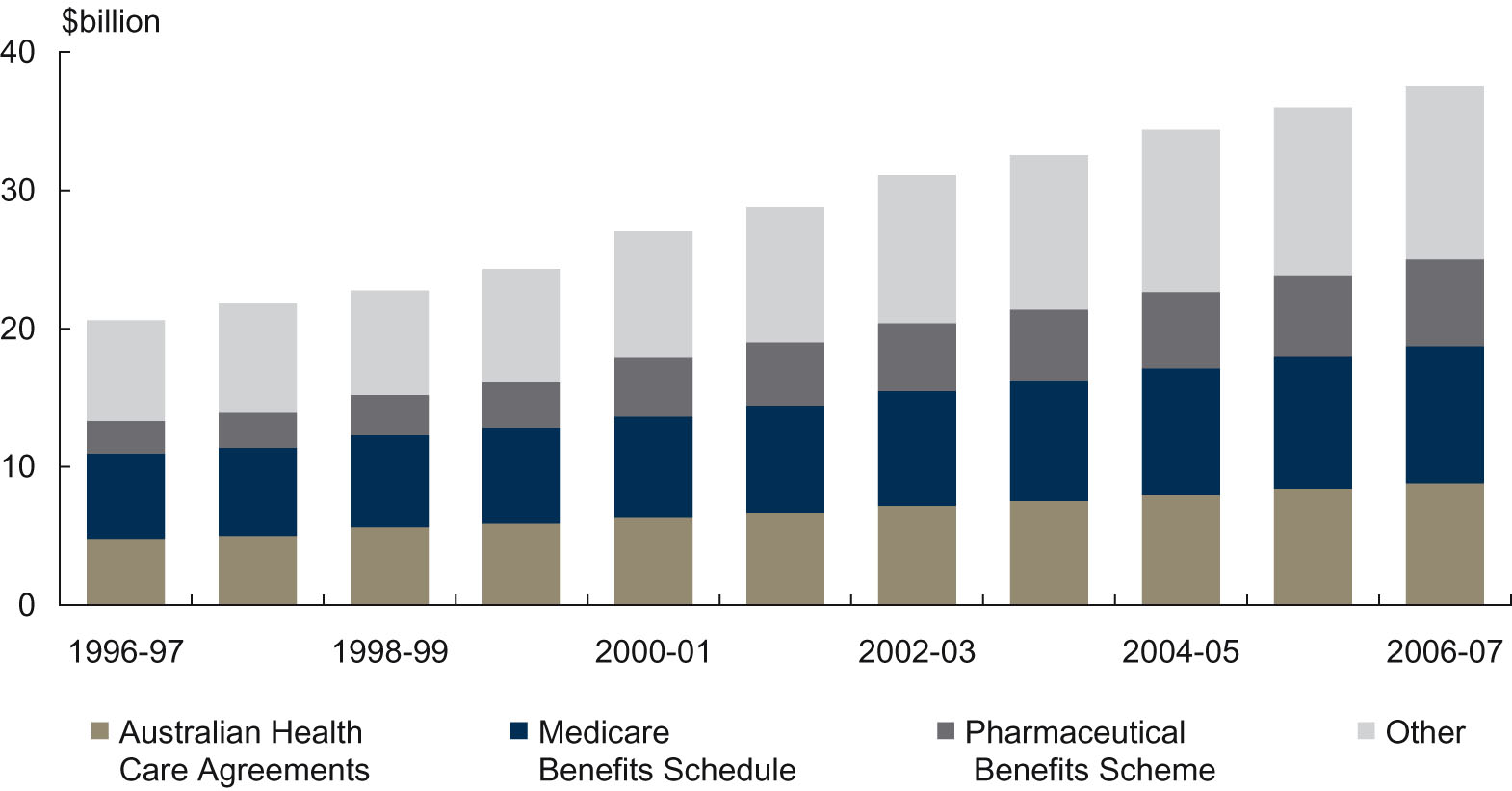
This year the Government plans to spend more than $30 billion on health care. This represents around one–fifth of total Government spending. A Fairer Medicare package and funding for new Australian Health Care Agreements reaffirm the Government's commitment to universal Medicare, where all Australians can access Medicare rebates, free treatment in public hospitals and subsidies for prescription medicines. |
|
|
In 2003-04, this Government will have increased health spending by around 65 per cent since coming to office. The Government is committed to an affordable range of medical services and better access to medical services wherever you live. The Government remains committed to ensuring Australians have choice in their health care. This involves operating a viable private health industry alongside the high quality public system. Private health insurance coverage has jumped from 30 per cent in January 1999 to 44 per cent in December 2002. This is largely due to the Government's 30 per cent Private Health Insurance (PHI) Rebate introduced in January 1999 and Lifetime Health Cover introduced in July 2000. Now more than 8.7 million people have private health insurance. This takes significant pressure off the public hospital system. |
In this Budget the Government is announcing renewed funding for 20 Commonwealth programmes costing around $561 million over the next four years. These programmes include
Australian Health Care AgreementsThe Government will provide $42 billion over five years to State and Territory governments for public hospitals under the new Australian Health Care Agreements. This $10.2 billion of additional funding represents 17 per cent real growth over five years. This includes funding for the Pathways Home initiative to improve services for people returning home from hospital, especially the elderly. |