|
The Commonwealth Budget – Overview 2003-04 |
|
|
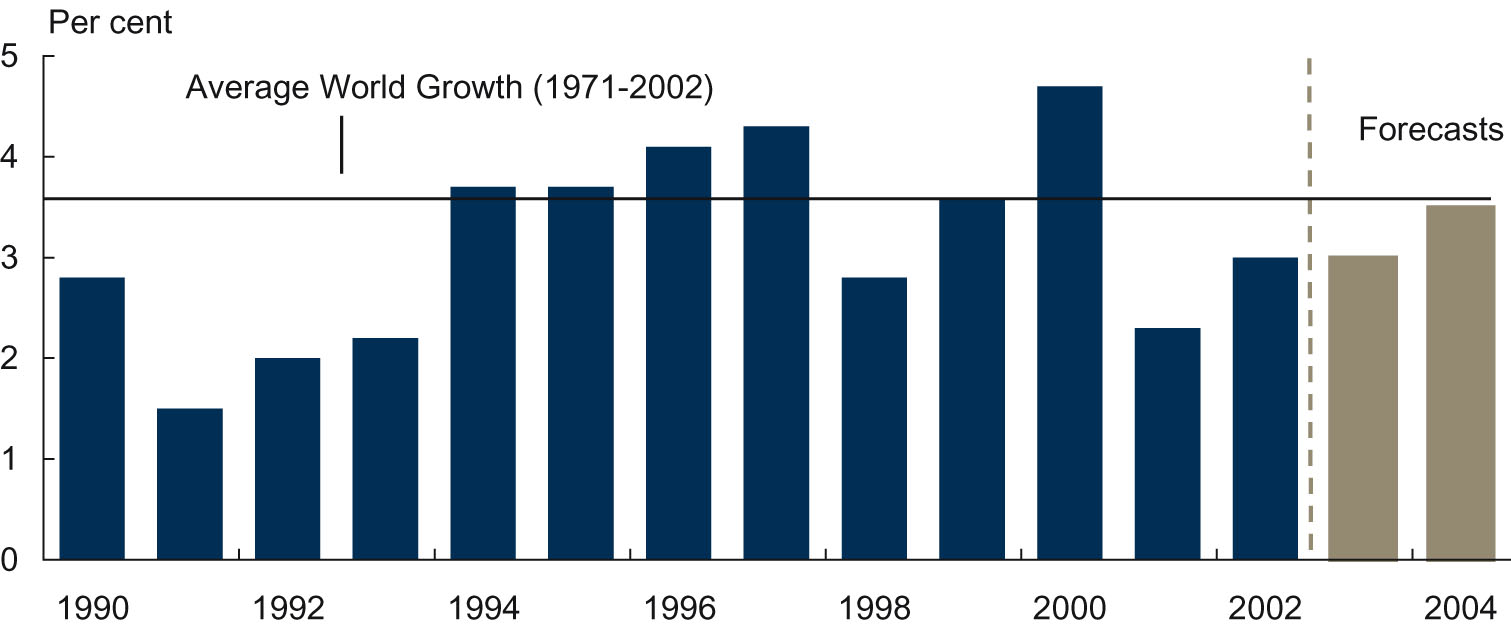
World annual economic growth Heightened risks, subdued global growth |
|
|
The global economic recovery is weak with existing economic problems worsened by recent international tensions, high oil prices and continuing fallout from weak stock markets. As uncertainties abate, the recovery should continue, but more slowly than earlier expected. |
|
|
Global economic growth slowed in late 2002 as previously identified risks such as international tensions, higher oil prices and continuing weak equity markets materialised. The global economy continues to face other major ongoing and emerging risks even though uncertainties related to Iraq have eased. Global economic growth relies excessively on the United States. Japan and the Euro area are hampered by weak financial markets and slow–paced structural reforms, especially in labour and product markets. The United States' outlook is clouded by a record high current account deficit despite weak growth. Combined with a high budget deficit, this risks a sudden and disorderly adjustment to exchange rates which could disrupt growth. |
New risks to the global economy have also emerged. These include the outbreak of Severe Acute Respiratory Syndrome (SARS) and the escalation of tensions in the Korean Peninsula. Unless SARS is contained rapidly, its full economic impact could be substantial. In Asia, SARS has already disrupted the travel and service sectors. Governments have acted to support growth in this weak and risky global economic environment by easing monetary and fiscal policies. In the United States, official interest rates are at 40–year lows and the fiscal stimulus is large. As uncertainties abate, these very supportive macroeconomic policies should see the global economy continue to recover, but more slowly than earlier expected. The balance of international risks remains predominantly on the downside. |