|
The Commonwealth Budget – Overview 2003-04 |
|
|
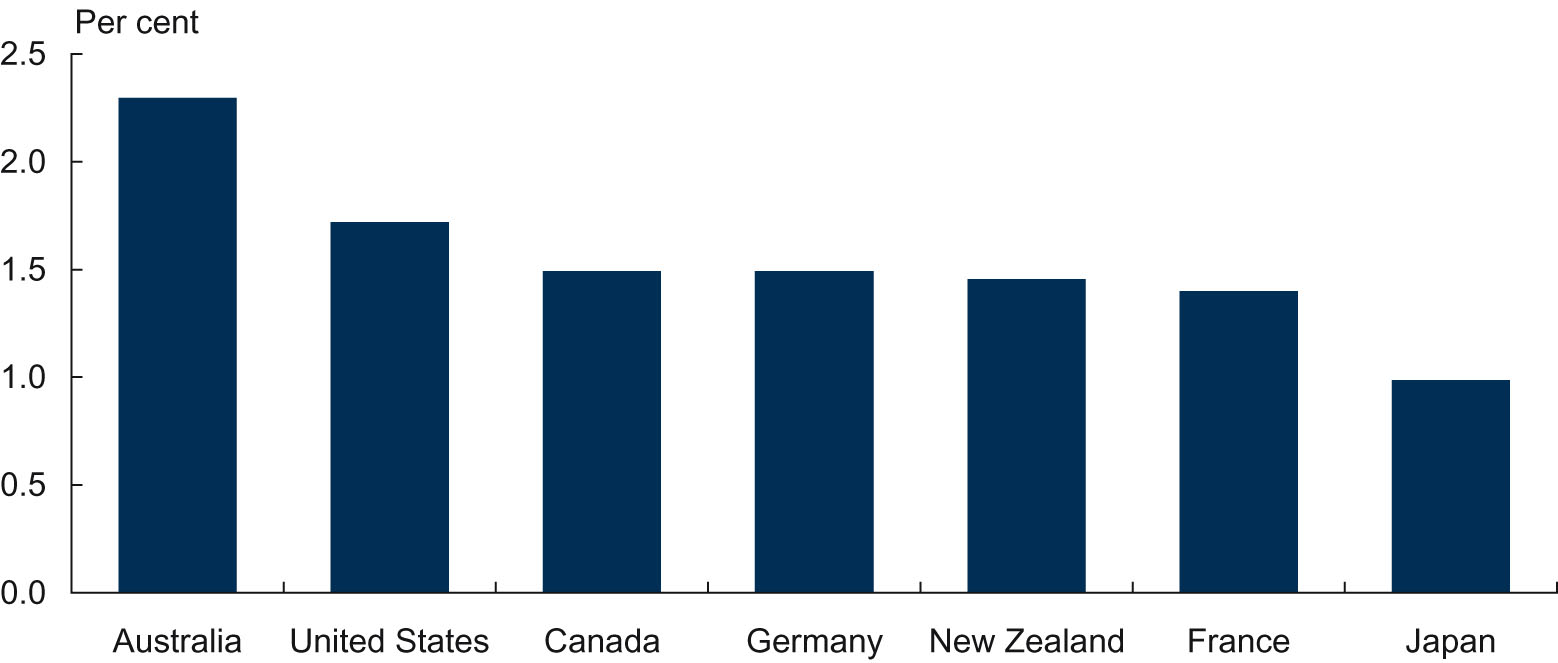
Strong annual growth in Australian living standards (measured as income per person) over the past decade Reform's rewards and future challenges |
|
|
Australia enjoyed exceptional growth in real incomes and rising living standards during the past decade. Economic growth will slow in coming decades unless evolving community attitudes and policy reforms to lift participation in the workforce and sustain high productivity growth counteract the economic effects of demographic changes. |
|
Rising living standards |
|
|
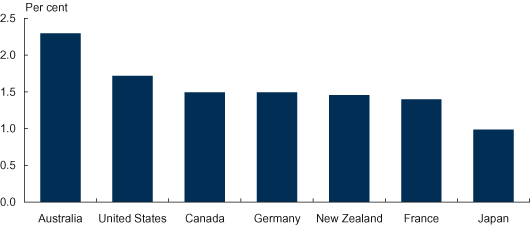
Growth in real incomes and in living standards in Australia has been exceptional over the past decade. Growth in Australia has surpassed that of many other developed countries, including the United States. In contrast, large continental European countries and Japan grew more slowly than the United States. The OECD has pointed to economic reforms as the cause of strong performance in the leading economies. Australian living standards are growing faster than countries that have not engaged in structural reforms to the same extent. But an ageing population will create challenges and will require further policy reform if rapid growth in living standards is to be maintained. |
Growth in the economy and Australian's living standards are determined by three things: the size and structure of the population, participation in the workforce and productivity. These three factors have all contributed to sustained growth in incomes and living standards. In the future, the ageing of the population will see an increasing proportion of the population move into the over–65 age bracket. There will also be a rapid rise in the 55-65 age bracket where participation in the workforce in Australia is falling. Government policies can have little effect on the age structure of the population. But, policies can, in combination with evolving community attitudes, have a significant influence on the level of participation and the rate of productivity growth. |