



Part C
agency additional estimates statements
Australian Taxation Office
Section 3: Budgeted financial
statements
The budgeted financial statements will form the basis of the financial statements that will appear in the Australian Taxation Office (ATO) 2003-04 Annual Report, and for the input into the Whole of Government Accounts. The financial statements should be read in conjunction with the accompanying notes.
Agency financial statements
Budgeted agency statement of financial performance
This statement provides the expected financial results for the ATO by identifying full accrual expenses and revenues, which highlights whether the ATO is operating at a sustainable level.
Budgeted agency statement of financial position
This statement shows the financial position of the ATO. It enables decision-makers to track the management of the ATO’s assets and liabilities.
Budgeted agency statement of cash flows
This statement identifies expected cash flows from operating activities, investing activities and financing activities.
Agency capital budget statement
This statement shows all proposed capital expenditure funded either through the Budget as appropriations or from internal sources.
Agency non-financial assets — summary of movement
This statement shows the movement in the ATO’s non-financial assets over the budget year.
Note of Administered Activity
Details of transactions administered by the ATO on behalf of the Commonwealth are shown in the following notes to the financial statements.
Note of budgeted administered financial performance
This note identifies the main revenues and expenses administered on behalf of the Government. It also discloses administered revenues from government and transfers to the Official Public Account.
Note of budgeted administered financial position
This note shows the assets and liabilities administered on behalf of the Government.
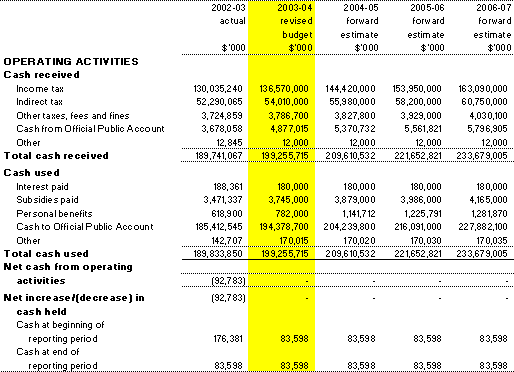
Note of budgeted administered cash flows
This note shows cash flows administered on behalf of the Government.
Table 3.1: Budgeted Agency Statement of Financial
Performance
(for the period ended 30 June)
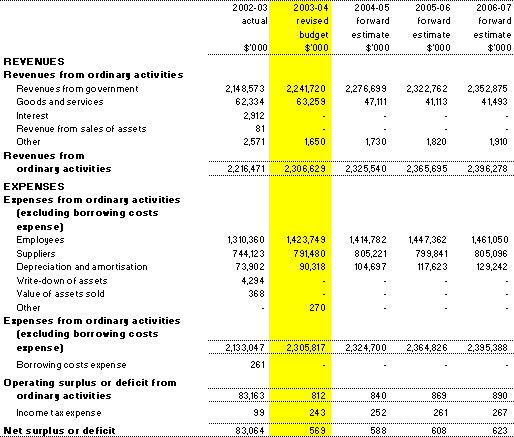
Table 3.2: Budgeted Agency Statement of Financial
Position
(as at 30 June)
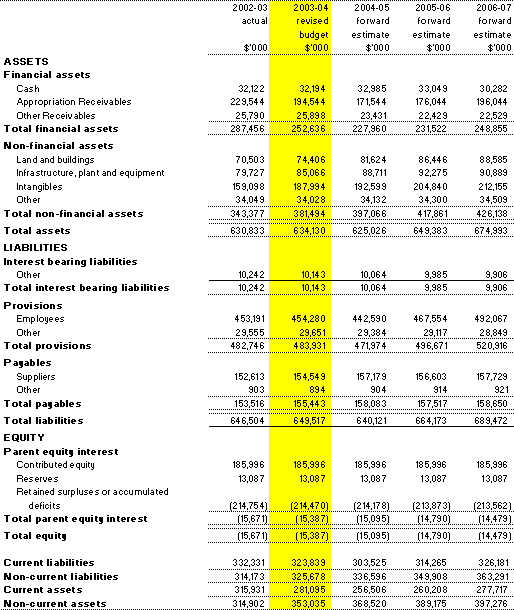
Table 3.3: Budgeted Agency Statement of Cash
Flows
(for the period ended 30 June)
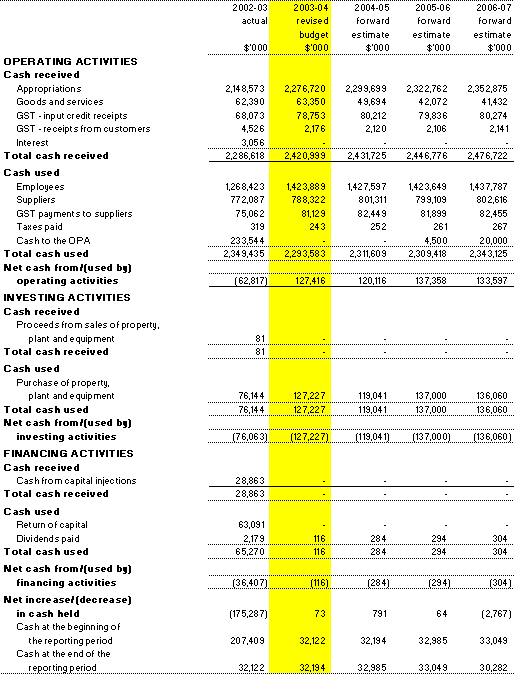
Table 3.4: Agency Capital Budget Statement
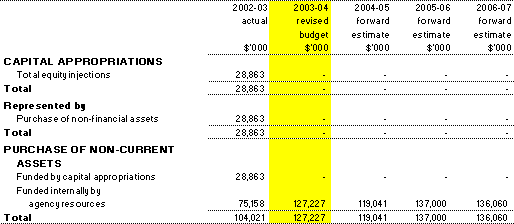
Table 3.5: Agency Non-financial Assets — Summary of Movement (Budget year 2003-04)
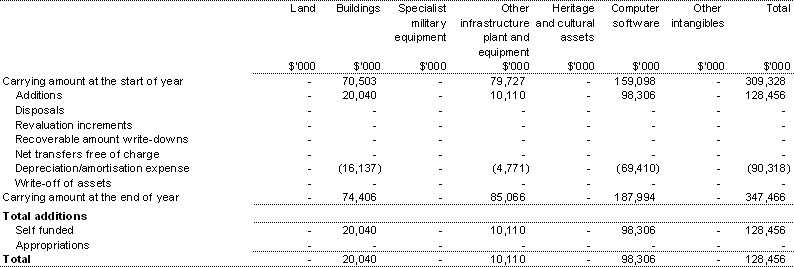
Table 3.6: Note of Budgeted Financial Performance Administered on behalf of the Government (for the period ended 30 June)
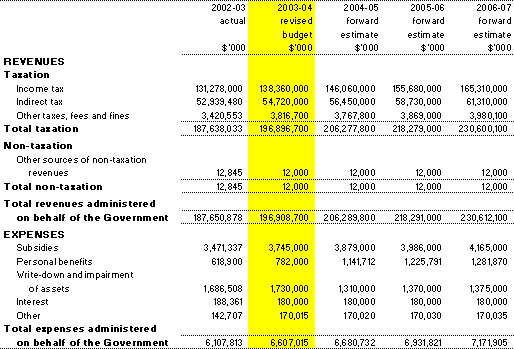
Table 3.7: Note of Budgeted Financial Position Administered on behalf of the Government (as at 30 June)
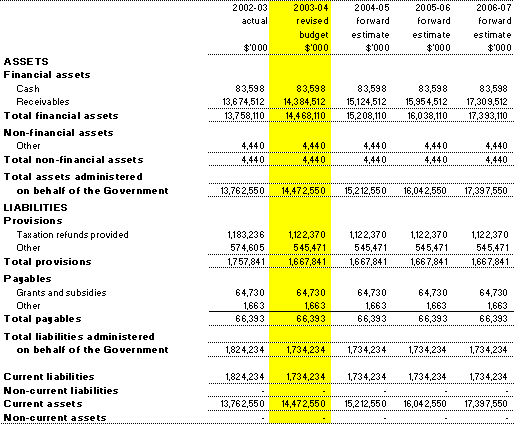
Table 3.8: Note of Budgeted Administered Cash
Flows
(for the period ended 30 June)
Notes to the financial statements
Basis of accounting
The budgeted financial statements have been prepared on an accrual basis.
Notes to the agency statements
Details of agency items in the financial statements included in Table 3.1 to 3.5 have been prepared in accordance with the requirements and guidance for the preparation of financial statements.
The budget statements and estimated forward years have been prepared to reflect the following matters.
Australian Valuation Office
The Australian Taxation Office’s agency budget statements are aggregated to include the financial operations of the Australian Valuation Office.
Cost of administering goods and services tax
Agency statements include the estimated costs of administering the goods and services tax pursuant to the ‘intergovernmental agreement on the reform of Commonwealth — state financial relations’. The GST revenue is collected on behalf of the states and territories which agree to compensate the Commonwealth for the agreed GST administration costs.
The recovery of GST administration costs are reported under the Department of the Treasury.
Notes to the administered statements
Details of administered items in the financial statements included in Tables 3.6 to 3.8 have been prepared under the Tax Liability Method (TLM) of revenue recognition, consistent with the Commonwealth’s recognition of taxation revenue. Under TLM, taxation revenue is recognised at the time a taxpayer makes a self-assessment or when an assessment of a tax liability is raised by the Australian Tax Office or the Australian Customs Service. This method retains some elements of cash revenue recognition, for example, when a cash payment occurs prior to an assessment being raised.
The budget statements and forward years have been prepared on the basis noted below and to reflect the following matters.
Recognition of taxation revenue
Since 1999-2000 administered taxation revenue has been brought to account on a year by year basis where:
- the client or the client group can be identified in a reliable manner;
- an amount of tax or other statutory charge is payable by the client or client group under legislative provisions; and
- the amount of the tax or statutory charge payable by the client or client group can be reliably measured, and it is probable that the amount will be collected.
This recognition policy does not include the following items as revenue of the period:
- estimates of future collections or refunds from individuals in respect of income tax returns to be lodged for the current financial year ended at 30 June;
- estimates of instalments of tax and final payments for companies due after 30 June;
- estimates of final amounts for petroleum resource rent tax due after 30 June; and
- actual payments for Pay As You Go, GST, excise and withholding taxes for amounts collected or withheld in June but not remitted to the Commissioner until July.
Items recognised as reductions to taxation revenue
The following items are recognised as reductions (increases) to taxation revenue and not as expense:
- refunds of revenue; and
- increase (decrease) in movement of provision for credit amendments.
Discontinuation of the Agency Banking Incentive Scheme
Previously, under the Agency Banking Incentive Scheme (ABIS), the ATO could invest surplus cash balances in term deposits with the Reserve Bank of Australia to earn interest. As a result of the discontinuation of ABIS from 1 July 2003, the ATO ceased to earn interest on cash holdings from 2003-04 onwards.
‘As needs’ cash drawdown arrangements
As part of the Budget Estimates and Framework Review (BEFR) recommendations, the ATO moved to an ‘As needs’ drawdown arrangement from 1 July 2003. The ATO now operates within an agreed working cash balance of $33 million. Cash in excess of that balance is returned to the Official Public Account and recognised as a receivable.