




Section 2: Outcomes and outputs information
Outcomes and output groups
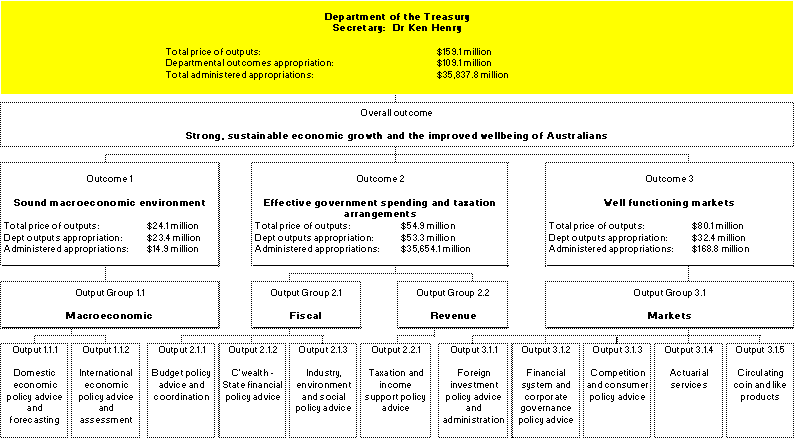
The map on the following page shows the relationship between government outcomes and the contributing outputs for the Department of the Treasury. Financial details for Outcomes 1, 2 and 3, by output, appear in Tables 2.1.1, 2.1.2 and 2.1.3 respectively, while non-financial information for the three outcomes appear in Tables 2.2.1, 2.2.2 and 2.2.3 respectively.
Output cost attribution
The Department of the Treasury uses a process of cost allocation to estimate the costs of each output identified in Table 2.1.1, Table 2.1.2 and Table 2.1.3.
The cost of each output is comprised of direct and indirect costs. Direct costs are assigned to outputs according to detailed cost profiles. Indirect costs that comprise corporate and overhead items such as information technology, accommodation and human resource management are allocated to outputs based on a consumption (cost driver) basis.
Map 2: Outcomes and output groups
Changes to outcomes and outputs
There has been no change to the Department of the Treasury’s outcomes or outputs structure since the 2003-04 Budget.
Outcome 1 — Description
Sound macroeconomic environment
A sound macroeconomic environment is an essential foundation for strong sustainable economic growth and the improved wellbeing of Australians. It is characterised by stable prices, low interest rates, healthy economic and employment growth, and a sustainable external position.
As many influences on macroeconomic outcomes are beyond the control of the Australian Government, policy aims to improve the prospects for the Australian economy rather than to target specific outcomes or major economic indicators. Success is judged more by medium to long-term performance relative to Australia’s past and to other countries, rather than by particular results in any year.
Measures affecting Outcome 1
Australia-United States Free Trade Agreement — realising competition and financial sector integration benefits
The Government will provide $1.7 million over four years to enable the Department of the Treasury to fulfil its commitments and obligations under the financial services and competition-related matters chapters of the Australia-United States Free Trade Agreement.
The additional resources will enable Australian officials to participate in ongoing consultation processes, including relevant working groups, to reduce restrictions and costs faced by Australians when attempting to access United States markets.
East Asia — promoting economic security
The Government will provide funding of $3.4 million over four years to enhance Australia’s efforts to promote economic growth and security in East Asia.
The initiative will increase Australia’s collaborative efforts with key partners in East Asia aimed at improving regional governance, strengthening financial systems and raising regional living standards. Funding has also been provided to host regular economic fora for discussion of medium-term macroeconomic challenges that will shape the region’s growth.
South Pacific economic governance and stabilisation
The Government will provide $14.9 million over five years (including $1.7 million in 2003-04) to the Departments of Finance and Administration and the Treasury to fund the establishment and operation of their Pacific Support Units.
Funding of $9.2 million will enable the Department of the Treasury to provide analytical, policy and administrative support to Treasury officers undertaking deployment in the Pacific region as part of the whole-of-government approach to utilise Australian expertise to improve governance, security and economic reform in Pacific Island countries.
Funding of $5.7 million will enable the Department of Finance and Administration to provide effective support to in-country operators in Papua New Guinea and other Pacific Island countries in the form of policy and administrative support, budget technical assistance and monitoring, and reporting and financial management assistance.
In-country resources from both agencies, which currently form the core of the economic and budget stabilisation team in the Solomon Islands and Papua New Guinea, are funded by Australian Agency for International Development.
Outcome 1 — Resourcing
Table 2.1.1 shows how the 2004-05 appropriations translate to total resourcing for Outcome 1, including administered expenses, revenues from government (appropriations), revenue from other sources, and the total price of outputs.
Table 2.1.1: Total resources for Outcome 1
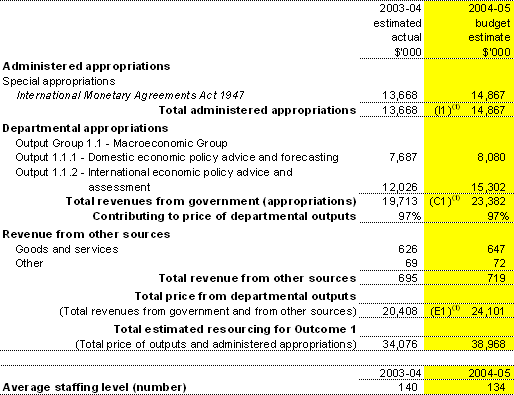
- C1, E1 and I1 show the links back to Table 1.1.
Outcome 1 — Contribution of outputs
The Department of the Treasury aims to contribute to a sound macroeconomic environment by monitoring and assessing economic conditions and prospects, both in Australia and overseas, and by providing advice on the formulation and implementation of effective macroeconomic policy, including monetary and fiscal policy.
The Department of the Treasury provides advice on advancing Australia’s interests at fora such as the Group of Twenty and the Manila Framework Group, and international institutions such as the World Bank, International Monetary Fund, Asian Development Bank and the Organisation for Economic Cooperation and Development, and in the Asia Pacific Economic Cooperation process. Complementing these multilateral activities, the Department of the Treasury is engaged in bilateral policy dialogue and cooperation with counterparts in the Asia-Pacific region. The Department of the Treasury also provides bilateral assistance in support of economic reform and strengthened economic and fiscal governance, in particular to Papua New Guinea and the Solomon Islands. Through these avenues, Australia is making a significant contribution in efforts to sustain economic stability and growth both in our region and internationally.
The effectiveness of the Department of the Treasury’s contribution to a sound macroeconomic environment is judged primarily by feedback from Treasury portfolio Ministers on the quality and relevance of Treasury’s advice.
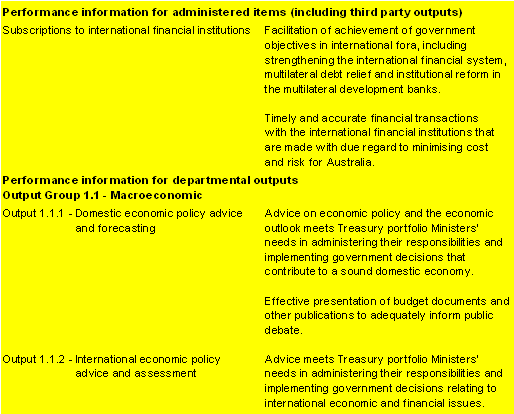
Performance information for Outcome 1
Table 2.2.1: Performance information for Outcome 1
Evaluations
Feedback will be sought from key clients on a regular basis on the effectiveness of the Department of the Treasury’s policy advice.
Results of evaluations will be presented, as appropriate, in The Treasury Annual Report 2004-05.
Outcome 2 — Description
Effective government spending and taxation arrangements
Government spending and taxation arrangements contribute to the overall fiscal outcome but also influence strong sustainable economic growth and the improved wellbeing of Australians.
Spending measures should be effective in meeting their stated objectives, minimise behavioural distortions and deliver significant economic and other benefits compared with costs, thus contributing to the wellbeing of Australians.
Taxation measures should meet revenue objectives (or other public policy objectives) and have regard to the principles of economic efficiency, horizontal and vertical equity and transparency whilst minimising compliance and administrative costs. By meeting these objectives, taxation measures contribute to wellbeing, either directly or by providing the revenue base to finance government services.
Treasury provides policy advice to portfolio Ministers in order to promote Government decisions that further these objectives.
Measures affecting Outcome 2
Australian Capital Territory — Special Revenue Assistance
The Government has decided that the ACT’s fiscal needs should now be considered in the same way as other States and Territories, that is, through the Commonwealth Grants Commission’s calculation of GST relativities. Accordingly, the Government will cease providing Special Revenue Assistance to the ACT from 2005-06.
The ACT will continue to receive funding to assist the ACT Government to meet the municipal costs flowing from Canberra’s role as the national capital.
Commonwealth-State Financial Relations — information for the public
The Government will provide $3 million in 2003-04 to the Department of the Treasury to deliver a communications package which will provide the public with information on Australian Government payments to the States and Territories.
Demographics — discussion paper
The Government will provide $0.5 million in 2003-04 to the Department of the Treasury to fund the publication of the discussion paper on Australia’s Demographic Challenges, released by the Treasurer on 25 February 2004. The funding will also enable public consultations on the issues raised in the discussion paper to be undertaken in each State.
As part of the 2002-03 Budget, the Government released the Intergenerational Report 2002-03 which projected that, in the absence of policy measures being taken, total expenditure by the Australian Government would significantly exceed the amount raised in taxes in 40 years’ time, as a result of ageing and other factors.
Department of the Treasury — secretariat to the Review of Horizontal Fiscal Equalisation Methodology
The Government will provide $1.3 million in 2004-05 to the Department of the Treasury for a secretariat to the Review of Horizontal Fiscal Equalisation Methodology.
The majority of the States and Territories, with the support of the Australian Government, have agreed to examine aspects of the Commonwealth Grants Commission’s methodology for Horizontal Fiscal Equalisation, and to do so while maintaining the underlying principles of equalisation.
Small business annual payment and lodgement of GST — compensating the States for revenue forgone
The Government will fully compensate the States for the revenue impact of the decision to allow taxpayers that are voluntarily registered for GST to pay and report GST annually. Compensation in 2004-05 will cost $330 million. Future compensation will be subject to further negotiation with the States, and provisions have been made in the Contingency Reserve.
This measure will reduce compliance costs for up to 740,000 small businesses and up to 30,000 non-profit organisations. This compensation will be provided to ensure that the Government receives the States’ agreement for this measure to proceed.
See also the related revenue measure titled Small Business — annual payment and lodgement in Appendix A of Budget Paper No. 3.
Outcome 2 — Resourcing
Table 2.1.2 shows how the 2004-05 appropriations translate to total resourcing for Outcome 2, including administered expenses, revenues from government (appropriations), revenue from other sources, and the total price of outputs.
Table 2.1.2: Total resources for Outcome 2
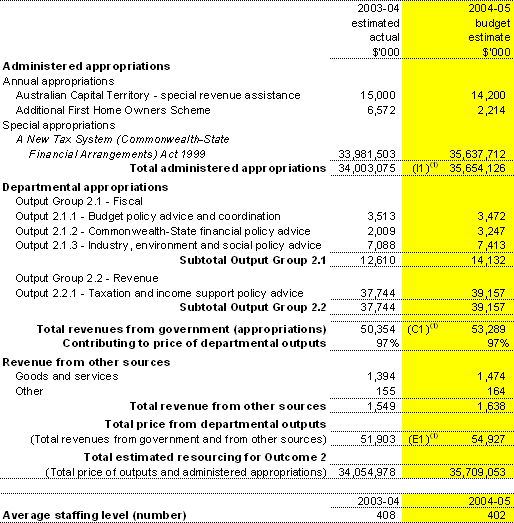
- C1, E1 and I1 show the links back to Table 1.1.
Outcome 2 — Contribution of outputs
Effective government spending and taxation arrangements are crucial to achieving the Australian Government’s objectives for the economy and hence the wellbeing of Australians. Ongoing advice to the portfolio Ministers from the Department of the Treasury assists in formulating, implementing and explaining government spending and taxation decisions.
More specifically, in the coming year the Department of the Treasury will provide advice on:
- budget policies, including arrangements for the distribution of resources between the Commonwealth and other levels of government, which are consistent with sustainable public finances and macroeconomic objectives;
- government expenditure programmes, with a focus on those programmes with significant economic or budgetary implications;
- policies relating to the Australian Government’s debt portfolio and the management of the portfolio;
- taxation policies and legislative design proposals which contribute to the reform of the Australian taxation system in terms of efficiency, equity and transparency whilst minimising compliance and administrative costs;
- policies to promote the efficient and sustainable use of resources and to improve the competitiveness and productivity of Australian industries, thereby promoting higher levels of sustainable economic growth; and
- development and implementation of policies relating to retirement incomes, including superannuation and the age pension, and other income support arrangements intended to promote the wellbeing of Australians.
In 2004-05, the Department of the Treasury will devote significant resources to:
- production of the 2004-05 Mid-Year Economic and Fiscal Outlook, 2005-06 Budget, and Pre-Election Economic and Fiscal Outlook;
- providing advice on those issues identified by the Australian Government as its key strategic priorities (including demographic changes, work and family policies, health, education, energy, defence and national security, science and innovation, the environment and rural and regional policy);
- public consultation on the Australian Government’s Discussion Paper Australia’s Demographic Challenges;
- a review, in conjunction with the States and Territories, to consider the simplification of horizontal fiscal equalisation principles;
- implementing decisions arising from the Australian Government’s Review of the System of Self Assessment for Income Tax Returns;
- improving processes and outputs in the development of advice on taxation and superannuation policies (including consultation processes and design of legislation);
- continuing to implement decisions arising from the review of international taxation; and
- further stages in legislation relating to the taxation of financial arrangements, the definition of charities, penalties for tax scheme promoters, foreign resident withholding and a substantial programme of other tax legislation.
The effectiveness of the contribution of these outputs to the outcome will be gauged primarily in terms of feedback from Treasury portfolio Ministers as to whether policy advice and new taxation legislation meets their needs in formulating, implementing and explaining government spending and taxation decisions.
Performance information for Outcome 2
Table 2.2.2: Performance information for Outcome 2
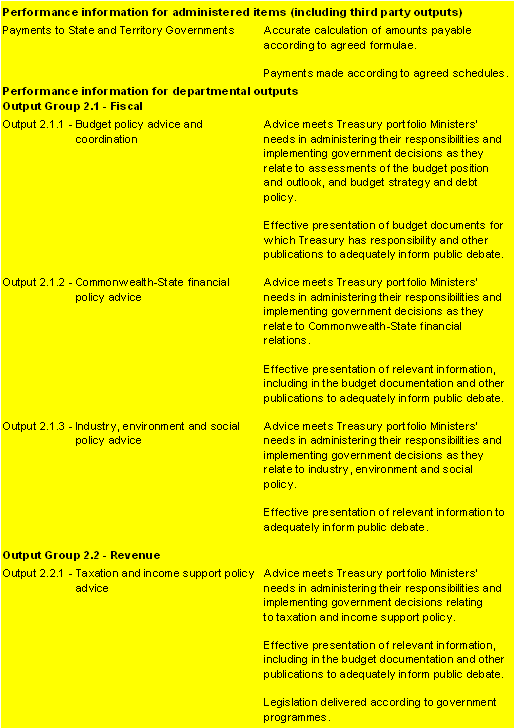
Evaluations
Feedback will be sought from key clients on a regular basis on the effectiveness of policy advice and payments to State and Territory Governments. Results of evaluations will be presented, as appropriate, in The Treasury Annual Report 2004-05.
Outcome 3 — Description
Well functioning markets
Well functioning markets contribute to high sustainable economic and employment growth and the wellbeing of Australians, by enabling resources to flow to those parts of the economy where they can be used most productively. Well functioning markets operate when investors and consumers have confidence and certainty about the regulatory framework, and are able to make decisions that are informed and free of market distortions and impediments.
The Department of the Treasury provides advice on policy processes and reforms that promote a secure financial system and sound corporate practices, remove impediments to competition in both product and services markets, and safeguard the public interest in areas such as consumer protection and foreign investment.
Measures affecting Outcome 3
Financial Reporting Council — improved accounting and auditing standards-setting arrangements
The Government will provide $3.4 million in 2004-05 as part of the implementation of Part 9 of the Corporate Law Economic Reform Programme (CLERP 9). These funds will support the Financial Reporting Council in its expanded role of oversighting auditor independence and the audit standard setting arrangements, the establishment of the Financial Reporting Panel and the reconstitution of the Auditing and Assurance Standards Board.
The Financial Reporting Panel will be established to provide a non-binding mechanism for the resolution of disputes between the Australian Securities and Investments Commission and companies, as an alternative to legal proceedings, in the application of accounting standards. The Auditing and Assurance Standards Board will be reconstituted to provide a statutory basis for auditing standards-setting.
Provision has also been made in the contingency reserve for the forward years, subject to the level of ongoing funding for this measure being determined in the 2005-06 Budget.
Royal Australian Mint — additional capital funding
The Government will provide $2.5 million in 2007-08 to fund the final year of the Royal Australian Mint’s capital equipment replacement programme. The Mint has previously received funding of $9.5 million for the first four years of a five-year capital programme to replace its antiquated coin producing equipment.
Outcome 3 — Resourcing
Table 2.1.3 shows how the 2004-05 appropriations translate to total resourcing for Outcome 3, including administered expenses, revenues from government (appropriations), revenue from other sources, and the total price of outputs.
Table 2.1.3: Total resources for Outcome 3
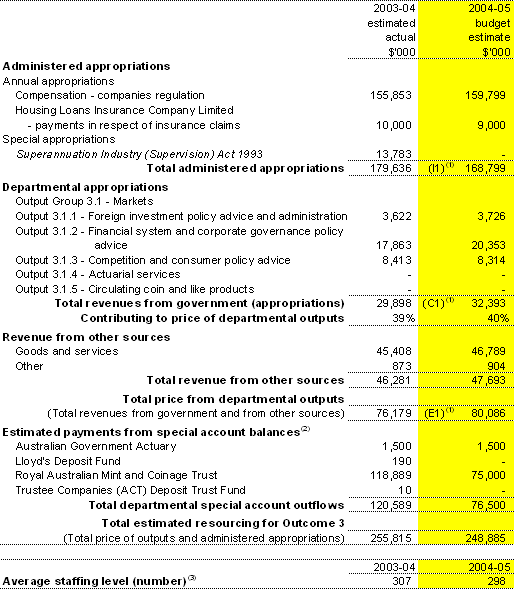
- C1, E1 and I1 show the links back to Table 1.1.
- Further details on special accounts appear in Table 1.6.
- Average staffing level includes the Royal Australian Mint.
Outcome 3 — Contribution of outputs
The Department of the Treasury provides advice to portfolio Ministers to assist them carry out their responsibilities in formulating, implementing and explaining the policies needed to achieve well functioning markets — markets that are competitive, efficient, informed, fair and transparent.
Advice is provided to the Australian Government on foreign investment proposals and on general foreign investment policy matters, including representing Australia’s foreign investment policy and negotiating position on international investment policy issues. In addition, the Department of the Treasury promotes awareness and understanding of the Australian Government’s foreign investment policy in the community and in the business sector, both in Australia and overseas, and monitors compliance with policy.
In relation to the financial system, the Department of the Treasury provides policy advice on the legislative framework and more complex operational matters and policy development. This includes oversight for the prudential supervision and conduct of financial institutions, financial markets and service providers (including in the areas of banking, insurance and superannuation) that are supervised by the Australian Prudential Regulatory Authority (APRA) and the Australian Securities and Investments Commission. The Department of the Treasury monitors issues and developments in the financial services sector, and provides advice on their policy implications. In 2004-05, the Department of the Treasury will continue to provide advice on policy issues emerging in the general insurance sector, including the recommendations of the HIH Royal Commission and implementation of the Medical Indemnity (Prudential Supervision and Product Standards) Act 2003.
Other policy priorities will include further reforms to the general insurance regime and harmonisation of APRA’s enforcement powers across supervised industries. There will also be continuation of amendments to Commonwealth legislation to support State and Territories insurance liability law reform. Participation will continue in the Insurance Issues Working Group of the Heads of Treasuries, to progress reforms to improve the availability and affordability of various classes of insurance.
The Department of the Treasury will provide policy advice to the Australian Government on a range of initiatives to more closely integrate the Australian and New Zealand markets, including in the areas of prudential supervision of banking, consumer and competition law and administration, fundraising and accounting standards.
Policy advice relating to the HIH Assistance Scheme will continue to be provided to the Australian Government. In addition, the ongoing involvement in relation to terrorism replacement insurance will continue, through the provision of policy advice and technical support to the Australian Reinsurance Pool Corporation, in its initial stages.
The Department of the Treasury will continue to provide the Executive for the Takeovers Panel, to promote efficiency and shareholder protection in the market for control of Australian companies.
In the coming year, the Department of the Treasury will continue to oversight the new system of financial services regulation. The legislation introducing the new system commenced full operation on 11 March 2004. The Department of the Treasury will continue to develop reforms to ensure that Australia’s regulatory framework remains at the forefront of world’s best practice.
Legislation implementing reforms covering independence of auditors, legislative backing for auditing standards as well as corporate governance more broadly was introduced into the Parliament in December 2003.
Secretariat services will continue to be provided to the Financial Reporting Council (FRC) which oversees Australia’s accounting standard setting arrangements. The FRC will have a future role oversighting audit standard setting and auditor independence issues following the implementation of proposals to strengthen corporate reporting and disclosure under CLERP 9.
There will be ongoing involvement in progressing international cooperation in financial market regulation, corporate governance, financial reporting and corporate insolvency. Priority will be given to bilateral efforts to promote the recognition of national regulatory frameworks covering financial products and service providers.
The Department of the Treasury provides advice on competition and consumer policy matters and advises on legislative amendments to the Trade Practices Act 1974. In addition, the Department of the Treasury participates with other government departments and agencies in formulating policy for the progress of structural reform in key sectors of the economy, including energy, transport and communications.
Consumer policy advice will focus on regulatory and non-regulatory options to promote consumer welfare. Secretariat services will be provided to the Ministerial Council for Consumer Affairs, the Commonwealth Consumer Affairs Advisory Council and the Minister’s Electronic Commerce Expert Group. In the area of product safety, regulatory powers under the Trade Practices Act 1974 will be appropriately used, relevant voluntary safety standards will be developed and the removal of unsafe products from the market will be facilitated.
The Department of the Treasury will continue to provide secretariat services to support the Consumer and Financial Literacy Taskforce which was established in February 2004 to develop a national strategy for consumer information provision in Australia. The taskforce includes high profile representation from the public, private and community sectors and is due to report to government in August 2004.
The Australian Government Actuary (AGA) will provide services relating to financial matters: for example, benefits depending on contingencies such as injury, death or retirement. The AGA also assists departments and agencies with policy development in areas where it has specialist expertise.
The Royal Australian Mint (the Mint) has responsibility for producing circulating and numismatic coin for Australia and maintaining the National Coin Collection and promoting public understanding about the cultural and historical significance of coins.
In 2004-05 the Mint will be continuing its capital equipment upgrade commenced in 2003-04. The Department of the Treasury will continue to chair the Mint Advisory Board and also provide advice relating to the currency system.
PERFORMANCE INFORMATION FOR OUTCOME 3
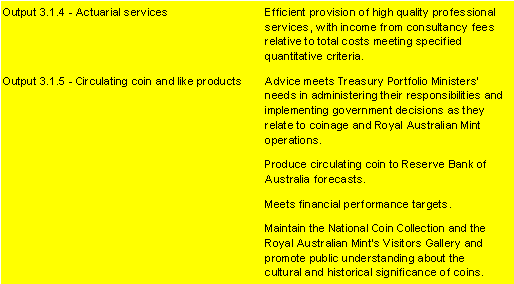
Table 2.2.3: Performance information for Outcome 3
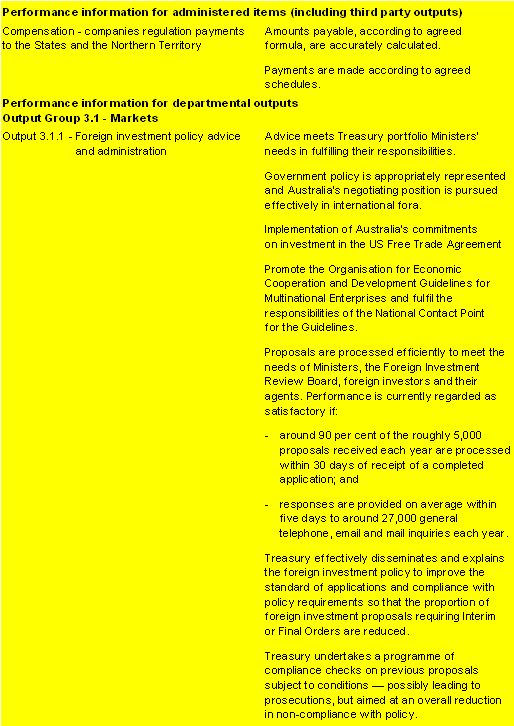
Table 2.2.3: Performance information for Outcome 3 (continued)
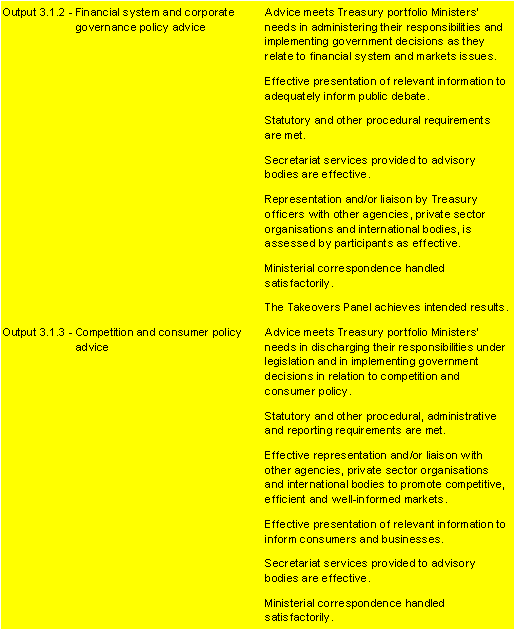
Table 2.2.3: Performance information for Outcome 3 (continued)
Evaluations
Feedback will be sought from key clients on a regular basis on the effectiveness of policy advice. Ongoing evaluation will be conducted of foreign investment policy administration in the context of statutory deadlines and target response rates. Results of the evaluations will be presented, as appropriate, in The Treasury Annual Report 2004-05.