Appendix F: Tax expenditures
This appendix contains an overview of the cost of tax expenditures provided to taxpayers through the tax system.
Tax expenditures provide a benefit to a specified activity or class of taxpayer. They can be delivered as a tax exemption, tax deduction, tax offset, reduced tax rate or deferral of a tax liability. The Government can use tax expenditures to allocate resources to different activities or taxpayers in much the same way that it can use direct expenditure programmes. For this reason, and noting their direct impact on the fiscal balance, these concessions are generally called tax expenditures.
The data reported in this appendix are consistent with tax expenditure data reported in the 2004 Tax Expenditures Statement published in January 2005. Several considerations need to be taken into account when analysing tax expenditure data (see section 2.1 of the 2004 Tax Expenditures Statement for a detailed description).
Table F1 contains estimates of total tax expenditures for the period 2001‑02 to 2008-09.
Table F1: Aggregate tax expenditures
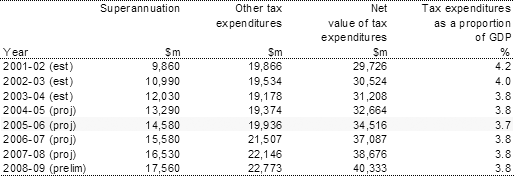
Tax expenditures are projected to decline as a proportion of GDP from 4.2 per cent in 2001‑02 to around 3.8 per cent in 2008-09. The largest single contributing factor to the decline in tax expenditures is the removal of accelerated depreciation under The New Business Tax System.
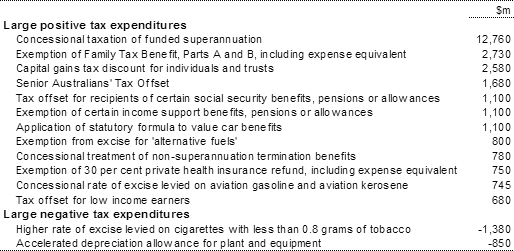
Table F2 is a list of the major tax expenditures in 2003-04.
Table F2: Major tax expenditures 2004-05