



State general government sector fiscal balance
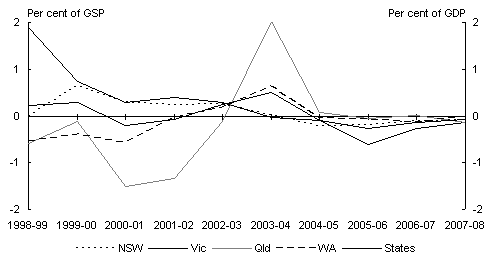
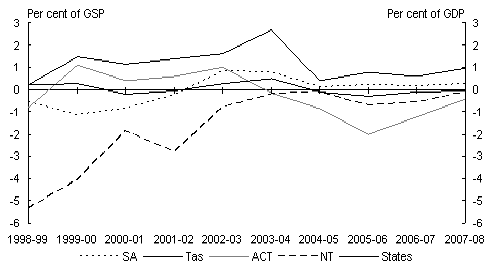
The aggregate state fiscal balance for the general government sector is estimated to be -0.3 per cent of GDP in 2005-06, slightly lower than in 2004-05 due to the lower operating balances of the states (Chart 5).
The fiscal balance measures, in accrual terms, the gap between government savings plus net capital transfers, and investment in non-financial assets. A fiscal surplus indicates that a government is lending to other sectors. A fiscal deficit indicates that a government is borrowing.
The aggregate state fiscal balance is expected to slowly improve over the forward years, with most states either moving towards or maintaining a fiscal surplus.
Chart 5: Individual state general government sector fiscal balance(a)(b)
- The ABS is currently reviewing accrual time series data, in consultation with all Treasuries, as accrual reporting is now established in all jurisdictions. Improvements in the quality of the time series data have resulted in some changes to these series. Further revisions are expected over the next year.
- States’ fiscal balances are expressed as a percentage of GSP (left hand axis) and the states’ aggregate fiscal balance is expressed as a percentage of GDP (right hand axis).
Sources: ABS Cat. No. 5512.0, state 2004-05 mid-year reports, Victoria, Australian Capital Territory and Northern Territory 2005-06 Budgets and Treasury estimates.
Trends in the aggregate fiscal balance for state/local general government, public non-financial corporations and the non-financial public sector are presented in Tables 1, 2 and 3, Statement 12, Budget Paper No. 1.