



Chapter Four: East Asia2
| Estimated total ODA to East Asia in 2005–06 | $344.3 million |
East Asia regional development indicators
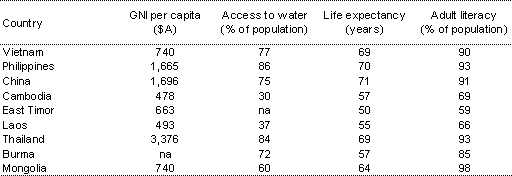
Source: GNI per capita: World Development Indicators, World Bank, 2003; other indicators: Human Development Report, UNDP, 2004.
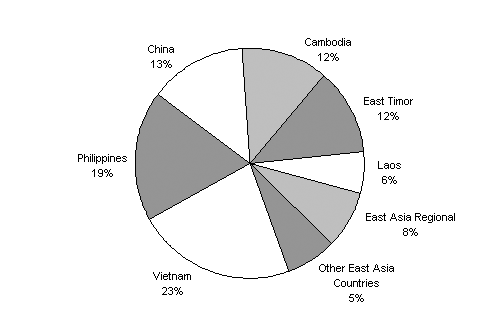
Diagram 9: Estimated Australian ODA to East Asia by country 2005–06
East Asia is returning to useful levels of economic growth, having recovered from the 1997 Asian financial crisis and other shocks such as the SARS and Avian Influenza outbreaks of 2004. According to the World Bank, East Asian growth topped 7 per cent in 2004. This growth has brought impressive reductions in poverty, with over 50 million people lifted out of poverty in 2003 alone.
Despite these successes, East Asia’s development challenges remain extensive. Over 280 million people still live in poverty, on less than US$1 per day. Moreover, benefits from economic growth have not been shared equally around the region. While parts of China, Thailand, and Vietnam have been particularly successful in achieving rapid economic growth, other parts have not performed so well. While Cambodia has shown some progress, Burma remains disengaged from the world economy, and Laos continues to lag behind. The Philippines has experienced reasonably rapid growth by its own standards, but against a backdrop of significant ongoing problems.
Many of East Asia’s development challenges are regional in nature. Regional trade, investment, economic integration, and economic governance are high priorities. Transboundary concerns including HIV/AIDS, communicable diseases, people trafficking, drugs, and security are also important.
East Asia’s continued rapid development is of great importance to Australia. Australia’s regional and bilateral relationships with East Asian countries are amongst our most politically and economically significant. Regional economic, security and transboundary issues also impact directly upon Australia’s national interests. Mutual national interest underpins much of Australia’s development cooperation with East Asian partners.
2 Note that in previous Budget Statements, ‘East Asia’ included Indonesia. In this 2005–06 Statement, Indonesia is covered in a separate chapter.