


GST windfall to drive further tax reform
All GST is paid to the states, providing them with a secure, growing and efficient revenue base.
The GST was intended to replace nine inefficient state taxes. By 2001-02, financial institutions duty, quoted marketable securities duty and bed tax were abolished. On 1 July 2005, debits tax will be abolished. (NSW abolished this tax in 2002.) The abolition of debits tax will save taxpayers over $1 billion in 2005-06.
The Australian Government has called on the states to eliminate the remaining business stamp duties listed in the Intergovernmental Agreement, from 1 July 2006.
Even after these taxes are abolished, the states will continue to enjoy significant GST windfall gains of around $9 billion from 2004-05 to 2009-10.
Six of the eight jurisdictions have responded to the Government’s proposal with their own timetable for the abolition of the taxes, and the Government is considering its response to them.
States better off
In 2005-06, every state will receive more revenue than it would have received had the Government not implemented tax reform. Subject to the Intergovernmental Agreement, the states can use their GST revenue to fund services such as hospitals, schools and police, and to reduce state taxes.
Even after the abolition of debits tax, the states will receive an additional $1.5 billion in 2005-06 because of tax reform.
- $60 million more for NSW
- $199 million more for VIC
- $595 million more for QLD
- $230 million more for WA
- $166 million more for SA
- $98 million more for TAS
- $54 million more for the ACT
- $138 million more for the NT
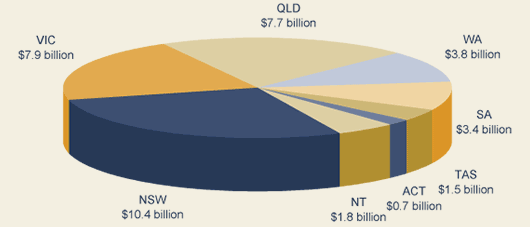
More than $37 billion in GST revenue to be provided to the states in 2005-06
24 2005-06 Budget Overview