


Section 3: Budgeted financial statements
A brief analysis of the Royal Australian Mint’s (the Mint) budgeted financial statements is provided below. The budgeted financial statements will form the basis of the financial statements that will appear in the 2005-06 Annual Report.
Analysis of budgeted financial statements
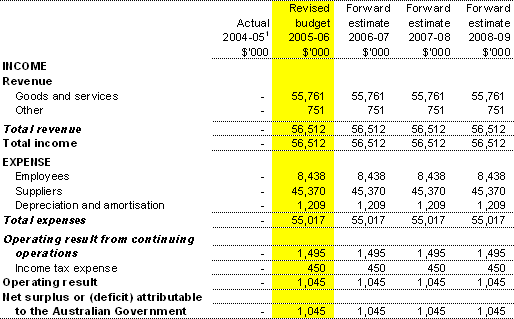
In the income statement the Mint has budgeted for a profit of $1.1 million in 2005-06. Income from the sales of numismatic coin and like product is expected to remain steady in the outyears.
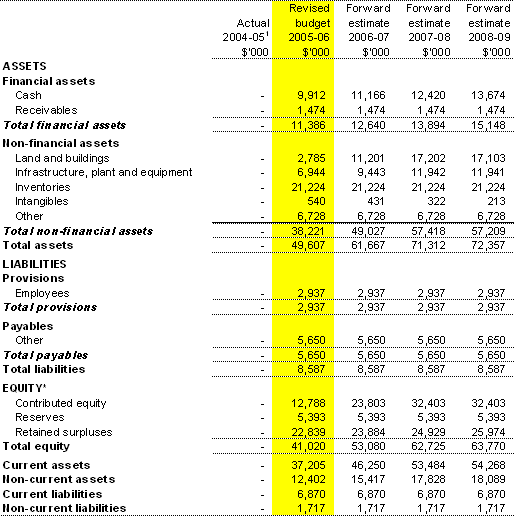
The balance sheet provides a consistent picture between the budget and previous financial years (as consolidated into Treasury’s annual financial statements). The net asset position is expected to increase from previous financial years (as consolidated into Treasury’s annual financial statements) due to the replacement of old plant and equipment, for which the Mint received capital appropriation over five years.
Budgeted financial statements
Departmental financial statements
The Mint has a sound financial position and currently has sufficient cash to fund ongoing provisions and payables, and asset replacements, as they fall due.
Budgeted departmental income statement
This statement provides a picture of the expected financial results for the Mint by identifying full accrual expenses and revenues, which indicates the sustainability of the Mint’s finances.
The Mint is budgeting towards an operating result of a profit of $1.1 million.
Budgeted departmental balance sheet
This statement shows the financial position of the Mint. It helps decision-makers to track the management of assets and liabilities.
Budgeted departmental statement of cash flows
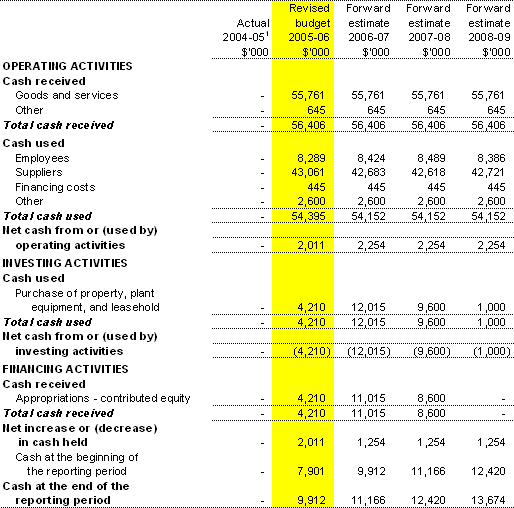
Budgeted cash flows, as reflected in the statement of cash flows, provide important information on the extent and nature of cash flows by categorising them into expected cash flows from operating activities, investing activities and financing activities
Departmental statement of changes in equity — summary of movement
Shows the budgeted movement in equity, from the operating result, changes in revaluations and injections of equity from capital appropriations.
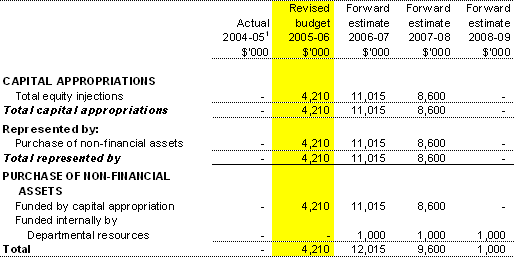
Departmental capital budget statement
Shows all planned departmental capital expenditure, whether funded through capital appropriations for additional equity, or funded from internal sources.
Departmental property, plant, equipment and intangibles — summary of movement
Shows budgeted acquisitions and disposals of non financial assets during the Budget year.
Schedule of administered activity
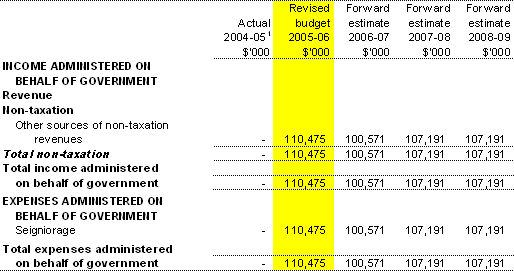
Schedule of budgeted income and expenses administered on behalf of government
This schedule identifies the main revenues and expenses administered on behalf of the Australian Government.
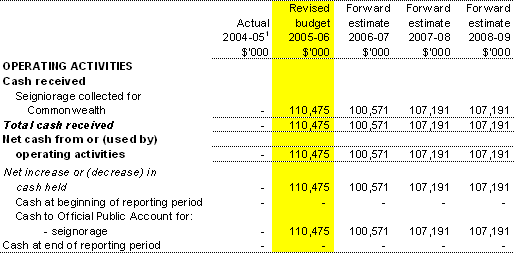
Schedule of budgeted administered cash flows
This schedule identifies the cash flows administered on behalf of the Australian Government.
Table 3.1: Budgeted departmental income statement (for the period ended 30 June)
1 Actual results for the Mint were consolidated as part of Treasury’s financial statements.
Table 3.2: Budgeted departmental balance sheet (as at 30 June)
* 'Equity' is the residual interest in assets after deduction of liabilities.
1 Actual results for the Mint were consolidated as part of Treasury’s financial statements.
Table 3.3: Budgeted departmental statement of cash flows (for the period ended 30 June)
1 Actual results for the Mint were consolidated as part of Treasury’s financial statements.
Table 3.4: Departmental statement of changes in equity — summary of movement (Budget year 2005-06)
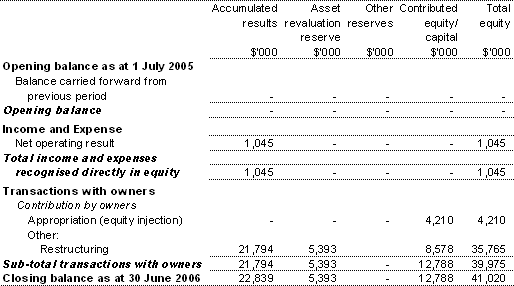
Table 3.5: Departmental capital budget statement
1 Actual results for the Mint were consolidated as part of Treasury’s financial statements.
Table 3.6: Departmental property, plant, equipment and intangibles — summary of movement
(Budget year 2005-06)
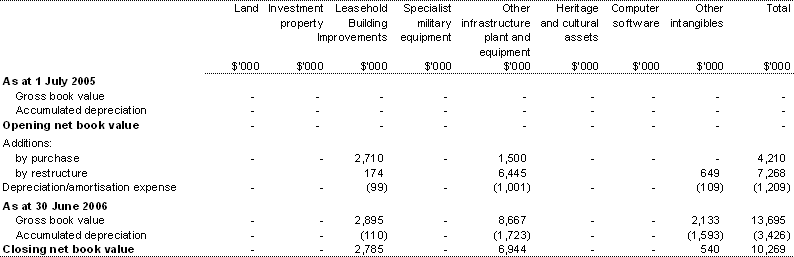
Table 3.7: Schedule of budgeted income and expenses administered on behalf of government (for the period ended 30 June)
1 Actual results for the Mint were consolidated as part of Treasury’s financial statements.
Table 3.8: Schedule of budgeted assets and liabilities administered on behalf of government (as at 30 June)
This table is not applicable to the Mint.
Table 3.9: Schedule of budgeted administered cash flows (for the period ended 30 June)
1 Actual results for the Mint were consolidated as part of Treasury’s financial statements.
Table 3.10: Schedule of administered capital budget
This table is not applicable to the Mint.
Table 3.11: Schedule of administered property, plant, equipment and intangibles — summary of movement (Budget year 2005-06)
This table is not applicable to the Mint
Notes to the financial statements
Departmental
Basis of accounting
The Mint’s budgeted statements have been prepared on an accrual basis and in accordance with historical cost convention, except for certain assets which are at valuation.
Revenues and expenses are recognised into the operating statement when and only when the flow or consumption or loss of economic benefits has occurred and can be reliably measured.
Budgeted departmental income statement
Revenues
Revenue is derived from the sale of numismatic coin, the production of circulating coin and the sale of coin like products. The amount of revenue earned in any one year is dependent upon the demand for such products by the coin collecting market.
Expenses
Employees
This includes wages and salaries, superannuation, provision for annual leave and long service leave and workers compensation.
Depreciation and amortisation
Depreciable assets are written off over their estimated useful lives. Depreciation is calculated using the straight-line method.
Budgeted departmental balance sheet
Non-financial assets
Inventory
Inventories held for resale are at the lower of cost and net realisable value. Work in progress and finished goods are brought to account to include direct costs and a proportion of direct labour and overhead. All precious metals are purchased and brought to account at cost and expensed as used.
Provisions and payables
Employees
The liability for employee entitlements includes provision for annual leave and long service leave. No provision has been made for sick leave, as all sick leave is non-vesting.
The non-current portion of the liability for long service leave is recognised and measured at the present value of the estimated future cash flows in respect of all employees.
Asset valuation
Australian Government agencies are required to value property, plant and equipment and other infrastructure assets using the fair value method of valuation.
Departmental capital budget statement
This shows proposed capital expenditure for the ongoing replacement programme of non-financial assets. This asset replacement programme has been funded by capital appropriation. In 2005-06 $2.7 million was provided for the replacement of plant and equipment and $1.5 million for the refurbishment of the Mint.
In 2006-07 $2.5 million was provided for the replacement of plant and equipment and $8.5 million for the refurbishment of the Mint.
Administered
Seigniorage is collected by the Mint on behalf of the Australian Government. Seigniorage represents the difference between the face value of coinage sold to the Reserve Bank of Australia and its cost of production to the Mint. Seigniorage is treated as an administered item within the Mint’s administered budget statements.