


Australia's strong fiscal position is expected to continue over the next four years. However, the Intergenerational Report 2007 shows that, although long term fiscal sustainability has improved since the first Intergenerational Report in 2002, Australia continues to face significant long‑term economic and fiscal challenges.
By 2047, a quarter of the Australian population is projected to be aged 65 and over, nearly double the current proportion. Falling fertility rates and rising life expectancies are the main factors contributing to population ageing.
Australia's fertility rate has fallen from 3.5 births per woman in 1961 to a current rate of 1.8 births per woman (slightly higher than in 2001). Life expectancies are projected to increase over the next 40 years.
The ageing of the population means that over the next 40 years living standards are projected to rise at a slower rate than in the past 40 years.
At the same time, government spending is projected to increase, primarily in the areas of health, age pensions and aged care.
In the absence of policy changes, this is projected to lead to a fiscal gap of around 3½ per cent of GDP by 2046‑47.
In addition to demographic challenges, Australia's future prosperity will depend on how we respond to developments in the environment, technology and the world economy.
These challenges will require continued reforms to improve Australia's ability to adapt and grow.
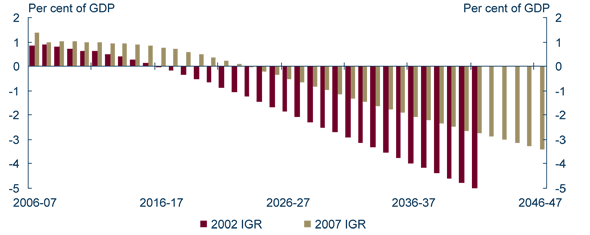
Government spending is projected to exceed revenue over the long term
6 2007‑08 Budget Overview