


All States are now receiving more revenue from the GST compared with the previous financial arrangements. In 2007-08, the States will receive GST revenue of $41.9 billion — an increase of 5.8 per cent from 2006-07.
State taxes totalling $5.0 billion in 2007‑08 have already been abolished under the Intergovernmental Agreement. These include financial institutions duty, listed marketable securities duty, debits tax and accommodation tax.
The States have also agreed on a schedule to abolish a second tranche of inefficient taxes:
mortgage duty; cheque duty; lease duty; rental duty; marketable securities duty; and non‑real non‑residential conveyance duty.
Even after the revenue from these abolished taxes is taken into account, the Australian Government's reforms will result in the States receiving net gains from tax reform of $16.5 billion from 2007‑08 to 2010‑11:
- $3.8 billion more for NSW
- $4.1 billion more for VIC
- $3.7 billion more for QLD
- $2.0 billion more for WA
- $1.4 billion more for SA
- $0.5 billion more for TAS
- $0.4 billion more for the ACT
- $0.6 billion more for the NT.
This is in addition to windfall revenue of $6.9 billion since 1 July 2000.
The Australian Government continues to pursue the abolition of stamp duty on conveyances of real non-residential property — the last remaining tax that the States agreed to abolish but have yet to commit to a date for abolition.
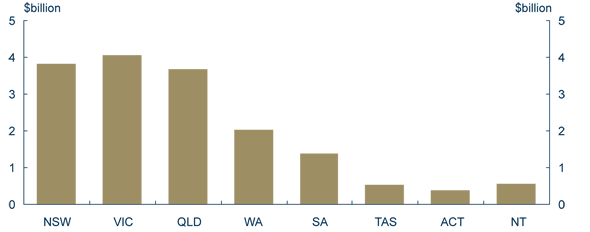
Revenue gains by the States from tax reform: 2007-08 to 2010-11
30 2007‑08 Budget Overview