




Revenue estimates by revenue head
The revenue estimates for 2007‑08 and 2008‑09 are constructed using the outcomes for 2006‑07, information on revenue collections in the year to date and the revised economic forecasts for 2007‑08 and 2008‑09. Revenue estimates for the projection years — 2009‑10 to 2011‑12 — are based mainly on underlying trends in economic parameters and take no account of cyclical influences on economic activity. Following the practice adopted in the 2006‑07 and 2007‑08 Budgets, this Budget incorporates a technical assumption that the prices of key non‑rural commodities will retrace some of their recent gains over the first two years of the projection period.
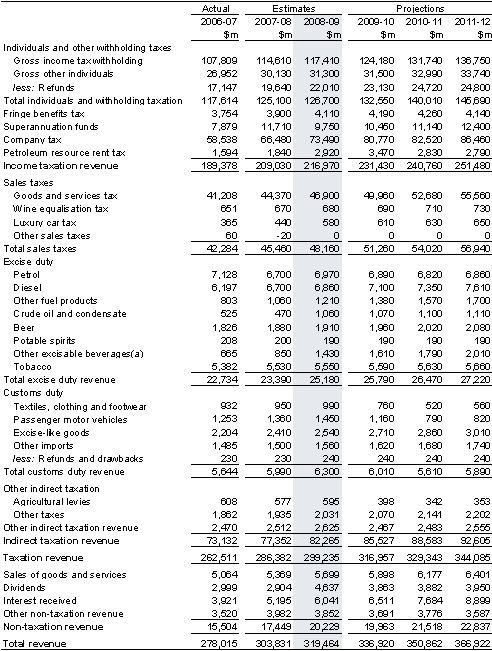
Table 6: Australian Government general government revenue
- Other excisable beverages are those not exceeding 10 per cent by volume of alcohol.
Total revenue is expected to increase by $25.8 billion in 2007‑08, 9.3 per cent growth on revenue in 2006‑07. Driving this growth are strong increases in taxes from companies and superannuation funds, which are expected to grow by 14 per cent and 54 per cent respectively.
In 2008‑09, total revenue is forecast to increase by $15.6 billion, an increase of 5.1 per cent. Strong growth in commodity prices boosting company tax and PRRT and interest and dividend earnings from the Australian Government's investments underlie this growth.
Income Tax Revenue
Gross income tax withholding
Estimated revenue from gross income tax withholding in 2007‑08 is expected to increase by $6.8 billion, principally reflecting the level of employment significantly expanding the tax base and partially offset by tax cuts. In 2008‑09, slowing employment growth and the effect of increases in tax thresholds are expected to slow growth in income taxation revenue, which is expected to increase by $2.8 billion.
Over the projection period, trend growth in employment and wages should see modest growth in gross income tax withholding, reduced by the continued impact of announced tax cuts.
The Government has, subject to economic conditions, committed to an aspriational tax goal of reducing the number of personal income tax rates from four to three by 2013‑14. As a first step towards this goal the government has set aside $6 billion for this purpose. In addition to gross income tax withholding, this allowance includes impacts on revenue related to gross other individuals, individuals' refunds and fringe benefits tax.
Gross other individuals
Gross revenue from other individuals is expected to increase by $3.2 billion in 2007‑08, reflecting the strength of small unincorporated business earnings and the lagged collection of capital gains realised in the 2006‑07 income year. The 2006‑07 income year includes an unusually high number of large capital gains events.
In 2008‑09, revenue from other individuals is expected to increase by $1.2 billion, reflecting tax cuts and a slowdown in non‑wage income growth, including a decline in the value of capital gains realised in 2007‑08.
Further out, unincorporated business income growth is projected to slow, growing in line with nominal GDP, and capital gains are expected to again contribute to revenue growth.
Income tax refunds for individuals
Refunds for individuals are expected to increase by $2.5 billion in 2007‑08, reflecting the strong labour outcomes of 2006‑07. Workers who are engaged in salary work for only a part‑year have tax withheld at a full‑year rate, typically resulting in over payment of tax through the year.
In 2008‑09 individuals' refunds are expected to increase by a further $2.4 billion, reflecting both the continued strength in labour market conditions and stronger growth in non‑wage income in 2007‑08. The increased value of offsets and deductions is also expected to continue contributing to growth in individuals' refunds.
Growth over the projection period largely follows fluctuations in individuals' income tax payments, growing throughout the period.
Medicare levy
Revenue from the Medicare levy is expected to increase by $200 million in 2007‑08, and by $210 million in 2008‑09. Movements in revenue from the Medicare levy are generally consistent with growth in personal taxable income, mitigated in part by increases in the Medicare levy and surcharge thresholds.
Fringe benefits tax
Revenue from FBT is expected to increase by $150 million in 2007‑08, reflecting stronger labour market outcomes largely offset by a reduction in the take up of fringe benefits taxable forms of remuneration.
FBT is expected to grow by $210 million in 2008‑09, and remain largely unchanged over the forward estimates period as the reduction in the take up of fringe benefits taxable forms of remuneration continues.
Superannuation funds
Taxation revenue from superannuation funds is expected to increase by $3.8 billion in 2007‑08, principally reflecting unusually high balancing payments relating to the 2006‑07 income year.
Superannuation funds achieved unusually strong growth in taxable contributions and net capital gains in 2006‑07. With strong labour market outcomes and superannuation changes, taxable contributions have grown strongly and increased the funds available for investment. Superannuation funds also benefited from the pace of growth in share prices in 2006‑07.
Revenue from superannuation funds is expected to fall by $2 billion in 2008‑09 in line with the recent performance of both the domestic and many overseas share markets. Recent market developments are expected to lead to lower capital gains tax revenue and an increase in capital losses.
Over the projection period, growth in revenue from superannuation funds is projected to return to modest levels, reflecting more moderate employment and wage outcomes and a gradual recovery in realised capital gains.
While the abolition of the superannuation surcharge extinguishes future liabilities from accruing, allowance has been made in relation to liabilities which accrued prior to 1 July 2005. Revenue from the superannuation surcharge is expected to decrease by $260 million in 2007‑08, and a further $40 million in 2008‑09.
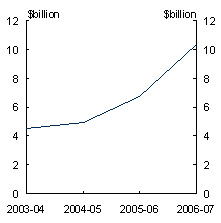
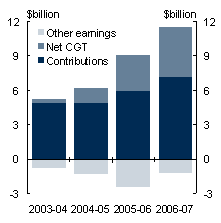
Box 4: Growth in revenue from superannuation funds The revenue collected from superannuation funds has grown strongly since 2004‑05 (see Chart A). Revenue from superannuation funds, excluding the superannuation surcharge, grew by 39 per cent in the 2005‑06 income year and 54 per cent in the 2006‑07 income year. The revenue growth reflects strength in realised net capital gains earned by superannuation funds and higher taxable net contributions made to superannuation funds. Chart A: Revenue from superannuation funds | ||
Aggregate
|
By source
| |
Source: ATO Taxation Statistics and Treasury estimate for 2006‑07. | ||
Net capital gains realised by superannuation funds are generally taxed at an effective rate of 10 per cent. Between 2003‑04 and 2006‑07, the CGT collected from superannuation funds is estimated to have risen over fourteen‑fold to $4 billion, primarily due to higher realised capital gains on shares and more superannuation funds realising capital gains. Box 3 provides more information on capital gains tax. A 15 per cent tax rate generally applies to contributions made by employers and contributions made by the self‑employed or others where the fund has been advised that the individual is intending to claim a deduction. Over 90 per cent of taxable contributions are made by employers, including contributions made under the superannuation guarantee, award and salary sacrifice arrangements. Taxable contributions grew strongly in 2005‑06 and 2006‑07. In 2006‑07, the estimated tax collected from contributions, excluding taxable contributions transferred to pooled superannuation trusts or life insurance companies, was around $7.2 billion. Strong labour market outcomes and superannuation changes have been supportive of growth in taxable contributions to superannuation. The ageing of the Australian workforce will also tend to support strong growth in contributions as older workers, on average, make higher voluntary contributions. Other deductions, rebate and tax offsets are allocated to other earnings for simplicity and many of these deductions relate to earning investment income. Other earnings typically decreases tax collected given that unused franking credits on company distributions are refundable and superannuation funds are allowed credits for any foreign tax paid on foreign income. In 2006‑07, other earnings are estimated to have reduced the amount of tax collected from superannuation funds by about $1.1 billion. | ||
Company and other related income taxation
Company income taxation
Company income tax revenue is expected to increase by $7.9 billion in 2007‑08, growth of 13.6 per cent on the 2006‑07 outcome. Company tax revenues are received partly with a lag to the year in which the income is earned, so the continued strength in revenues in 2007‑08 partly reflects the strength in corporate income in 2006‑07. Underpinning this strength is strong capital gains income, and lower depreciation expenses, reducing offsets against companies' taxable income. Audit activity by the ATO relating to previous income years has raised additional one‑off revenue in 2007‑08.
Growth in company tax is expected to moderate slightly in 2008‑09, increasing by $7.0 billion, following weaker growth in corporate income in 2007‑08 (due to more moderate growth in corporate operating incomes and a substantial slowdown in capital gains income), mitigated by the forecast strong increase in the terms of trade in 2008‑09.
Company income taxation revenue over the projection years, 2009‑10 to 2011‑12, incorporates a technical assumption that the prices of key non‑rural commodities will retrace some of their recent gains over the first two years of the projection period.
Petroleum resource rent tax
Estimated revenue from PRRT is expected to increase by $250 million in 2007‑08, as sales revenue mirrors the increase in the crude oil price (in Australian dollar terms), with deductions from costs carried forward from previous years moderating the impact on tax revenue. The rising price for oil appears to have led to increased exploration activity by extractors, a deductible cost under the PRRT regime designed to reduce the risk associated with exploration activity.
In 2008‑09 petroleum resource rent tax revenue is expected to increase by $1.1 billion, reflecting recent rises in the price of oil and related energy resources.
Further out, the production levels of some new fields are expected to see them commence payment of PRRT, lifting revenue before the general decline in production volumes as older fields mature sees expected revenue begin to decline.
Sales taxation revenue
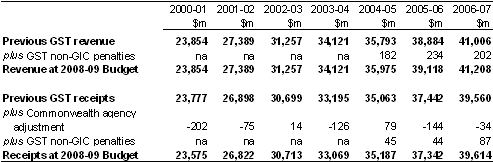
Goods and services tax
GST revenue is expected to increase by $3.2 billion in 2007‑08 on the back of strong growth in nominal household consumption subject to GST, particularly in the first half of the financial year. In line with the expected slowing in growth in consumption and continued moderate private dwelling investment, a smaller increase in GST revenue of $2.5 billion in 2008‑09 is expected.
The decision of the Federal Court of Australia in KAP Motors Pty Ltd v Commissioner of Taxation [2008] FCA 159 is expected to result in around $500 million of refunds that reduce GST revenue in 2008‑09.
Over the forward estimates period, GST is expected to grow at a moderate pace, in line with the assumed trend growth in nominal consumption.
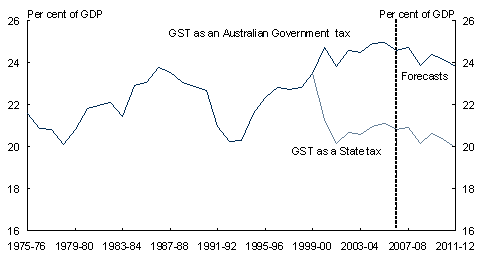
In accordance with the Intergovernmental Agreement on the Reform of Commonwealth‑State Financial Relations, the Commonwealth administers the GST on behalf of the States and GST revenue is paid to the States.
Other sales taxes
Other sales taxes include the luxury car tax and wine equalisation tax and residual liabilities and disputed amounts related to the abolished wholesale sales tax.
Revenue from other sales taxes is expected to grow by $14 million in 2007‑08 and by a further $170 million in 2008‑09.
For the luxury car tax this reflects the impact of the increase in the luxury car tax rate from 1 July 2008. Wine equalisation tax revenue is expected to rise moderately throughout the forecast and projection periods reflecting the balance of slow volumes growth and moderate price growth.
Excise and customs revenue
Excise duty
In 2008‑09, revenue from excise duty on refined petroleum products is expected to increase by $580 million, following an increase of $330 million in 2007‑08.
Despite rising pump prices for refined petroleum products, demand continues to grow. The strong performance of the business (and particularly mining) sector is supporting growth in demand for diesel, as is the increased demand for diesel fuelled passenger vehicles. Longer term, demand for gasoline appears to be declining, reflecting consumer substitution to more fuel‑efficient vehicles and blends containing biofuels.
Crude oil excise revenue is expected to decline in 2007‑08 by $55 million, reflecting the gradual decline in volumes from (generally) older fields and the lower progressive tax rate these lower volumes incur. The policy decision to remove the crude oil excise exemption on condensate production is expected to increase revenue in 2008‑09 by $590 million.
Estimated revenue from other excisable goods (other excise) is expected to increase by $380 million in 2007‑08 and by $620 million in 2008‑09. This reflects a general trend towards declining volumes of consumption of both tobacco and alcohol being more than offset by the policy decision to increase the excise rate on pre‑mixed alcoholic beverages.
Customs duty
Customs duty revenue is expected to increase by $350 million in 2007‑08, reflecting strong import demand for excise‑like products and passenger motor vehicles. Increased importation of automotive components has also played a significant role in this increase.
Growth of customs revenue is expected to slow as household nominal consumption and domestic demand ease, partly offset by the effect of a higher exchange rate on import prices.
Growth in customs duty revenue in the projection years is dominated by the impact of the tariff rate reductions scheduled to occur on 1 January 2010, leading to the declines in revenue in the first two projection years even as the value of imports continues to increase.
Other taxation revenue
Revenue from agricultural levies is expected to remain relatively constant in 2008‑09 but will decline from 2009‑10 primarily due to the scheduled cessation of the Dairy Industry Restructure Package levy in 2009.
Non‑taxation revenue
Non‑taxation revenue is expected to increase by $2.8 billion (up 15.9 per cent) in 2008‑09 largely reflecting an increase in dividends from the RBA. This increase is mainly due to an increase in the RBA dividend, which largely reflects that the RBA has realised higher capital gains on its portfolio than in the previous year. Also, the RBA dividend paid in 2007‑08 was impacted by the appreciation in the exchange rate.
If www.budget.gov.au responds slowly or you are having trouble downloading a document, try one of the Budget Website Mirrors
Note: Where possible, Budget documents are available in HTML and for downloading in Portable Document Format(PDF). If you require further information on any of the tables or charts on this website, please contact Treasury.