The global recession has put significant pressure on the Australian Government Budget. The Government is determined to assist Australians more vulnerable to the impacts of the downturn, but is equally committed to returning the Budget to surplus as the economy recovers. This will mean ensuring spending is directed to high‑priority areas.
Savings will be achieved in areas where sustainability of existing arrangements will come under pressure in the years to come. The changes announced in the Budget will bring greater fairness to these arrangements and support priority spending areas.



Fairer private health insurance incentives
The Government is rebalancing its suite of private health insurance policies from 1 July 2010.
The existing Private Heath Insurance rebate will remain unchanged for singles earning less than $75,000 and families less than $150,000, but will be progressively reduced for those earning above these amounts — phasing out for people on high incomes.
The Medicare levy surcharge rate will also increase for singles earning above $90,000 and families above $180,000 to continue to provide higher income Australians with incentives to take out private health insurance.
These measures will save $1.9 billion over five years, and are expected to result in PHI coverage levels at more than 99 per cent of current levels.
Family payments
To limit growth in payments made to higher income families, the Government will pause CPI indexation of upper income eligibility thresholds for three years, saving $1.4 billion over four years.
The indexation pauses will affect eligibility for FTB‑B, the Baby Bonus and dependency tax offsets for families earning over $150,000 on an annual basis. For FTB‑A the income limit at which payments cease will remain around $112,000 (for a family with two children under 13).
To further reform the family payment system, Family Tax Benefit Part A (FTB‑A) will, in future, be indexed by the CPI only. The maximum rate for children aged under 16 will no longer be linked to the couple pension rate. This measure will save $1.0 billion over four years.
Medicare Safety Net
The Government will cap Extended Medicare Safety Net (EMSN) benefits from 1 January 2010 where doctors are charging excessive fees, such as for obstetrics and Assisted Reproductive Technology.
Benefits will be capped once a patient has met the relevant EMSN threshold, ensuring better value for money for patients and Government.
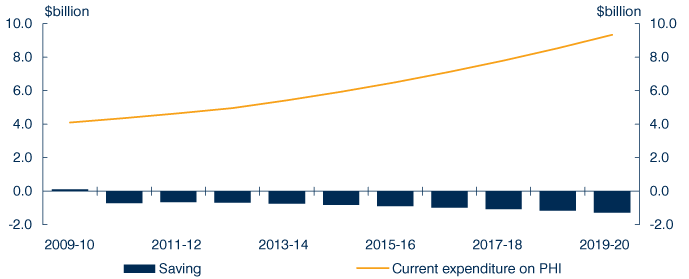
Savings from reform to private health insurance rebate