Ageing population
The Australia to 2050 Report highlighted the challenges that population ageing and associated pressures in the health system will bring to bear on Australia's economic growth, living standards and government finances.



Australia to 2050
The Australia to 2050 Intergenerational Report showed that over the long term, ageing will pose significant challenges.
Population ageing means fewer workers to support retirees in the future. The IGR projects the number of people of eligible age to receive the Age Pension will increase by around 150 per cent, highlighting the importance of adequate and sustainable retirement incomes.
The number of traditional working age people to support each retiree is expected to fall from 5 people today, to 2.7 people in 2050.
Reflecting this, the proportion of people in the labour force is expected to fall gradually, slowing the pace of growth.
Fiscal pressures
The report also projected that the ageing population and associated spending pressures would result in a substantial fiscal gap. Spending would exceed revenue by around 2¾ of GDP in 2049‑50. The Government is responding to these long‑term challenges.
Responsible economic management, including policies that lift productivity and encourage participation in the labour force, will contribute to higher
rates of economic growth and higher living standards.
The Government is supporting productivity growth, through investments in skills and nation building infrastructure like transport, education and broadband, and reducing business costs through streamlined regulation and tax reform.
Reforms in education, training, health, employment services, paid parental leave and childcare will all support higher workforce participation.
The Government's implementation of the fiscal strategy is delivering structural adjustments to spending that address fiscal pressures over the medium and long term.
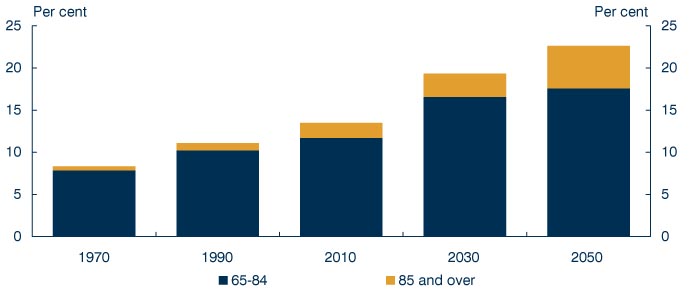
The proportion of the population aged over 65 years is increasing