



Placing industry at the heart of the training effort
As the economy approaches capacity, skill shortages are emerging at the regional, industry and occupational level.
Research indicates that shortages are most acute in professional occupations and the traditional trades. Timely and targeted interventions focused on identified skill shortages have the potential to alleviate capacity constraints and support stronger economic growth.
A tight link between industry demand for skilled workers and Government investment in training will help focus training expenditure on the needs of the economy.
A new partnership with industry
The Government is investing $558 million over four years in a National Workforce Development Fund (the Fund) to respond to the most critical emerging skills needs facing Australian industry, including at a national, regional and sectoral level. It is anticipated that the Fund will support an estimated 130,000 training places over four years.
The Government understands that training needs differ across regions, industries and occupations. This new partnership with industry will ensure that our training investment delivers quality training outcomes that meet the needs of industry, support economic growth, and ensure students have quality jobs at the end of their training. It is expected that the new Fund will make a major contribution to delivering the higher level skills industry needs.
The training places will require co‑investment from industry, targeting an average of 50 per cent of training costs, recognising the shared responsibility for training between Government and industry.
Funding for the Critical Skills Investment Fund, announced as part of the Skills for Sustainable Growth strategy in the 2010‑11 Budget, is included in the Fund.
Demand for labour in skilled trades is strong
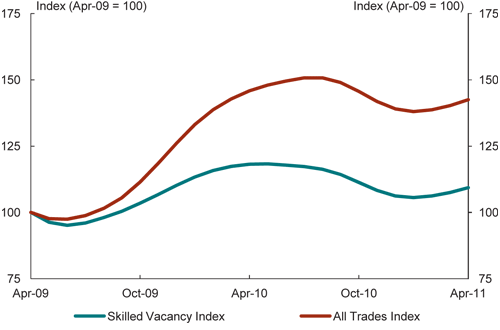
Source: Department of Education, Employment and Workplace Relations, Vacancy report.