Requiring greater personal responsibility ...
Despite solid employment growth and a falling unemployment rate, some groups of Australians are experiencing low rates of participation and higher unemployment.



Boosting participation
The Government will introduce a range of measures to assist and encourage Australians into the workforce or to undertake activities that will improve their future employment prospects.
Improving incentives in the tax system
The Government's change to the Low Income Tax Offset will mean more immediate rewards to work for low and middle‑income earners.
Phasing out the Dependent Spouse Tax Offset for taxpayers with a dependent spouse who turns 40 on or after 1 July 2011 will reduce disincentives to work.
Single parents
The Government will restructure income support for single parents to promote and support participation.
From 1 January 2013, single parents on Newstart Allowance will get to keep up to an extra $3,900 per year through a more generous income test.
At the same time, grandfathering will be phased out for Parenting Payment recipients when their child turns 12 to more closely align eligibility with other recipients.
The Government will also provide up to $103 million to support single parents through training, career advice, and other services.
People with disability
From 1 July 2012, the Government will introduce participation requirements for Disability Support Pension (DSP) recipients aged under 35 years with an assessed work capacity of eight hours or more per week, and increase the number of hours recipients can work and remain eligible for DSP.
The Government is also making the DSP assessment process more rigorous and more accurate from September 2011.
The Government will introduce higher wage subsides, to reward employers who hire people with disability for at least 15 hours per week.
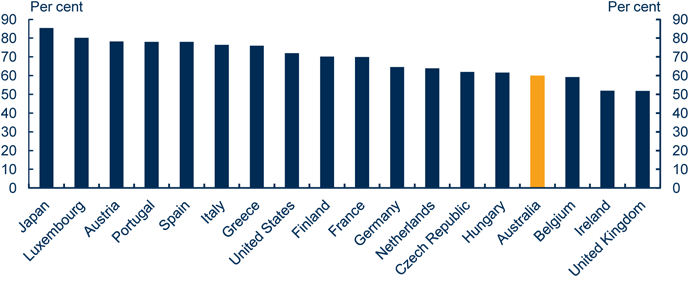
Comparison of employment rates of single mothers in Australia an selected OECD countries