



Health and Ageing
The Australian Government provides substantial assistance to Australians living in regional Australia, both through general health and ageing programs and through a range of programs targeted specifically at regional Australia.
In 2012‑13, it is estimated that over $50.0 billion will be administered by the Department of Health and Ageing to support Australians with their health and ageing needs. Of this total, it is estimated that over $14.0 billion will be spent in regional Australia, around 29 per cent of the total spend. In addition, around two thirds of spending through the Health and Hospitals Fund (HHF) is directed to regional Australia.
Through a range of targeted rural health and aged care programs, the Government is investing over $2.0 billion in 2012‑13 to address the factors that impact on the health and wellbeing of people living in rural, regional and remote communities.
In recognition of the issues that specifically affect people living in regional, rural and remote Australia, the Australian Government aims to improve access to health services by delivering a range of targeted rural health and aged care programs, as well as through the Government's ongoing health reform agenda.
Spatial Reporting
Table 6 illustrates a summary of expenditure by program disaggregated between regional Australia, non-regional and non-specific location for the budget year and forward estimates for the Health and Ageing portfolio.
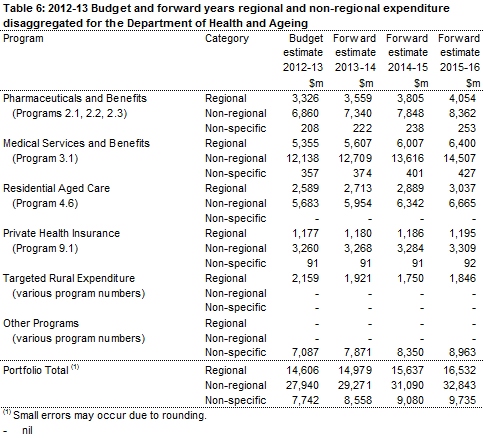
Table 6 shows that total expenditure (grants, subsidies and personal benefits) for the Health and Ageing portfolio is estimated to be over $50.0 billion in 2012‑13. Over $14.0 billion in expenditure is allocated in regional areas, almost $28.0 billion in non-regional areas and approximately $7.7 billion is non-specific. The proportion of total identifiable expenditure in regional areas is around 29 per cent and this identifiable proportion remains broadly constant over the forward estimate years.
The top five program groups listed in the above table represent around 81 per cent of the total estimated expenditure for the portfolio in 2012‑13. The regional profile of these program groups is readily identifiable. For many Health and Ageing programs classified under 'Other Programs' it is not possible to determine a geographical split as relevant data is not available. Estimated expenditure for these programs is classified as 'Non-specific'. However, based on the proportion of identifiable spending directed to regional Australia, there is no reason to believe that the same proportion cannot be applied to those 'Other' payments.
Table 6 indicates the following:
- around 32 per cent of expenditure on Pharmaceuticals and Benefits is spent in regional Australia;
- around 30 per cent of Medical Services and Benefits is spent in regional Australia;
- around 31 per cent of Residential Aged Care is spent in regional Australia, although this amount is supplemented by expenditure on multi-purpose facilities that are included under Targeted Rural Expenditure; and
- around 26 per cent of Private Health Insurance is spent in regional Australia, which is lower than the population in regional Australia but does not include direct taxation deductions and may also reflect the lower number of private inpatient facilities in regional areas.
Programs specifically targeting regional Australia are described in the second part of this section.
Caveats, Regional Projections and Program Materiality
The non-specific category in the above tables has generally been used where the programs are multi-regional and cannot be allocated to a specific location. As with any forward estimates, the reliability of the estimated proportion of Commonwealth funds being spent in regional Australia reduces over the forward estimates from 2012‑13, which may also be a result of policy changes.
The regional distribution of pharmaceuticals and benefits, medical services and benefits, residential aged care and private health insurance are projected on the basis of historical outcomes.
The programs shown in Table 6 have been determined as being material for spatial accounting purposes, based on their contributions to total spending on health programs managed by the Department.
This statement does not cover the National Health and Medical Research Council and other Health and Ageing portfolio agencies, which are not considered material for the purposes of spatial reporting.
Health and Hospitals Fund
The HHF is funded through a special account administered by the Department of Finance and Deregulation. HHF grants to State and Territory Government recipients are paid via the National Partnership Agreement on Health Infrastructure, while grants to non-government recipients are paid directly via individual funding agreements.
The objectives of the HHF, while not replacing State and Territory, effort is to:
- invest in major health infrastructure programs that will make significant progress towards achieving the Commonwealth's reform targets; and
- make strategic investments in the health system that will underpin major improvements in efficiency, access and outcomes of health care.
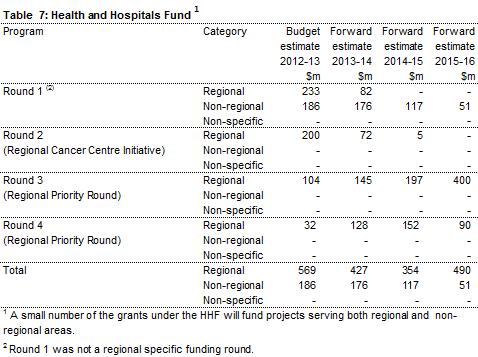
The HHF funds the building of new infrastructure for clinical care, training and research in the health sector, as well as related needs such as patient and carer accommodation. Of the total $5.0 billion that has been allocated under the program, around $1.8 billion is directed to meeting the needs of regional Australia.
To date there have been three funding rounds totalling $4.5 billion, with $475.0 million in funding for a fourth funding round to be available from 2012‑13.
Table 7 provides details on projected expenditure under the HHF over the forward estimates.
New Initiatives
Aged Care Reform
The Australian Government has announced substantial reform measures to aged care worth $3.7 billion over five years from 2012‑13. A key measure is the continued expansion of the viability supplement for residential aged care places, providing support for services to remain financially viable in regional and rural locations. The viability supplement is provided to services located in regional and remote locations that face higher employment costs, including training costs. Older facilities may also struggle to attract residents, and the small size of many rural services means that economies of scale are not as readily achievable by these facilities as compared to larger services.
In addition to the viability supplement, the National Aboriginal and Torres Strait Islander (ATSI) Flexible Aged Care Program will be expanded with more aged care places; thereby allowing significantly more older ATSI people with complex high care needs to stay close to their home and country in culturally appropriate care. In addition, funding levels for all existing ATSI flexible aged care places will also be adjusted annually for frailty levels, in addition to indexation adjustments, to ensure funding reflects the cost of providing care.
Other areas in which funding will be expanded include a substantial increase to the current accommodation supplement, restricted to new or substantially refurbished facilities, which is expected to ease pressures on capital funding for care provision across Australia, as well as providing an added incentive to construct additional places. These benefits are likely to be more significant in regional Australia than in capital cities, as overall levels of wealth and income are lower, resulting in providers in rural areas being more reliant on government accommodation supplement than providers in urban areas.
A key aspect of reform is support for the construction of aged care homes where mainstream funding is not available or not sufficient. The two existing capital grants funds will be combined to form the new Rural, Regional and Other Special Needs Building Fund. Combining the two capital grants programs will enable funding to be more flexibly targeted to deliver services in priority areas identified by the Government, and therefore enable improved access to residential aged care. Approximately $45.0 million (indexed) will be available annually for allocation from 1 July 2012. In addition, the remaining $150.0 million in zero real interest loans will be refocused to support building activity in priority areas.
Workforce pressure in aged care is particularly problematic in regional areas. To address this, reform initiatives will include a strong focus on addressing these pressures in regional, rural and remote areas including action to improve the recruitment and retention of aged care workers through the Workforce Compact. Future workforce initiatives will be informed by an evaluation of workforce measures in regional locations.
Addressing the needs of vulnerable older Australians in regional areas is a strong focus of the reform measures. Financially disadvantaged older people are over-represented in regional, rural and remote locations. To assist in addressing gaps in service provision for these financially disadvantaged older people, a review of aged care supported resident ratios will be undertaken. These ratios are in place to ensure people who cannot afford to pay for aged care and accommodation will continue to be supported. In addition, increased funding will be provided through the Assistance with Care and Housing for the Aged Program, supporting those who are homeless or at risk of homelessness in regional areas.
A consistent theme throughout the reform is recognising diversity among older Australians. The Aged Care Service Improvement and Healthy Ageing Grants Fund will help improve access to information and aged care services for diverse communities in regional areas.
Innovation is another area in which significant change will improve the quality of care and the care experience of older Australians in regional areas. Services will be encouraged to adopt innovative processes, especially further expanding and integrating with the broader health care sector. New research into clinical and non-clinical aspects of service delivery will be funded for services to translate into standard daily operations. Funding is also being provided for State-wide telephone advisory services to provide advice on palliative care and advance care planning to aged care providers and General Practitioners (GPs) in regional areas. Those people in regional Australia with symptoms of dementia will be further supported with funding for improved timing and diagnosis, targeting barriers to diagnosis in regional areas.
Stronger Futures in the NT through Health
The Government is investing $713.5 million over ten years for the continued delivery of specialist and allied health services to Indigenous Australians in the Northern Territory.
This funding provides for the following health care activities:
- primary health care service delivery;
- primary health care reform;
- Remote Area Health Corps - a program that helps meet workforce shortages in remote locations by providing short-term professional placements; and
- specialist and allied health services for conditions of very high disease burden, such as oral health, hearing health and therapeutic services for children.
Dental Relocation and Infrastructure Support Scheme
The $77.7 million Dental Relocation and Infrastructure Support Scheme measure aims to encourage and support dentists to practise in regional, rural and remote communities and to increase workforce and service delivery capacity in these communities. The measure provides scaled relocation grants and infrastructure grants to dentists who elect to move to areas more remote than where they have practised in the previous 12 months, based on the Australian Standard Geographical Classification — Remoteness Areas (ASGC-RA) categories 2 to 5.
General Practice Rural Incentives Program
The General Practice Rural Incentives Program (GPRIP) commenced on 1 July 2010 and was funded in the 2009‑10 Budget as part of the Rural Health Workforce Strategy. The GPRIP aims to encourage medical practitioners to practice in rural and remote communities and to promote careers in rural medicine. It combines two previously separate retention incentive programs available to GPs and GP Registrars, and provides a new relocation grant.
Since the commencement of GPRIP, participation in the program has exceeded expectation. The number of GPs working in regional, rural and remote areas has increased by more than four per cent and the increase in the number of GP Registrars is more than five percent. Consequently, funding of $34.9 million will be provided during 2012‑13.
Current Initiatives
The Australian Government continues to see improvements in the health and ageing outcomes of Australians living in regional, rural and remote locations. These improvements include, but are not limited to:
- tailored services that meet needs of local communities;
- increased accessibility to services, including a 30 per cent increase in access to specialist services in the most remote locations; and
- improvements to workforce coverage and distribution, including an increase of 11.9 per cent in the number of employed medical practitioners in outer regional areas.
Australians in regional areas can face barriers in accessing health and aged care information. In addition to a range of targeted programs to assist with overcoming this information barrier, the Government announced Rural and Regional Health Australia in November 2011 and established a website and free call 1800 number with information about Commonwealth programs. In 2012‑13, Rural and Regional Health Australia will continue to provide accessible information to the public about Commonwealth health and aged care programs in rural and remote Australia, engage with stakeholders, perform advocacy functions across Government and provide a strong leadership role in developing initiatives targeted at improving health and aged care outcomes in rural and regional Australia.
Population Health
Healthy Communities Initiative
The Healthy Communities Initiative (HCI) is a Commonwealth funded ($71.8 million over four years from 2009‑10) initiative under the National Partnership Agreement on Preventive Health. This initiative includes funding for 92 local government councils to implement a range of community-based healthy lifestyle programs, and funding of six National Program Grants to assist organisations that have demonstrated success in delivering community-based healthy lifestyle programs to expand nationally. In addition, the HCI provides funding for the development of a Healthy Communities Quality Framework, against which programs and service providers will be registered and promoted on a web-based registration portal.
Quality Assurance for Aboriginal and Torres Strait Island Medical Services
Since 1999, the Australian Government has provided funding to the Quality Assurance for the Aboriginal and Torres Strait Islander Medical Services (QAAMS) Pathology Program, which will continue in 2012‑13 ($1.1 million). QAAMS supports the provision of culturally appropriate and clinically effective diabetes management through the use of 'point of care' pathology tests at predominantly rural and remote Aboriginal and Torres Strait Islander health services across Australia. QAAMS also includes training, technical support, quality assurance and a consultation program for community leaders to support program management.
The Rollout of Low Aromatic Opal Fuel
The Australian Government is committed to tackling substance use issues that impact negatively on social and emotional wellbeing and general health. The Government funding commitment to support the rollout of low aromatic Opal fuel is $91.0 million over four years commencing from 2011‑12.
Petrol sniffing has been reduced by as much as 94 per cent in some communities where Opal fuel has been introduced.
There are currently 119 sites receiving Opal fuel. The funding is also being used to address storage and distribution issues that have prevented the rollout of the fuel to some locations in northern Australia. Storage facilities are being established in Darwin and north Queensland, enabling low aromatic Opal fuel to be distributed to at least 39 new sites in the Top End of the Northern Territory, the East Kimberley and Gulf Region of Queensland. This expanded rollout of low aromatic Opal fuel will help reduce the incidence and impact of petrol sniffing in at least eleven Aboriginal and Torres Strait Islander communities.
Substance Use Activities, Substance Misuse Service Delivery Grants Fund
Following the review of administrative arrangements in the Health and Ageing portfolio, substance use treatment activities are now part of the newly established Substance Misuse Service Delivery Grants Fund. The Fund consolidates activities from a number of existing programs, and provides a flexible funding pool for organisations supporting service delivery.
This funding is provided for culturally appropriate substance use prevention, early intervention, treatment, rehabilitation and aftercare services for Indigenous people across Australia. In 2011‑12, $75.0 million is being provided to support a range of services and major new initiatives including:
- establishing and enhancing drug and alcohol treatment and rehabilitation services in regional and remote areas;
- continuing substance use initiatives in the Northern Territory commenced under the Northern Territory Emergency Response and continued under Stronger Futures in the Northern Territory; and
- providing funding for the delivery and support of Indigenous substance use treatment and rehabilitation services across the country.
In 2012‑13 a similar amount of funding will be provided for these services in regional Australia.
Access to Pharmaceutical Benefits
Rural Pharmacy Maintenance Allowance
The Rural Pharmacy Maintenance Allowance is a monthly payment provided to eligible rural or remote section 90 pharmacies, in recognition of the additional burden of maintaining a pharmacy in rural and remote areas of Australia. In 2012‑13, $13.9 million has been allocated for this program.
Rural Pharmacy Workforce Program
The Rural Pharmacy Workforce Program aims to maintain and improve access to quality community pharmacy services in rural and remote communities, and strengthen and support the rural and remote pharmacy workforce in Australia. It comprises various initiatives designed to recruit, train and retain pharmacists for rural and remote areas, including undergraduate scholarships, intern support, professional development support, and an emergency locum scheme.
Section 100 Pharmacy Support Allowance Program
The Section 100 (S100) Pharmacy Support Allowance Program aims to improve health outcomes for clients of remote area Aboriginal Health Services by supporting quality use of medicines at those services through pharmacist visits and advice. The S100 Program services Aboriginal Health Services in selected remote areas.
Home Medicines Review Program
The Home Medicines Review (HMR) Program aims to enhance the quality use of medicines, and reduce the number of adverse medicines events through a medication review conducted by an accredited pharmacist in the patient's home. A HMR service is a structured and collaborative health care service provided to an eligible patient in a community setting. HMR service providers are able to claim for travel expenses where services are provided in eligible remote areas. Rural travel reimbursement is expected to be a small component of the total expenditure on the broader HMR Program in 2012-2013.
Quality Use of Medicines Maximised for Aboriginal and Torres Strait Islanders Health
The Quality Use of Medicines Maximised for Aboriginal and Torres Strait Islanders Health (QUMAX) Program aims to help improve the health outcomes of Aboriginal and Torres Strait Islander peoples in both regional and metropolitan of Australia, by improving access to Pharmaceutical Benefits Scheme (PBS) medicines, and supporting medication compliance and quality use of medicines. The QUMAX Program services community controlled Aboriginal Health Services in selected rural and remote areas.
Closing the Gap co-payment measure
This Program, that targets both rural and urban areas, aims to reduce the cost of Pharmaceutical Benefits Scheme medicines for eligible Aboriginal and Torres Strait Islander people living with or at risk of chronic disease.
Section 100 Remote Area Aboriginal Health Service Program
The S100 Remote Area Aboriginal Health Service (RAAHS) Program is administered under section 100 of the National Health Act 1953, for the supply of pharmaceutical benefits to patients of remote area Aboriginal Health Services (AHSs). It aims to improve access to essential medicines for clients of remote area AHSs through addressing geographic, financial and cultural barriers by removing the need for a PBS co-payment and PBS script. RAAHS is a demand-driven Program.
Access to Medical Services
Medicare Benefits Schedule
The Australian Government makes rebates available to Australians for private medical treatments through the Medicare Benefits Scheme (MBS). Under this arrangement, patients are entitled to a rebate equivalent to 100 per cent of the MBS item fee for a visit to a GP. The MBS provides further incentives to GPs who bulk bill Commonwealth Concession Card holders and children under 16 years of age. These payments are currently $5.90 for GPs providing services in metropolitan areas, and $8.90 in regional, rural and remote areas, as well as Tasmania and selected metropolitan areas.
Connecting Health Services with the Future: Modernising Medicare by Providing Rebates for Online Consultations
In 2012‑13, the new Medical Benefits Schedule items and financial incentives for specialist video consultations which became available on 1 July 2011 will continue to help people in remote, regional and outer-metropolitan Australia to overcome the barriers to accessing specialist medical care, caused by distance. The use of video consultations will, in many cases, provide patients in these areas with access to specialists sooner than would otherwise be the case, and without the time and expense involved in travelling to major cities.
Diagnostic Imaging
The Australian Government announced in the 2011‑12 Budget that it will provide $104.4 million over four years to implement the Diagnostic Imaging (DI) Review Reform Package. The DI Review Reform Package will ensure ongoing, affordable and convenient DI services for patients, with a key focus on the staged expansion of patient access to Medicare-eligible Magnetic Resonance Imaging (MRI) services. From 1 November 2012, access to Medicare eligibility for existing Medicare-ineligible MRI units operating in non-major cities will be extended.
Visiting Optometrists Scheme
The Visiting Optometrist Scheme (VOS) aims to improve access to optometry services for people living and working in rural and remote communities. To achieve this, the VOS addresses some of the financial disincentives incurred by optometrists providing outreach services, with funding provided for costs that include:
- travel, accommodation and meals;
- facility fees and administrative support at the outreach location;
- external locum support at the home practice; and
- lease and transport of equipment.
There are two elements to VOS - Core VOS and the VOS Expansion for Indigenous Australians.
Aged Care and Population Ageing
Presently, over one third of all aged care places are in regional Australia. This corresponds broadly to Australia's population distribution, with just under one-third of Australians living outside major cities. There are a number of initiatives within the existing aged care system that contribute to the accessibility and delivery of aged care services in regional Australia. These include: aged care planning ratios; subsidy supplements, including accommodation and viability supplements; flexible funding for Multi-purpose Services (MPS) and ATSI Flexible Aged Care Services; targeted capital funding; and access to Zero Real Interest Loans. MPS, in particular, are services that specifically cater for small rural and remote communities. For Indigenous aged care services, the current policy over-supplies rural and regional locations in recognition of the greater presence of Indigenous Australians who can suffer from age-related illnesses at an earlier age than other Australians.
Residential Aged Care Viability Supplement
The Residential Aged Care Viability Supplement is paid to eligible providers operating in rural and remote areas, providers with small numbers of residents and providers that specialise in the care of homeless older people. The aim of this supplement is to assist providers of aged care homes to operate viable businesses particularly in areas where it is difficult to do so. The amount of viability supplement paid to an aged care home depends on where the service is located, the number of places in the service, and the proportion of care recipients with special needs.
National Aboriginal and Torres Strait Islander Flexible Aged Care Program
The National ATSI Flexible Aged Care Program provides recurrent funding to services to deliver quality, culturally appropriate aged care that meets the changing needs of older Indigenous people specifically in rural and remote areas. Under the proposals, these services will be further supported by continuing the expansion of the viability supplement. In addition, ATSI residential care funding will be grown at the same rate as the Aged Care Funding Instrument for mainstream residential places.
Community Aged Care Viability Supplement
The Community Aged Care Viability Supplement is paid to eligible community care providers operating in regional areas. This supplement provides support for the higher operating costs (including wages, fuel and training) associated with providing care in regional locations.
Aged Care Service Improvement and Healthy Ageing Grants Fund
The Aged Care Service Improvement and Healthy Ageing Grants Fund has a specific priority to support services providing aged care to Indigenous people. It aims to improve the long-term quality of aged care in remote communities and for Indigenous people by providing access to capital funding to improve the infrastructure of aged care services.
Rural, Regional and Other Special Needs Building Fund
The Rural, Regional and Other Special Needs Building Fund provides capital grants to assist providers, including those in rural, regional and remote areas, with the cost of capital works, including: land acquisition; building new, altered or extended premises; and acquiring furniture and fittings. Grants are only available where the provider has demonstrated a lack of capacity to meet the full cost of capital works through other funding sources.
Zero Real Interest Loans
Zero real interest loans are available to assist aged care providers in targeted areas, including in regional Australia. The loans are a lower cost alternative to normal commercial funding arrangements, as the interest rate is set at the Consumer Price Index only.
Indigenous Aged Care Workforce — Employment
The Indigenous Aged Care Workforce initiatives funded under the National Partnership on Indigenous Economic Participation provide funding for salary units that enable aged care services, mainly in rural and remote areas, to employ permanent, part-time staff from Aboriginal and/or Torres Strait Islander backgrounds.
Aged Care Workforce Fund — Training and Traineeships
Indigenous Remote Service Delivery Traineeships delivered through the Aged Care Workforce Fund provide funding for trainees' wages and on-costs, and covers accommodation and travel expenses associated with their training. Further, funding for training and development of workforce supports (for example training resources, service delivery manuals and mentoring workshops) is aimed at improving recruitment and retention of Aboriginal and Torres Strait Islander workers employed to provide aged care services.
Primary Care
Practice Incentives Program
The Practice Incentives Program (PIP) has two components:
- Procedural GP Payment - The PIP Procedural GP Payment aims to encourage GPs in rural and remote areas to maintain local access to surgical, anaesthetic and obstetric services; and
- Rural Loading - A rural loading ranging from 15 per cent to 50 per cent (depending on the remoteness of the practice location) is applied to the incentive payments of rural and remote practices in Rural, Remote and Metropolitan Areas 3 to 7 Classification areas. The rural loading is paid in recognition of the difficulties of providing care, often with little professional support, in rural and remote areas.
Rural Primary Health Services Program
The Rural Primary Health Services (RPHS) program funds a range of organisations — State health entities, local government, Indigenous health services, divisions of GP and other non-government organisations, to provide additional primary and allied health care services in rural and remote communities. The services delivered depend on the identified needs of the communities covered. From 2012‑13, RPHS funding previously provided to Divisions of General Practice will be managed through rural-based Medicare Locals.
Rural Health
Rural Health Outreach Fund
The Rural Health Outreach Fund was one of 18 new Flexible Funds announced in the 2011‑12 Budget. It has been established by bringing together the Medical Specialist Outreach Assistance Program and its Maternity Services and Ophthalmology expansions, with the Rural Women's General Practice Service and the National Rural and Remote Health Program. The Fund Guidelines will be released shortly and it is anticipated that a competitive funding round will be announced early in 2012‑13, with services to commence operations in July 2013. The existing component programs continue to be delivered in their current format until 30 June 2013.
Rural Women's GP Service
The Rural Women's GP Service (RWGPS) aims to improve access to primary health care services for women in rural and remote Australia, who currently have little or no access to a female GP, by facilitating the travel of female GPs to these communities. The RWGPS is open to all members of the community, including men and children. The RWGPS is facilitated by the Royal Flying Doctor Service. The RWGPS will be operated under the Rural Health Outreach Fund from 2013‑14.
Medical Specialist Outreach Assistance Program
The Medical Specialist Outreach Assistance Program (MSOAP) was established in the 2000‑01 Budget to provide outreach specialist services to regional, rural and remote locations by removing the barriers that can stop specialists providing services. The program has been highly successful in providing a wide range of specialist services since its inception. MSOAP will be operated under the Rural Health Outreach Fund from 2013‑14.
Medical Specialist Outreach Assistance Program — Maternity Services
The MSOAP Maternity Services is an expansion of MSOAP that has increased access to a range of maternity services for women and their families in regional, rural and remote Australia for the duration of pregnancy, confinement and the post natal stage. Services commenced in 2011. MSOAP Maternity Services will be operated under the Rural Health Outreach Fund from 2013‑14.
Medical Specialist Outreach Assistance Program — Ophthalmology
MSOAP Ophthalmology is an expansion of MSOAP that has increased the number of ophthalmology services delivered to people in regional, rural and remote Australia from 1 July 2010. The allocation for this measure includes funding to the Australian Society of Ophthalmologists to support administration and coordination of elements of the program. MSOAP Ophthalmology will be operated under the Rural Health Outreach Fund from 2013‑14.
National Rural and Remote Health Infrastructure Program
The National Rural and Remote Health Infrastructure Program (NRRHIP) was announced as part of the 2008‑09 Budget. The NRRHIP is a competitive grant program that improves access to health services by funding projects in rural and remote communities where a lack of infrastructure is a barrier to both the establishment of new health services and the enhancement of existing health services. In 2012‑13, Round Seven will be announced.
Royal Flying Doctor Service
The Australian Government funds the Royal Flying Doctor Service (RFDS) to provide 'traditional' services (health care clinics, primary aero-medical evacuations, medical chests and remote consultations) in rural and remote Australia throughout New South Wales, Queensland, South Australia, Western Australia and in the Northern Territory from Tennant Creek to the South Australia border. In Tasmania, the RFDS provides several medical chests.
Indigenous Health
Aboriginal and Torres Strait Islander Chronic Disease Fund
Indigenous Chronic Disease Package
In November 2008, the Council of Australian Governments committed up to $1.6 billion over four years to close the gap in life expectancy between Indigenous and non-Indigenous Australians within a generation. Under this partnership, the Australian Government committed $805.5 million over four years through the Indigenous Chronic Disease Package (ICDP) to improve the prevention, detection and management of chronic disease in Aboriginal and Torres Strait Islander peoples. Components of the ICDP are implemented in regional, rural and remote areas.
Indigenous Chronic Disease Package — Expanding the outreach and service capacity of Indigenous health organisations
This component of the Indigenous Chronic Disease Package provides funding for Aboriginal and Torres Strait Islander Outreach Workers, Practice Managers and additional health professionals. The additional health professionals component is specifically targeted for rural and remote areas.
Health@Home Plus Package — Australian Nurse Family Partnership Program
The Australian Nurse Family Partnership Program (ANFPP) is a nurse-led intensive home visiting program delivered in three sites across Australia as part of the Health at Home Plus Package. The ANFPP aims to improve pregnancy outcomes by helping women engage in good preventive health practices and support parents to improve Indigenous child health and development. Of the three sites one is remote and two are defined as outer regional.
New Directions: An Equal start in Life for Indigenous Children
The New Directions program is the Commonwealth's contribution to the Indigenous Early Childhood Development National Partnership Agreement. The program is designed to increase Aboriginal and Torres Strait Islander families' access to antenatal care; provide standard information about baby care; provide practical advice and assistance with breastfeeding, nutrition and parenting; assist with monitoring developmental milestones, immunisation status and infections; and to undertake health checks for Indigenous children before starting school. By the end of March 2012, 82 organisations had been approved for funding with 76 operational sites distributed across Australia in urban, regional, rural and remote locations.
Closing the Gap — Northern Territory — Dental Program
The Closing the Gap in the Northern Territory Dental program provides funding to the Northern Territory Government and Aboriginal Community Controlled Health Organisations for the delivery of follow-up dental health services for children under 16 years living in prescribed communities and town camps in the Northern Territory. This program will continue under the Stronger Futures in the Northern Territory through Health initiative.
Expanding Health Service Delivery Initiative — incorporating the Remote Area Health Corps
The Expanding Health Service Delivery Initiative supports the expansion and improvement of health service delivery in the Northern Territory, including through regionalisation of health service delivery, increased community control and participation and establishment of the Remote Area Health Corps to fill short-term gaps in the remote Northern Territory Indigenous health workforce. Funding for this initiative expires on 30 June 2012. The Program will continue in 2012‑13 under the Stronger Futures in the Northern Territory through Health initiative.
Improving Eye and Ear Health Services for Indigenous Australians for Better Education and Employment Outcomes
The Indigenous Health Outcome (Outcome 8) component of this measure has a significant focus on the eradication of trachoma, an infectious eye disease endemic in a range of rural and remote regions of Australia, as well as increasing access to specialist eye health services in Central Australia. Ear health activities administered under Outcome 8 include the purchase of ear health equipment for primary health care services and additional surgical services and clinical leadership positions.
Establishing Quality Health Services — Continuation Budget Measure
The 2011‑12 Establishing Quality Health Services-Continuation (EQHS-C) Budget measure provides $35.0 million over four years to support eligible Indigenous health organisations to attain accreditation against mainstream Australian clinical and organisational accreditation standards. The EQHS-C measure continues the work undertaken through the original 2007‑08 Budget EQHS measure ($36.9 million over four years) and is a national initiative with funding available to eligible Indigenous health organisations in urban, rural and remote areas.
Continuation of the Bringing Them Home and Expanding Link Up Programs for the Stolen Generation
This measure consolidates existing counselling, family tracing and reunion support in a flexible package of service delivery supplemented by national coordination and support. The measure aims to enhance existing service delivery to Aboriginal and Torres Strait Islander communities, prioritising members of the Stolen Generations, through more flexible models of service delivery and increased capacity to meet demand for services. The program delivers:
- counselling, family tracing and reunion services to members of the Stolen Generations, through the existing network of eight Link Up Services across Australia;
- social and emotional wellbeing services, particularly counselling services, to Indigenous Australians, through existing mental health and counselling staff based in over 90 Aboriginal Community Controlled Health Organisations across Australia; and
- national coordination support to services and staff, through initiatives that include workforce support units, innovative practice, research and governance support, national coordination and communication forums, electronic client records and data collection, support for peak bodies, program support and program development and evaluation.
National support will address key program limitations identified in the 2007 program evaluation including the challenges faced by services operating in rural and remote areas, such as workforce recruitment and retention issues. The Australian Government will invest a total of around $43.0 million in 2012‑13.
Medical Specialist Outreach Assistance Program — Indigenous Chronic Disease
The MSOAP Indigenous Chronic Disease provides for multidisciplinary teams, comprising specialists, GPs and allied health professionals, to better manage complex and chronic health conditions in rural and remote Indigenous communities. Services commenced in 2009‑10.
Health System Capacity and Quality
McGrath Specialist Breast Care Nurses
The Australian Government has provided $12.6 million to the McGrath Foundation to recruit, train and place breast care nurses across Australia for a period of four years. Government-supported McGrath Foundation Breast Care Nurses are specially trained, registered nurses who provide vital information, care, and practical and emotional support to women diagnosed with breast cancer, their families and carers. Breast Care Nurses are in place in 44 communities across Australia, 89 per cent of which are located in rural and remote areas.
The National Rural and Remote Health Stakeholder Support Scheme
The National Rural and Remote Health Stakeholder Support Scheme (NRRHSSS) Program was implemented on 1 July 2010 and provides a consistent approach to the funding provided to six peak rural and remote health stakeholder organisations to assist in supporting their core secretariat functions, and enabling their contribution to develop better policy and programs to address rural and remote health issues.
The organisations funded under the NRRHSSS initiative are:
- National Rural Health Alliance;
- Services for Australian Rural and Remote Allied Health (SARRAH);
- Rural Doctors Association of Australia;
- Health Consumers of Rural and Remote Australia;
- Council of Remote Area Nurses of Australia (CRANA); and
- National Rural Health Students Network.
From 2012‑13, these funds have been consolidated into the Health System Capacity Development Fund.
Health and Hospitals Fund — Round 1
As part of the 2009‑10 Budget, a $3.2 billion nation-building package of HHF projects covering three critical areas was announced. These included:
- $1.3 billion towards building a world class cancer care system;
- $1.5 billion towards building a hospital system for the future and to undertake other projects of national significance; and
- $430.3 million towards medical research and workforce infrastructure to improve the transfer of research outcomes into patient care.
Included as part of these three initiatives is $418.0 million allocated over three years for 42 regional, rural and remote projects.
Health and Hospitals Fund — Round 2 Regional Cancer Centres
As part of the $1.3 billion provided to build a world class cancer care system, $560.0 million was allocated in the 2009‑10 Budget to establish a network of best practice Regional Cancer Centres and associated accommodation facilities.
The aim of the Regional Cancer Centres initiative is to help improve access and support for cancer patients in rural, regional and remote Australia, and to help close the gap in cancer outcomes between the city and the country.
These projects will enable people with cancer to access the right care at the right time, as close as possible to their home and family, irrespective of where they live or their social circumstances.
The nationwide network now consists of 24 Regional Cancer Centres - 21 funded under HHF Round 2, two from the HHF Regional Priority Round and the Alan Walker Cancer Centre in Darwin.
When these Centres are operational, they will cover a catchment area of well over seven million people and provide world-class treatment for over 7,600 additional radiotherapy patients annually and over 127,000 additional chemotherapy treatments each year, along with 180 accommodation beds.
Health and Hospitals Fund — Round 3 Regional Priority Round
The 2011‑12 Budget provided funding for 63 projects from the 2010 HHF Regional Priority Round valued at $1.3 billion. The primary focus of the HHF Regional Priority Round is to provide capital funding to projects in regional communities in the Australian Standard Geographical Classification Remoteness Areas 2 to 5 to support upgrades to regional health infrastructure, expansions to regional hospitals and to help support the clinical training capacity of regional hospitals.
Health and Hospitals Fund — Round 4 Regional Priority Round
The Government has allocated funding for 76 projects from the 2011 HHF Regional Priority Round 4 valued at $475.0 million. The primary focus of the HHF Regional Priority Round is to provide capital funding to projects in regional communities in the Australian Standard Geographical Classification Remoteness Areas 2 to 5 to support upgrades to regional health infrastructure, expansions to regional hospitals and to help support the clinical training capacity of regional hospitals.
Mental Health
Mental Health Services in Rural and Remote Areas Program
The Mental Health Services in Rural and Remote Areas Program funds Medicare Locals, Aboriginal Medical Services and the RFDS to deliver mental health services by appropriately trained mental health care workers, including psychologists, social workers, occupational therapists, mental health nurses, Aboriginal health workers and Aboriginal mental health workers.
It provides funding for mental health professionals in communities that would otherwise have little or no access to mental health services. The program is designed to address inequities in access to the MBS by targeting areas where access to MBS‑subsidised mental health services is low.
The program also addresses workforce shortage issues by providing flexible employment models suited to local needs and conditions. This includes flexibility to accommodate geographically, culturally and linguistically diverse populations in rural and remote areas of Australia.
Funding of up to $82.6 million will be provided from 2011‑12 to 2015-16 under the Program.
Access to Allied Psychological Services
The Access to Allied Psychological Services (ATAPS) Program provides access to short-term focused psychological services for people with a diagnosed mental illness, with referral through their GP. This program is particularly effective at targeting hard to reach groups and people who would otherwise miss out on mental health services.
Many specific populations, such as low income earners and those in rural and remote areas have difficulty accessing MBS-subsidised mental health services due to cost and workforce limitations in some locations. In 2010‑11 over 44,000 referrals were received services through ATAPS and 40 per cent of services were provided in rural areas.
As part of the 2011‑12 Budget's Delivering National Mental Health Reform package the Government allocated $205.9 million over five years to provide additional services under the program.
National Suicide Prevention Program
The Australian Government's National Suicide Prevention Program (NSPP) allocated funding to 24 projects in 2011‑12 and 2012‑13 that target populations in rural and remote areas. Those who will benefit from these projects include farmers, workers and their families in rural and remote Australia, Aboriginal and Torres Strait Islander peoples, and men in rural and remote areas.
While suicide is ranked as the 15th leading cause of deaths registered in Australia and accounts for only a relatively small proportion (1.6 per cent) of all deaths overall, it accounts for a greater proportion of deaths in some groups of people, including those in regional Australia and remote and very remote areas.
The total allocation to the NSPP in 2011‑12 was $24.2 million. $7.3 million, or 30.2 per cent of total funding, was allocated to national and local community-based suicide prevention projects targeting rural and remote areas.
Approximately $5.1 million has been provided to Indigenous projects across the country through the NSPP in 2011‑12.
Telephone Counselling, Self Help and Web-Based Support Programs
It is estimated that one in five Australians experience a mental health disorder in any given year. Only a third of people with a mental disorder use mental health services, which leaves two thirds of that population not accessing support or treatment. Online mental health therapies have a sound evidence base, particularly in the treatment of anxiety and depression disorders.
Key measures funded under this initiative include telephone crisis support services such as those provided by Lifeline and Kids Helpline. This initiative commenced in 2006 and is ongoing.
Establishment of a Single Mental Health Online Portal
Evidence shows that web-based programs delivering therapies such as cognitive behavioural therapy (also known as talking therapies) are effective, particularly for people with common mental disorders such as anxiety and depression.
An online mental health portal will be available from mid-2012 and will provide an additional avenue to traditional face-to-face psychological support. It will guide people to programs most suited to their needs, including self-directed programs and clinician assisted support through a 'virtual' clinic. GPs will be able to refer suitable patients to the portal. Consumers and carers will also be able to get more information and be guided to online treatment where appropriate.
The portal will also improve access for consumers to the existing investments and resources, and will also ensure that people are able to be matched to those services that best meet their particular needs.
This measure will provide access for harder to reach groups, including those in rural and remote areas and those who prefer anonymity.
Funding of $14.4 million over the five years from 2011‑12 to 2015-16 has been provided for these projects as part of the 2011‑12 Budget's Delivering National Mental Health Reform package. This measure forms part of the Government's broader investment in e-mental health services which totals $136.9 million from 2011‑12 to 2015-16.
headspace
One in four young Australians aged 16 to 24 years will experience a mental health disorder (including substance use disorder) in any year. Only 25 per cent of this group is accessing help.
"headspace" provides a national, coordinated focus on youth mental health and related drug and alcohol problems, aims to improve access for young people aged 12 to 25 years to appropriate services and ensure better coordination between services. The headspace model provides for holistic care in four key areas - mental health, physical health, alcohol and other drug use and social and vocational support.
The headspace model has proven to be very successful and many communities are keen to have a headspace site established in their area.
The Government provided an additional $197.3 million over five years as part of the 2011‑12 Budget's Delivering National Mental Health Reform package. This initiative will boost funding to achieve sustainability across the current sites and bring on additional sites in a phased way. A total of 90 headspace sites will be available across Australia by 2015-16. Once all 90 sites are fully established, headspace will help up to 72,000 young people each year.
The location of new sites will be determined by the Government and headspace using well established criteria and through consultation with States and Territories and other key stakeholders.
Health Workforce Capacity
Australian General Practice Training Program
General Practice Education and Training Limited, the Commonwealth Company responsible for the management of the Australian General Practice Training Program, is required to ensure at least 50 per cent of registrars are training in regional areas. Significant additional investment was announced in 2010 to deliver around 1,375 new GPs or GPs-in-training by 2013, or 5,500 new GPs or GPs-in-training over the next decade.
Remote Vocational Training Scheme
The Remote Vocational Training Scheme is a vocational general practice training program supporting doctors practicing in some of Australia's remotest locations. The scheme delivers structured distance education and supervision to doctors while they continue to provide general practice medical services to remote and/or isolated communities. The training includes weekly tutorials through video and teleconferences, twice yearly education workshops, remote supervision and individualised training advice.
Prevocational General Practice Placement Program
The Prevocational General Practice Placements Program PGPPP) provides junior doctors with the opportunity to undertake a short-term placement (usually 12 weeks) in general practice under the supervision of an experienced GP. As of 2012, at least 50 per cent of PGPPP places must occur in regional and remote Australia. Evidence shows that exposure to practice in regional Australia increases the likelihood of a person returning to the bush to practice later in their career.
Specialist Training Program
The Specialist Training Program (STP) increases the capacity of the health care sector to provide high quality, appropriate training opportunities for trainee medical specialists. It will more than double the number of Commonwealth-funded specialist training places in private, public, community and rural settings from 360 to 900 by 2014. Approximately 50 per cent of STP training positions are located in regional areas.
Rural locum scheme for nurses
This rural locum scheme measure provides around 3,000 possible nursing locums over the four year funding period to enable rural based nurses to take leave and enable organisations to back-fill their positions to support ongoing service delivery. The measure encourages nurses to remain working in rural areas. It is also designed to encourage interested nurses to remain in the workforce and experience rural based practice through a locum placement.
Rural locum scheme for allied health professionals
This measure provides around 100 locum placements annually to enable rural based allied health professionals to take leave and enables organisations to back-fill their positions to support ongoing service delivery. It will also encourage interested allied health professionals to remain in the workforce and experience rural based practice through a locum placement.
Rural Australia Medical Undergraduate Scholarship
Rural Australia Medical Undergraduate Scholarships (RAMUS) assist selected students with a rural background to study medicine at university. The scheme is aimed at attracting more doctors to rural and remote Australia.
Because students from rural areas can face financial barriers to studying medicine, particularly the costs of moving and living away from their home and family support structures, scholarship holders receive $10,000 per annum to assist in meeting travel, accommodation and living costs incurred while studying medicine. The RAMUS scheme provides 580 ongoing scholarships valued at $10,000 per annum for medical students during their completion of a standard medical degree.
Nursing and Allied Health Scholarship and Support Scheme
The allied health component of the Nursing and Allied Health Scholarship and Support Scheme (NAHSSS) provides scholarships to support undergraduate and postgraduate study, continuing professional development activities and rural clinical placements for allied health students and professionals. Scholarships under the NAHSSS have a rural element in the selection or eligibility criteria, in recognition of the need to improve access to health professionals in these areas.
As part of Health reform, an additional 100 scholarships will be provided each year under the NAHSSS to support allied health students undertaking a rural or remote clinical placement during their degree. This aims to improve the future recruitment of allied health professionals to rural areas by introducing increased numbers of students to rural clinical practice during their university training.
GP Procedural Training Support Program
The GP Procedural Training Support Program aims to improve access to maternity services for women living in rural and remote communities, by supporting GPs to attain procedural skills in obstetrics or in anaesthetics.
The Program targets existing GPs in rural and remote areas. For the 2012 training year, 25 obstetrics scholarships and 15 anaesthetics scholarships have been awarded to rural and remote doctors. Scholarship recipients commenced training from 1 January 2012.
Rural Health Multidisciplinary Training Program
Rural training encourages the next generation of health professionals to consider rural careers and enhances the capacity of health services to meet community needs. Involvement in education and training also reduces professional isolation for existing rural practitioners, enhancing workforce retention and sustainability.
The Rural Health Multidisciplinary Training Program includes sub-programs which support undergraduate clinical training of the medical, nursing and allied health students in rural and remote Australia and support existing rural health professionals, therefore alleviating the shortage of adequate health care services in rural areas.
The sub-programs are:
- The Rural Clinical Training and Support Program;
- The University Departments of Rural Health Program;
- The Dental Training Expending Rural Placements Program; and
- The John Flynn Placement Program.
Rural Health Continuing Education Sub-Program
The Rural Health Continuing Education (RHCE) Sub-Program, established under the Continuing Education and Training Support measure, is part of the Australian Government's strategy to provide equitable access to health services in rural and remote areas. Rural health professionals can sometimes face difficulties in accessing professional development services. The RHCE Sub-Program is helping to address this by providing funding for support, education and training activities for rural medical specialists, and allied health professionals, nurses, GPs and Indigenous health workers. This investment will provide valuable benefits for the sustainability of the rural health workforce, particularly in terms of workforce retention.
The Rural Health Education Foundation (RHEF) is also funded separately under the RHCE Sub-Program. RHEF provides rural health professionals with free access to professional development and medical education broadcasts through its satellite network, and via DVD and video, web streaming and podcasts.
National Rural and Remote Health (Stakeholder Support)
This measure supports the rural and remote health workforce through programs such as the Bush Services Support (Bush Crisis Line) which averages around 65 to 70 calls per month from health professionals. This measure also encourages health service providers in remote areas of Australia to network and engage in professional development through activities such as conferences conducted by SARRAH and CRANA.
Medical Rural Bonded Scholarship Scheme
The Medical Rural Bonded Scholarship (MRBS) Scheme aims to increase the number of doctors practicing in rural and remote areas of Australia. The MRBS provides 100 additional graduate and undergraduate medical school places each year to Australian medical students. In return for a scholarship while they are studying medicine at university, students agree to work for up to six continuous years in a rural or remote area of Australia, once they have qualified and attained fellowship of a specialist college (including General Practice). There are currently more than 1,000 participants in the scheme.
Bonded Medical Places Scheme
The Bonded Medical Places (BMP) Scheme is designed to help ease the shortage of doctors in outer metropolitan, rural and remote areas of Australia. In return for a medical school place at university, students agree to work for up to six continuous years in a district of workforce shortage, once they have qualified and attained fellowship of a specialist college (including General Practice). There are currently over 3,000 medical students and doctors participating in the Scheme. The allocation of BMP places to participating universities constitutes 25 per cent of the total commencing Commonwealth Supported Places each year.
This Scheme is funded through the Department of Education, Employment and Workplace Relations.
Diagnostic Imaging — Enhancing the Rural and Remote Workforce Scheme
This Scheme aims to support the rural allied diagnostic imaging workforce. It comprises of a minimum of ten postgraduate scholarships annually valued at up to $15,000 per year, a minimum of ten Professional Development Year scholarships valued at up to $10,000 per year and Rural and Remote Support Grants valued at $5,000 to $10,000 to assist rural practices to increase the capacity of their services.
Telehealth Support Program
The aim of the Telehealth Support Program is to ensure that existing health professionals, as well as those newly entering the workforce, have training and supports available in the use of online technologies to deliver health services.
The Program is a component of the larger Connecting Health Services with the Future: Modernising Medicare by Providing Rebates for Online Consultations initiative, which supports new MBS items to enable the delivery of video consultations between rural health professionals, their patients and metropolitan specialists.
Funding has been made available to non-government organisations that provide education, continuing professional development training, and other support services to the health professions eligible for Medicare rebates under the larger initiative.
In 2011‑12 and 2012‑13 the Government will support 30 different projects targeted towards different sectors of the health profession. This will include enabling key organisations to employ around 50 telehealth support officers across the country to assist practitioners to learn how to conduct best-practice telehealth consultations. Over this two year period the program will also invest in the development of updated professional standards and educational tools to ensure doctors and nurses have the training they need to use telehealth in the future. The Telehealth Support Program will conclude in July 2013.
Overseas Trained Doctors Recruitment
The International Recruitment Strategy (IRS) aims to increase the supply of appropriately qualified overseas trained doctors (OTD) to districts of workforce shortages throughout Australia. The IRS package comprises of four programs:
- the IRS;
- the Five Year OTD Scheme;
- Additional Assistance Scheme; and
- Rural Locum Relief Program.
Higher Education Contribution Scheme (HECS) Reimbursement Scheme
The HECS Reimbursement Scheme encourages medical graduates to pursue a career in rural medicine and aims to increase the number of doctors working in rural and regional areas. Under the Scheme, eligible medical graduates will have a portion of their HECS fees reimbursed for each year of training undertaken or service provided in regional and remote areas of Australia.
Specialist Obstetrician Locum Scheme
The Specialist Obstetrician Locum Scheme maintains and enhances the access of rural women to quality local obstetric care by providing the regional and remote obstetric workforce with subsidised locum support.
Rural Locum Education Assistance Program
The Rural Locum Education Assistance Program allows urban GPs practicing in selected regional locations to access a grant to undertake emergency medicine training in return for a commitment to undertake a four week locum placement in a rural location.
Rural Procedural Grants Program
The Rural Procedural Grants Program (RPGP) enables procedural GPs in rural and remote areas to access a grant to attend relevant training and up skilling. The RPGP provides grants for emergency medicine training and procedural medicine training.
GP Anaesthetist Locum Scheme
The GP Anaesthetist Locum Scheme maintains and enhances the access of rural communities to quality local GP anaesthetist care by providing the rural and remote GP anaesthetist workforce with subsidised locum support.
Rural and Remote General Practice Program
The Rural and Remote General Practice Program provides a range of activities and support to improve the recruitment and retention of GPs to rural and remote areas.
Scaling Rural Workforce Communications — Rural Health Champions Program
The aim of the Rural Health Champions Program is to provide credible, first-hand accounts of rural practice and the benefits of Government rural health incentives. The Rural Health Champions consist of doctors and medical students located in each State and Territory to provide students, GP registrars and GPs with information about their rural experiences.
Rural Other Medical Practitioners Program
The Rural Other Medical Practitioners (ROMPs) Program recognises the value of services provided by non-Vocationally Registered (non-VR) medical practitioners in rural and remote areas and provides higher financial benefits for patients. The ROMPs Program also provides an incentive to encourage non-VR medical practitioners (both Australian and overseas trained) to provide general practice services in eligible rural and remote locations.
Scaling for Overseas Trained Doctors
The scaling incentive for OTD and foreign graduates of an accredited medical school (FGAMS) commenced on 1 July 2010. Scaling is an initiative under the Rural Health Workforce Strategy, which applies to a range of existing programs. The effect of scaling is to ensure that benefits derived will be significantly greater for doctors choosing to live and work in more remote areas of Australia, as determined by the ASGC-RA system.
Scaling is a non-cash incentive offering OTD and FGAMS opportunities to reduce the ten year moratorium restriction period. Time reductions are significantly greater for doctors who choose to work in more remote areas (see Figure 3 below).
Figure 3: Australian Standard Geographic Classification — Remoteness Areas
| RA Classification | RA Category | Scaling discount | Restriction period reduced to |
|---|---|---|---|
| RA 1 | Major Cities | Nil | 10 years |
| RA 2 | Inner Regional | 10% | 9 years |
| RA 3 | Outer Regional | 30% | 7 years |
| RA 4 | Remote | 40% | 6 years |
| RA 5 | Very Remote | 50% | 5 years |
In order to attract a discount to the ten year moratorium, an OTD or FGAMS is required to achieve a monthly threshold of $5,000 within an eligible regional, rural or remote location. The Department of Human Services (Medicare) is responsible for providing Medicare rebates to doctors, and therefore is able to determine if the minimum monthly threshold has been met to attract a scaling discount.
The Innovative Clinical Teaching and Training Grants Program
The Innovative Clinical Teaching and Training Grants Program is a one-off program, established in 2009‑10, which provides funding to eligible organisations for infrastructure projects that increase capacity and improve distribution of clinical teaching and training across the training continuum. A total of 35 projects were approved for funding over four years to 2012‑13.
Acute Care
COAG Improving Access to Primary Care in Rural Areas Initiative
The COAG Improving Access to Primary Care in Rural Areas Initiative provides funding through the MBS to approved rural and remote public hospitals which, due to workforce shortage, were often employing salaried medical officers to make traditional GP services available.
Mersey Community Hospital — continued management, operation and funding
This three year agreement with Tasmania provides for the continued management and operation of the Commonwealth-owned Mersey Community Hospital in northwest Tasmania. The agreement commenced 1 July 2011 and expires 30 June 2014. It requires Tasmania to provide a specified range of core services at the Hospital in return for total funding of $197.6 million over three years. This arrangement follows on from an earlier three year agreement that concluded 30 June 2011.
Closing the Gap — Indigenous Dental Services in Rural and Regional Areas
This Program was announced in the 2009‑10 Budget and provides $11.0 million over four years to implement and evaluate pilot projects for mobile dental services for Indigenous communities in rural and regional Australia.
If www.budget.gov.au responds slowly or you are having trouble downloading a document, try one of the Budget Website Mirrors
Note: Where possible, Budget documents are available in HTML and for downloading in Portable Document Format(PDF). If you require further information on any of the tables or charts on this website, please contact The Treasury.