Removing barriers to workforce participation
The Government's reforms to the personal tax system to encourage workforce participation and provide fair rewards from work are supported by other reforms, including strengthening the national training system so that all Australians have the opportunity to develop skills needed for the workplace.
Improving The Tax-Transfer System
Since 2008-09, a range of measures have been introduced to boost participation by addressing childcare affordability and increasing incentives to enter and stay in work:
- the Child Care Rebate was increased from 30 to 50 per cent of out-of-pocket costs per child per year, and the annual cap lifted from $4,354 to $7,500 per child;
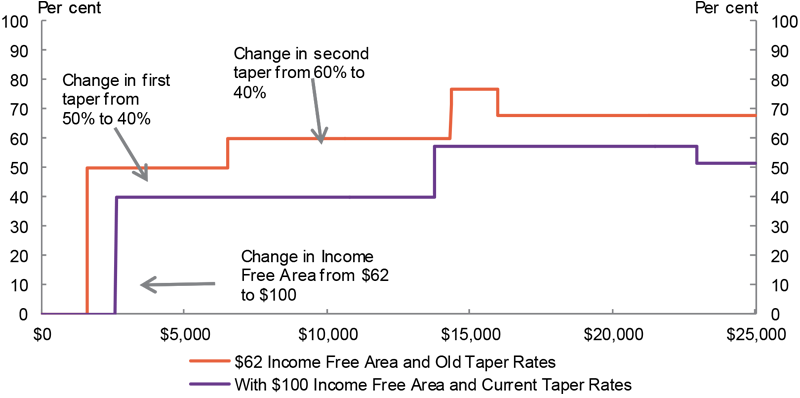
- single principal carer parents on Newstart can now keep up to $4,100 more of their income over a year from part-time work;
- the amount of income that young people who are unemployed and on Youth Allowance can earn before they start to lose benefits has been increased from $62 to $143 a fortnight;
- the number of hours a person on the Disability Support Pension can work and retain access to their pension has been increased from 15 to 30 hours per week; and
- eligibility requirements for Parenting Payment have been aligned following a six-year transition.
Lifting Participation
In the 2013-14 Budget, several measures have been introduced to increase workforce participation incentives for income support recipients and working families:
- the income free area for Newstart and similar allowance payments will be increased to $100 per fortnight and indexed from 1 July 2015 - recipients can earn more before their allowance is affected;
- the Pensioner Education Supplement will be extended to single principal carers on Newstart to undertake training and education to build skills for employment; and
- single parents who are no longer eligible for Parenting Payment nor qualify for income support due to earnings will have their eligibility for the Pensioner Concession Card extended from two to 12 weeks.
Effective marginal tax rate for a single principal carer with two kids (aged 9 and 14) in 2013‑14