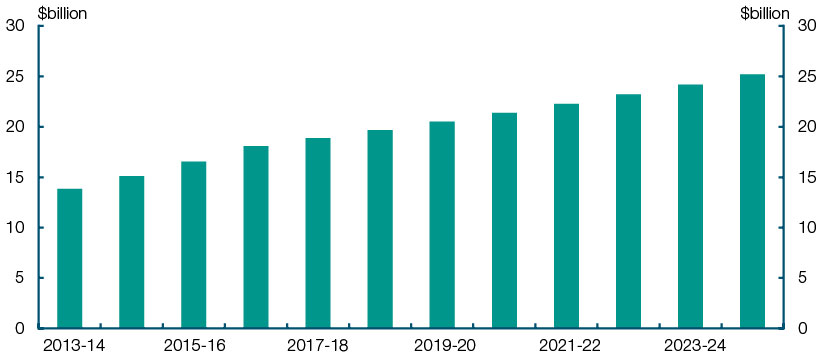


Putting hospital funding on a sound footing
The Government’s changes will bring excessive growth in funding for public hospitals under control while ensuring real funding increases every year
Ensuring value for taxpayer dollars in the public hospital system
The Government is focused on ensuring efficiency in the health system by removing ineffective or wasteful funding arrangements.
The Government will not proceed with the previous Government’s guarantees to increase funding to the States regardless of how many or how few public hospital services are delivered. Reward funding under the National Partnership Agreement on Improving Public Hospital Services will also cease.
Moderating spending growth in the future
The last government’s public hospitals funding arrangements would have had unsustainably high growth beyond previously published estimates.
Without changes made in this Budget, Commonwealth funding for public hospitals would have almost tripled from 2013-14 to 2024-25.
From 2017-18 the Government will index public hospitals funding by a combination of growth in the Consumer Price Index and population.
State and Territory governments are responsible for managing public hospitals, and are therefore best placed to improve efficiency in the hospital system.
The changes in this Budget will provide a platform to consider longer term arrangements in the context of the White Papers on the Reform of the Federation and the Reform of Australia’s Tax System.
Savings from the changes to public hospital funding will be invested in the $20 billion Medical Research Future Fund.