


New South Wales
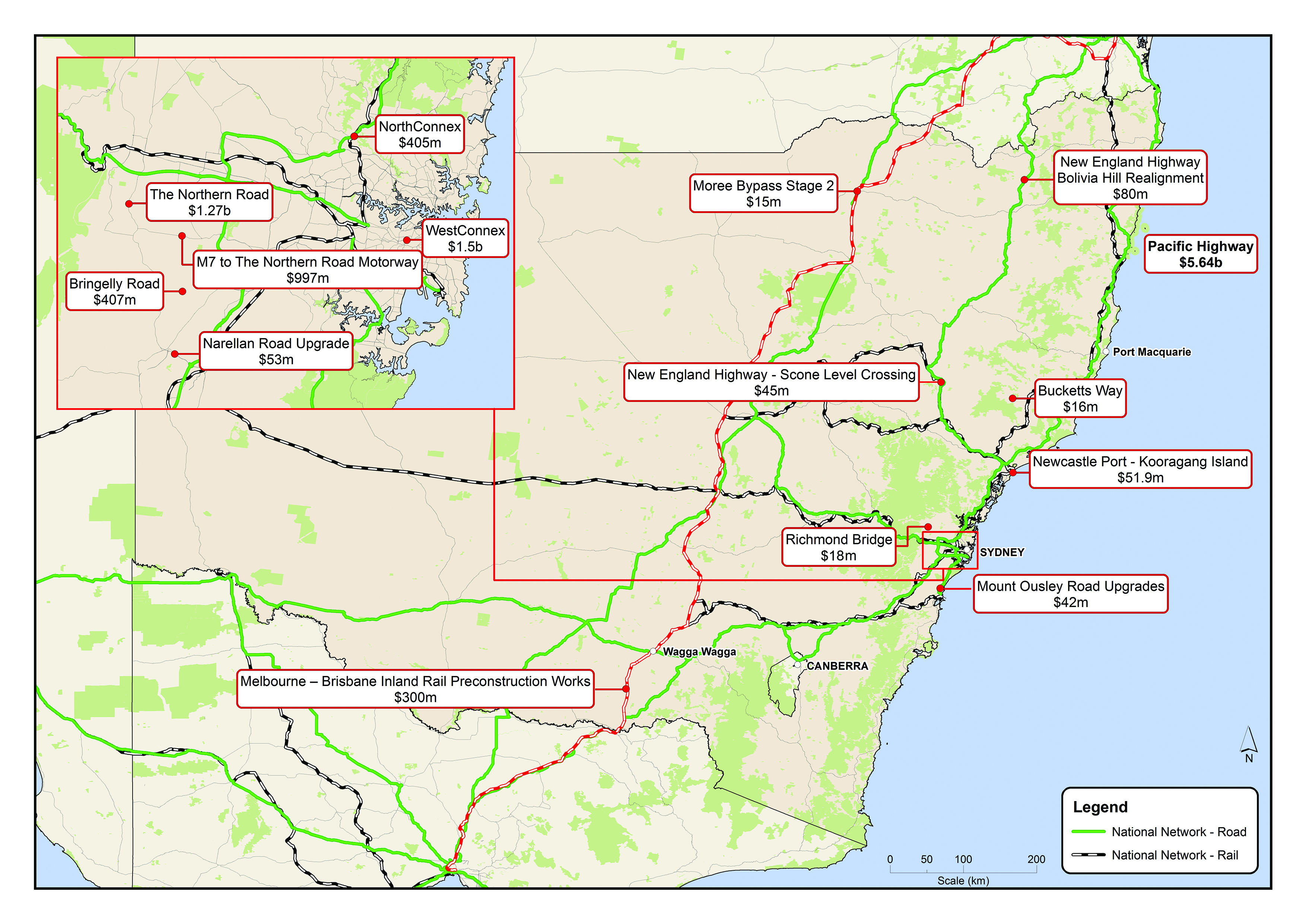
The Australian Government is investing $14.9 billion into New South Wales to fund major projects, including:
- the Western Sydney Infrastructure Plan, a ten-year road investment programme to meet future growth in the South West Growth Centre and for the development of an airport at Badgerys Creek;
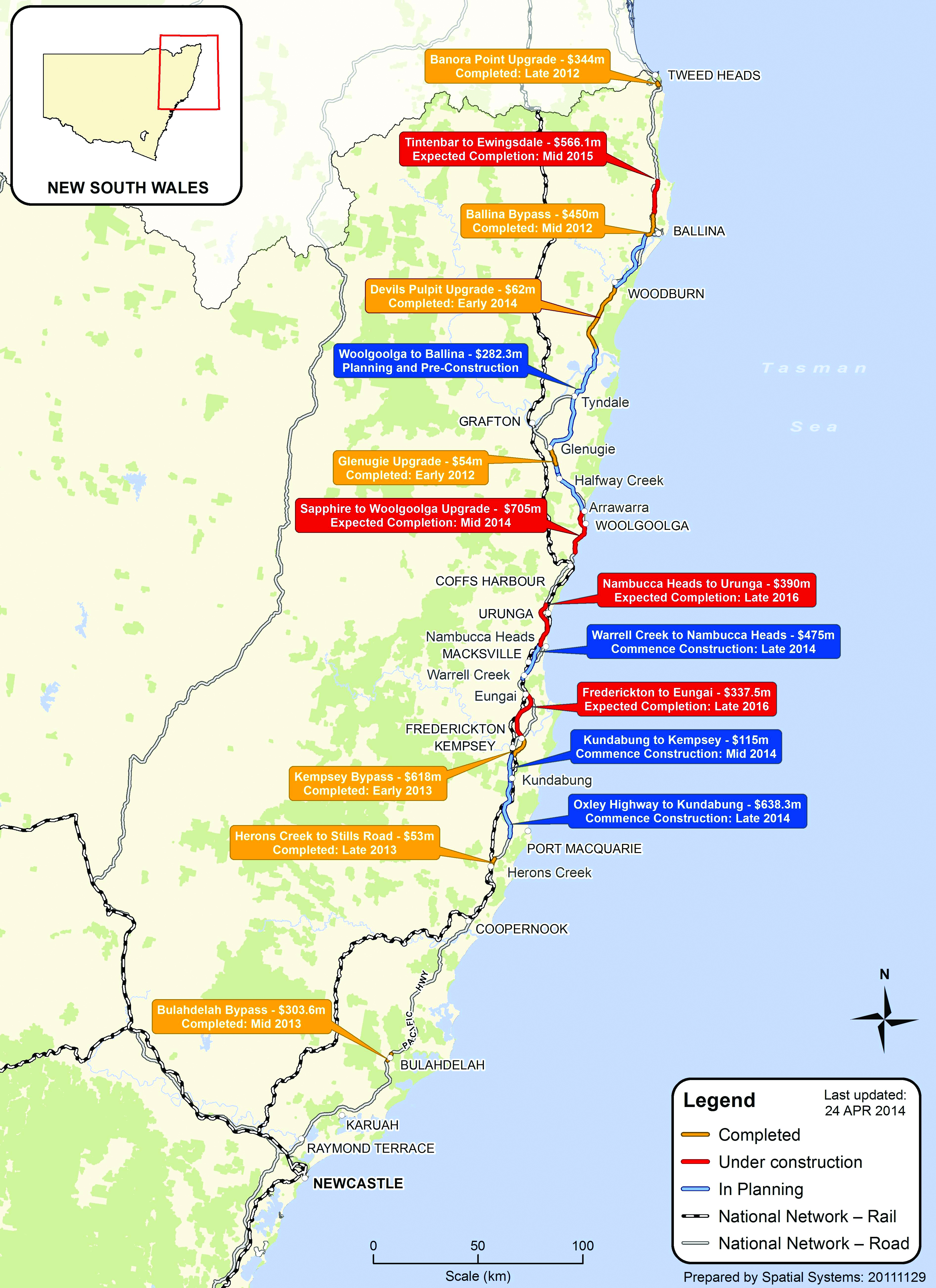
- the Pacific Highway upgrade, which will be completed by the end of the decade;
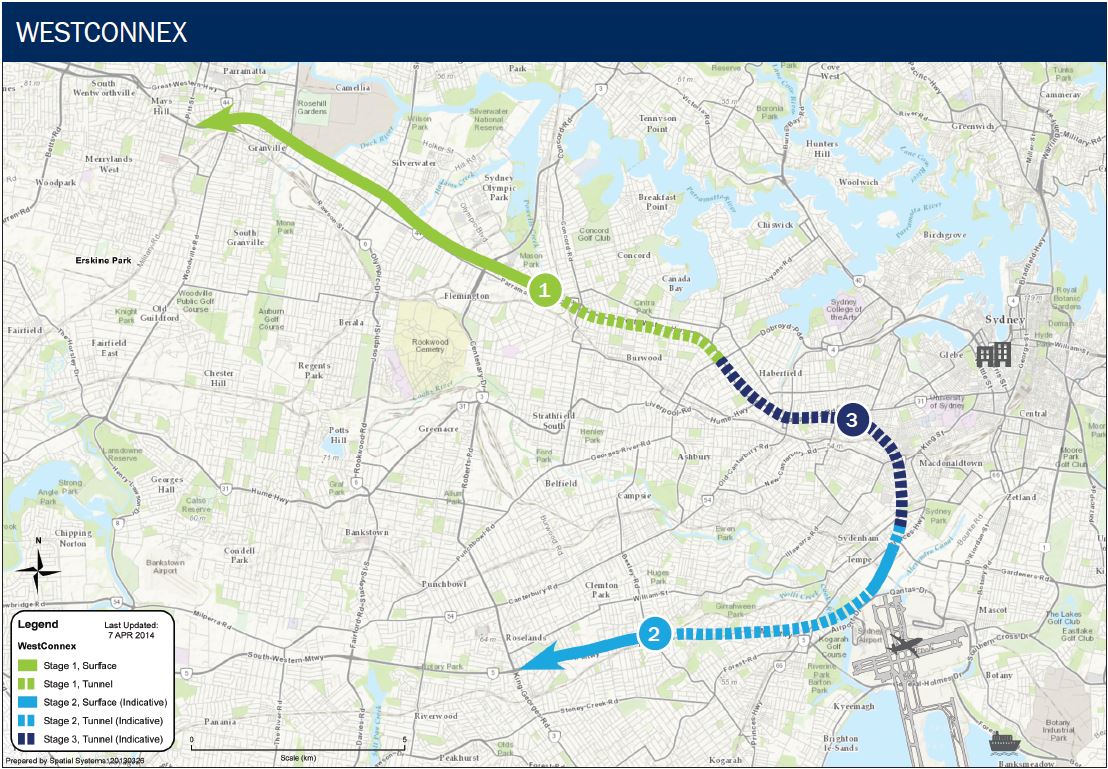
- WestConnex, 33 kilometres of new and upgraded motorways linking Western and South‑Western Sydney with the city, Sydney Airport and port precincts;
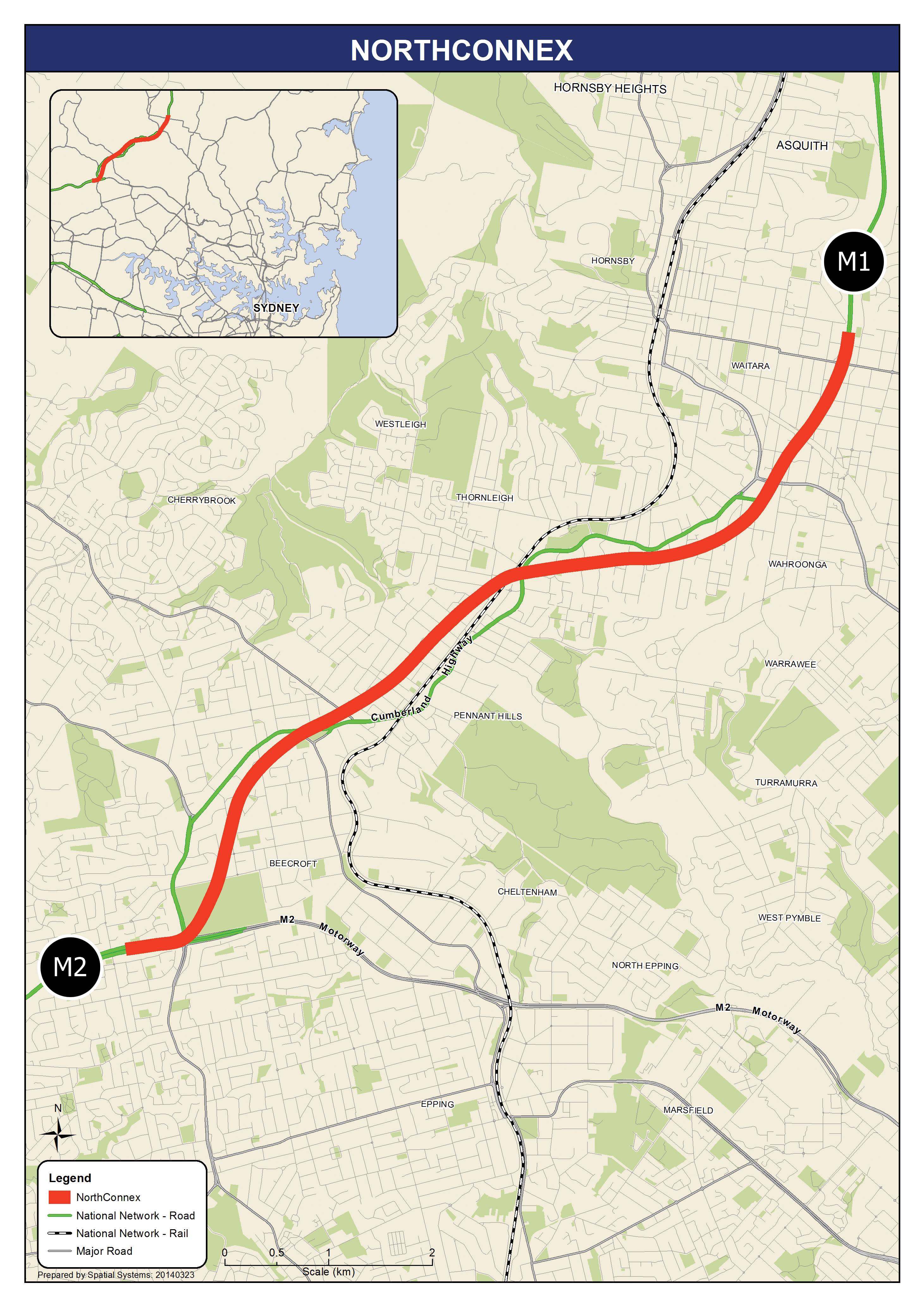
- NorthConnex, a nine kilometre tunnel under Pennant Hills Road bypassing 21 sets of traffic lights; and
- the M1 Productivity Package for capacity improvements in four sections of the M1 Motorway.
These and other significant commitments the Australian Government has made in New South Wales since the 2013 Federal Election are detailed below.
Western Sydney Infrastructure Plan
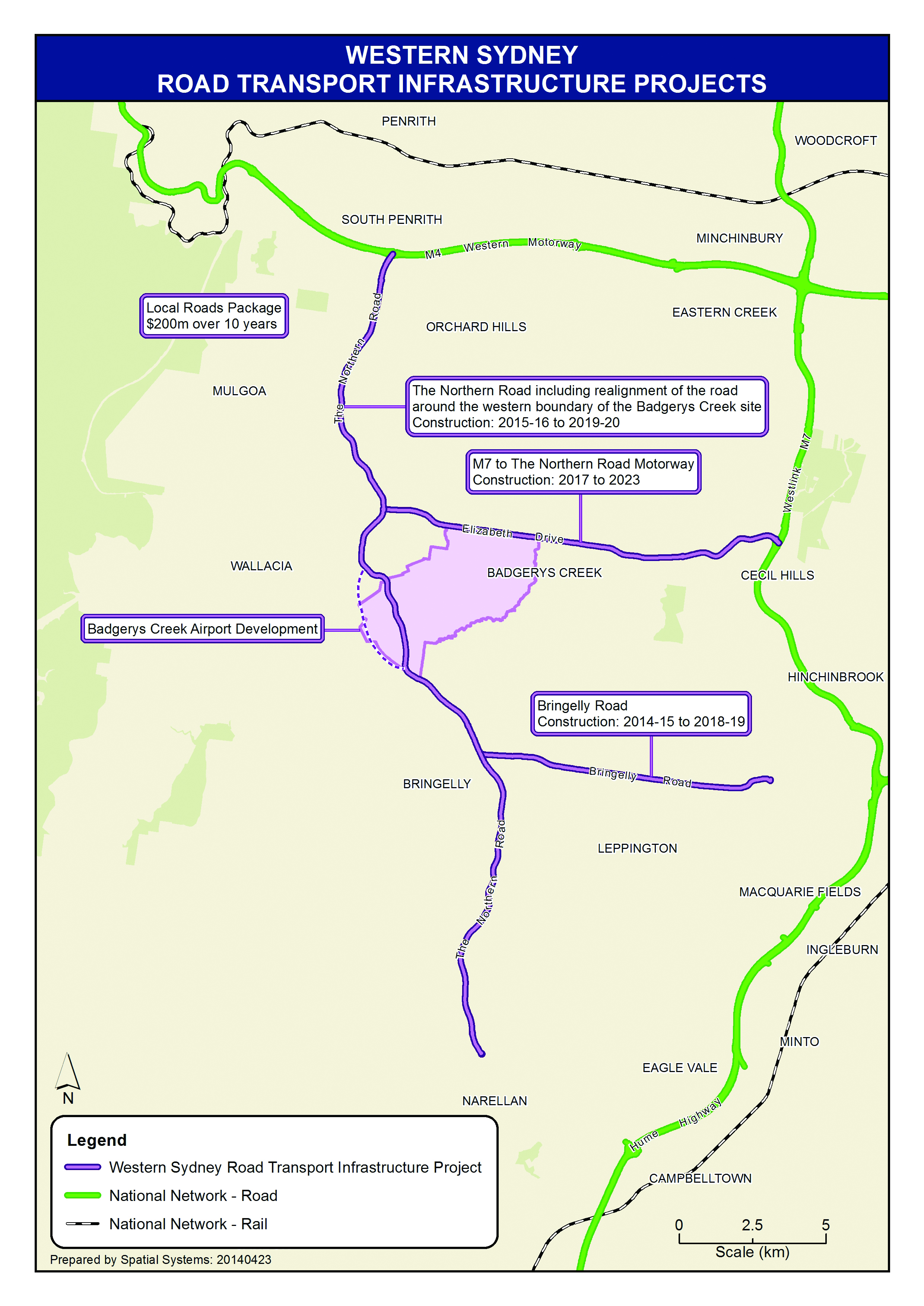
The Australian Government, in partnership with the New South Wales Government, has announced a ten‑year road investment programme of close to $3.5 billion for Western Sydney — the Western Sydney Infrastructure Plan. This programme includes:
- upgrade of the Northern Road to a minimum of four lanes from Narellan to the M4 Motorway;
- construction of a new four‑lane motorway between the M7 Motorway and the Northern Road;
- upgrade of Bringelly Road to a minimum of four lanes from Camden Valley Way to the Northern Road;
- improved interchanges connecting the Northern Road and the new motorway with arterial roads; and
- a $200 million local roads package.
Benefits of the investment programme include capacity to handle future traffic growth in the South West Growth Centre and for the development of an airport at Badgerys Creek, as well as improved local transport connections. The Australian Government is providing $2.8 billion towards this package, with construction due to commence in 2014‑15, for completion in 2024.
In addition, the New South Wales Government is undertaking corridor planning for a continuation of the South West Rail Link to the Badgerys Creek airport site and onward to St Marys, where it would connect with Western Line Services, as well as south to Narellan. The Australian Government will also preserve a rail corridor and station box at the Badgerys Creek airport site for future use.
WestConnex
The WestConnex project, with a cost estimate of over $11 billion, is one of the largest transport infrastructure projects in Australia.
WestConnex will deliver 33 kilometres of new and upgraded motorways linking Western and South-Western Sydney with the city, Sydney Airport and port precincts. WestConnex will remove traffic from surface roads and place it in underground tunnels‑bypassing up to 52 sets of traffic lights. Up to 3,000 trucks a day will use these tunnels instead of Parramatta Road, creating the opportunity for urban renewal along Parramatta Road. Travel times for motorists travelling between Parramatta and Sydney's Kingsford Smith Airport will be reduced by up to 40 minutes.
The Budget provides $1.5 billion in Australian Government funding for the project and a concessional loan of up to $2 billion to accelerate delivery of Stage 2 by up to 18 months. This innovative financing solution will provide bridging finance while the project is constructed, with repayment to occur when the project becomes operational and generates revenue. In addition to accelerating the delivery of Stage 2, the loan will enable this stage to be constructed at a reduced capital cost.
WestConnex will deliver more than $20 billion in economic benefits to New South Wales. Around 10,000 jobs will also be created during the construction of the project‑including many apprenticeships.
Construction commences in July 2015, with completion of all stages of WestConnex expected in 2023.
NorthConnex
The $3 billion NorthConnex project will provide a continuous motorway between the New South Wales Central Coast and Western and South‑Western Sydney. NorthConnex will also make it possible to travel by road from Newcastle to Canberra and Melbourne without encountering a single set of traffic lights.
NorthConnex comprises the construction of twin three‑lane road tunnels. The tunnels will be approximately nine kilometres in length, running beneath Pennant Hills Road and the Northern Railway Line, linking the M1 Pacific Motorway at Wahroonga to the M2 Motorway at West Pennant Hills. The Commonwealth is contributing $405 million, including $5 million in 2013‑14 to assist with the costs of conducting a tender process. Construction is expected to commence in early 2015, with completion expected by late 2019.
By bypassing up to 21 sets of traffic lights, the project will reduce travel times by up to 15 minutes during peak periods compared with current travel times on Pennant Hills Road.
The reduction of up to 5,000 heavy vehicles on Pennant Hills Road will improve safety, local air quality and noise amenity along the corridor. It will also reduce congestion on the local road network and provide the opportunity for better public transport in the local area along Pennant Hills Road. There is also potential for urban renewal from reduced traffic, returning local streets to local communities.
Pacific Highway
The Australian and New South Wales Governments are working together to complete the Pacific Highway upgrade by the end of the decade.
The upgrade will increase freight efficiency through reduced costs for transport operators, while providing local benefits through enhanced amenities for townships that will be bypassed by the upgraded Pacific Highway. It will provide a four‑lane divided road from Hexham, near Newcastle, to the Queensland border. The Australian Government has committed $5.6 billion from 2013‑14 towards the upgrade.
The benefits already being realised over the length of the highway include:
- travel time savings of an average of around 90 minutes for light vehicles and an average of 100 minutes for heavy vehicles. The overall savings in travel time are expected to increase to 2.5 hours when the full upgrade is complete; and
- halving of fatal crashes from the mid‑40s to the 20s annually, along the entire length of the highway. It is anticipated that future upgrades will continue to improve safety, further reducing the number of deaths and injuries on the highway.