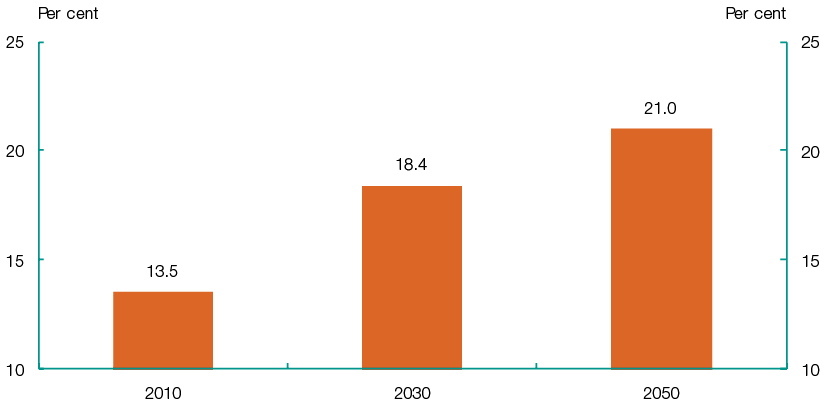

Our Age Pension system must be sustainable, as Australians live longer and healthier lives
We must be able to both celebrate and support higher life expectancy and healthier lives for the future
The Government is meeting its commitment on the Commonwealth Seniors Health Card
A sustainable pension system
It is a sign of a healthy, strong, nation that Australians are increasingly living longer lives.
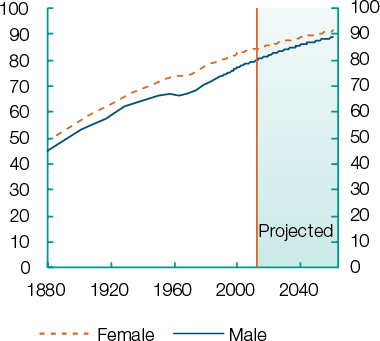
An Australian woman born today can expect to live for around 84.8 years and an Australian man can expect to live for around 80.6 years.
When our pension and welfare system was introduced, it was a very different story, with life expectancy of 58.8 for women and 55.2 for men. This is why we need to take a good look at how to make our Age Pension system strong for all of our futures.
The Government understands the challenges facing older Australians. Many seniors have not benefited from a lifetime of superannuation, and for many the Age Pension is wage replacement.
Changes announced to the Age Pension will not start until 2017.
The family home will not be included in the pension means test.
Pension reforms
All pension assets test and income test thresholds will be fixed for three years from 1 July 2017. Maintaining these thresholds will not lead to any reduction in the rate of the pension.
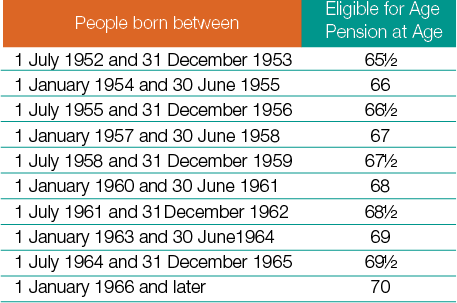
Building on the move by the previous Government to increase the Age Pension age to 67 by 1 July 2023, the Government will continue this growth and increase the Age Pension age to 70 by 1 July 2035.
From 1 September 2017, the Government will link pension increases only to inflation.
For the purposes of the pension income test, the Government will also change how it deems the return from a person's financial assets.
The Government will reset the deeming thresholds from $46,600 to $30,000 for singles and from $77,400 to $50,000 for couples from September 2017.
Recognising the Government's commitment to abolish the carbon tax, while keeping in place the associated pension increases, the Government will maintain the Energy Supplement (formerly known as the Clean Energy Supplement) at current levels.
The Government will not make any changes to pensions before 2017.
Commonwealth Seniors Health Card holders
The Government will meet its election commitment to senior Australians to index the eligibility thresholds for the Commonwealth Seniors Health Card (CSHC) from September 2014.
This change means modest variations in income will not affect eligibility, and will reduce uncertainty for people in this group. This will be the first time the thresholds have increased since 2001.
To ensure people with similar incomes are treated consistently, from 1 January 2015 superannuation will be treated for new recipients in the same way for the CSHC income test as it is for the Age Pension.
Currently CSHC holders also receive the Seniors Supplement, $876.20 per annum for singles and $1,320.80 combined for couples.
To help ensure that payments to senior Australians remain targeted to those who need them the most, the Government will cease payment of the Seniors Supplement received by those eligible for a CSHC entirely after the June 2014 payment.
This will help ensure the sustainability of the CSHC.
CSHC holders will still remain eligible for:
- discounts on PBS medicines;
- health safety net thresholds; and
- lower fees on medical services.