

Economic Outlook
The Australian economy will face an ongoing transition
The Government has been left with an economy growing below trend for four of the past five years and rising unemployment. A transition period continues with the mining construction boom now ending, the population ageing and low productivity growth.
For the economy to once again reach its full potential, we need to increase activity in the non-resources sectors, fostering a work culture and boost productivity growth.
There are some signs that the economy is coping well with the transition already. Household consumption is improving and dwelling investment is forecast to rise strongly on the back of low interest rates. Resources exports will also grow strongly, reflecting newly finished capacity.
But more needs to be done and this Budget is squarely pitched at building our future growth potential and job opportunities while not placing additional near‑term pressure on the economy.
A credible path to surplus is being forged, with structural reforms delivering growing medium-term savings that are projected to build to a surplus of well over one per cent of GDP by 2024‑25.
The $11.6 billion Infrastructure Growth Package will increase total infrastructure investment by the Australian Government, State and local governments and the private sector to over $125 billion, which will boost annual GDP by one percentage point.
Reforms to the role of Government, including higher education reform and welfare reform, will provide greater incentives for all age groups to enter and stay in the workforce. Deregulation and the continued streamlining of the Australian Public Service will also support growth potential.
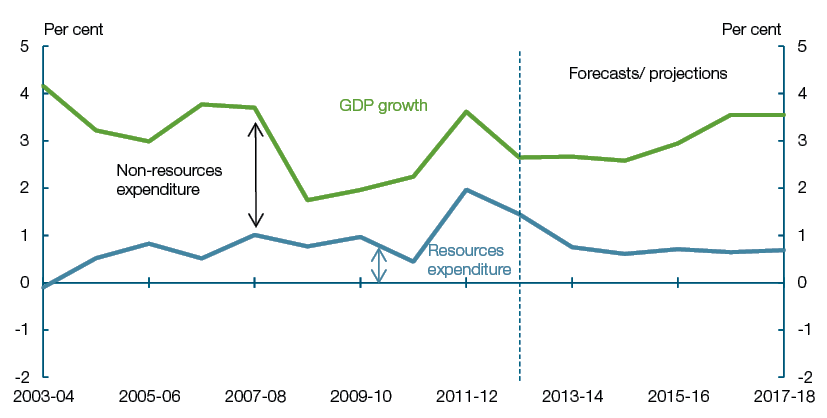
Note: Assumes that mining investment has an import share of 50 per cent.
Source: ABS Cat. No. 5204.0, 5206.0 and 5302.0, BREE and Treasury.