
Strengthening the higher education system
The Government's reforms place higher education on a strong and sustainable financial footing, sharing fairly the cost between students — who benefit from having tertiary qualifications — and taxpayers
Expanding access to higher education
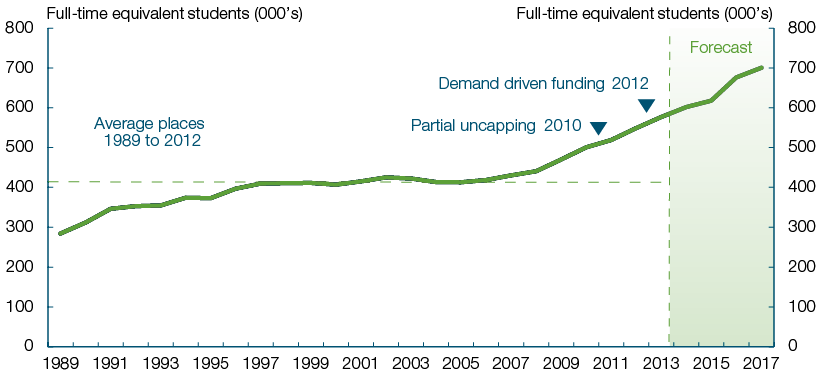
For the first time, the Government will provide direct financial support to all students studying diplomas, advanced diplomas and associate degree courses, as well as those studying bachelor degrees, at all approved higher education institutions. This will see the Government supporting over 80,000 more students by 2018, at a cost of $820.4 million over three years.
Strengthening the higher education system
From 1 January 2016 higher education providers in Australia will be able to set their own tuition fees for the courses that they offer.
Fees will remain the responsibility of higher education providers. With these changes, some course fees may rise and some course fees may fall, as education providers compete for students and as the Government funding increases for some courses.
A more sustainable HELP system
The Government will continue to help students defer the cost of their study until they reach a point where it is fair that they begin to repay their loan. To help ensure the HELP loan scheme will be sustainably and fairly funded into the future:
- graduates will begin to repay their HELP debt only once they start earning over $50,638 from 1 July 2016; and
- the interest rate applied to HELP loans will be changed to a rate that reflects the cost of Government borrowings, with a maximum rate of 6 per cent.
Commonwealth Scholarships
Higher education providers will be required to direct 20 per cent of the additional revenue raised to Commonwealth scholarships, supporting access for disadvantaged students.