
Aggregate Tax Expenditures
Table C1 shows
estimates and projections for the period 1992-93 to
2000-01 of the aggregate of tax expenditures that have
been identified and costed in the 1995-96 Tax Expenditures
Statement (TES), which was published in January 1997.
The availability of new information on forward estimates
and decisions taken since the TES was published have
led to a re-estimation of forward projections for aggregate
tax expenditures.
Table
C1: Aggregate Tax Expenditures and Direct Outlays 1992-93
to 2000-01
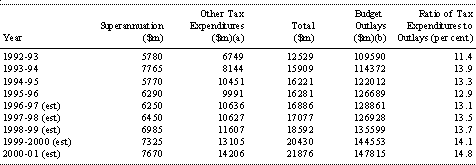
(a) This aggregate does not include timing measures.
(b) Outlays are reported on a headline basis.
There are a number of major considerations in analysing
aggregate tax expenditures:
- Many of the tax expenditures that have been identified
have not been costed due to a lack of data.
- There has been an inconsistent coverage of tax expenditures
over time - some tax expenditures have been costed
for only a few of the fiscal years that they have actually
been part of the tax system. Changes in aggregates
over time will therefore reflect both changes in the
cost of individual tax expenditures and changes in
the coverage of the tax expenditures costed.
- There can be quite large revisions to tax expenditure
estimates due to changes over time in methodology and
available data.
The aggregate projections should therefore be treated
with considerable caution and should only be used to
provide a broad indication of the historical and possible
future growth path of the cost of tax expenditures.
Bearing these considerations in mind, Table
C1 shows that the net cost of aggregate tax expenditures,
in terms of forgone revenue, has remained at around
$16.2 billion in 1994-95 and 1995-96 (excluding so
called 'timing' tax expenditures which merely defer
tax revenue collections to a later date). Table
C1 also indicates that assistance provided through
aggregate tax expenditures is about 11 per cent of
total Government assistance provided (ie through tax
expenditures and direct outlays).
The cost of tax expenditures (excluding 'timing' tax
expenditures) is projected to rise to $21.9 billion
in 2000-01, an increase of 34 per cent from 1995-96.
By comparison, direct outlays are expected to increase
by 17 per cent over the same period.


