|
|
| Home | Search | Site Map | Help | |



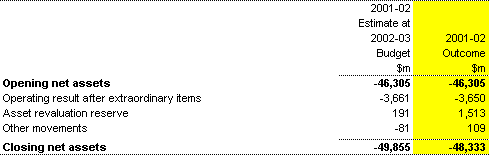
This Part presents financial statements that have been prepared on an accrual basis in accordance with applicable Australian Accounting Standards, including Australian Accounting Standard No. 31 Financial Reporting by Governments (AAS31), except where departures from the standard are identified in Note 1.
This Part also provides month of June figures consistent with monthly financial statements.
A reconciliation between the Commonwealth's general government AAS31 and Government Finance Statistics (GFS) revenue, expenses and operating result is provided in Appendix A.
Table 23: Statement of financial
performance for the Commonwealth
general government sector - AAS31
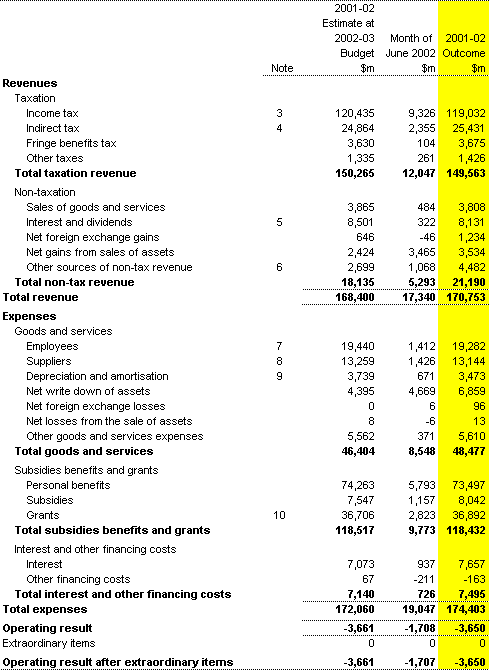
Table 24: Statement of financial
position for the Commonwealth general
government sector - AAS31
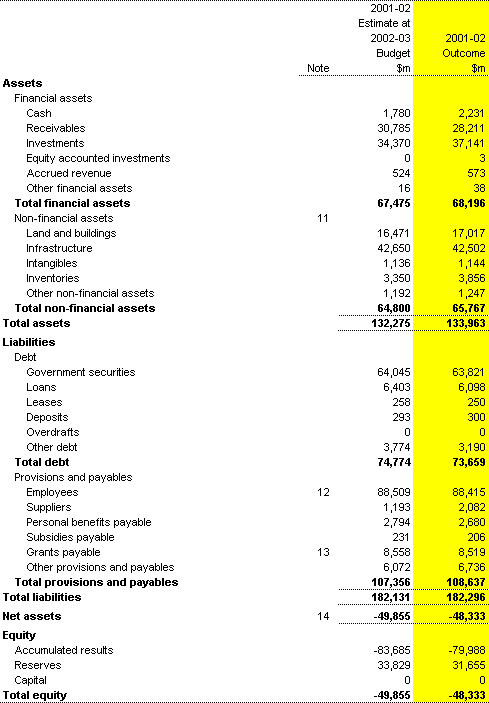
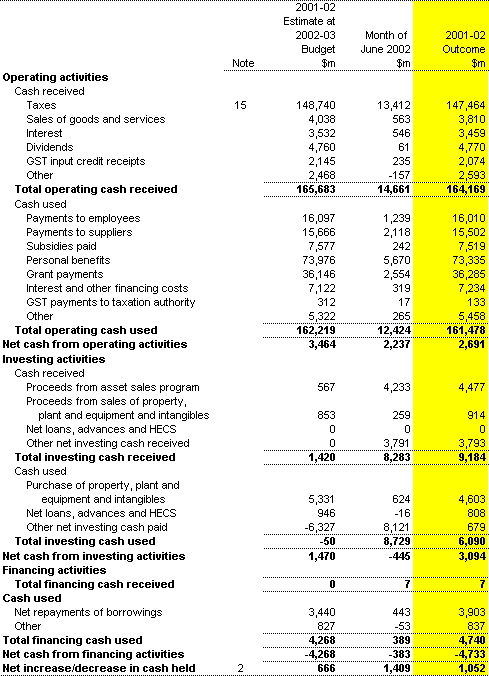
Table 25: Statement of cash flows for the Commonwealth general government sector - AAS31
Note 1: External reporting standards
The Charter of Budget Honesty Act 1998 requires that the Final Budget Outcome be based on external reporting standards and that departures from applicable external reporting standards be identified.
The financial statements included in the Final Budget Outcome have been prepared on an accrual basis in accordance with applicable Australian Accounting Standards, including Australian Accounting Standard No. 31 Financial Reporting by Governments (AAS31). AAS31 is the relevant accounting standard for financial reporting by governments.
AAS31 requires adoption of the full accrual basis of accounting. This means that assets, liabilities, revenues and expenses are recorded in financial statements when they have their economic impact on the government, rather than when the cash flow associated with these transactions occurs. Consistent with AAS31, a statement of financial performance, statement of financial position and a statement of cash flows have been prepared using results for 2001-02.
The accounting policies in this section are generally consistent with the accounting policies in AAS31. While the scope for financial reporting recommended in AAS31 is the Whole of Government (that is, the Commonwealth public sector), in accordance with the Charter of Budget Honesty Act 1998, the presentation of financial outcomes covers the general government sector only.
In relation to taxation revenue, AAS31 suggests revenue be recognised at the time the income (or economic activity) giving rise to a tax liability occurs, where this can be measured reliably. At this stage, the Commonwealth does not consider its taxation revenues can be reliably measured on this basis for outcome reporting purposes. Taxation revenue in the Final Budget Outcome is therefore recognised at the time a taxpayer makes a self-assessment or when the Australian Taxation Office (ATO) or the Australian Customs Service (ACS) raises a tax assessment.
In regard to GST revenue, AAS31 and other relevant accounting standards would suggest the gross amount of GST be included in the Commonwealth's financial statements. However, the clear policy intent of the Intergovernmental Agreement on the Reform of Commonwealth-State Financial Relations (the IGA) is that the GST is a State tax collected by the Commonwealth in an agency capacity. Therefore, accrued GST revenues and associated payments to the States and Territories are not recorded in the financial statements.
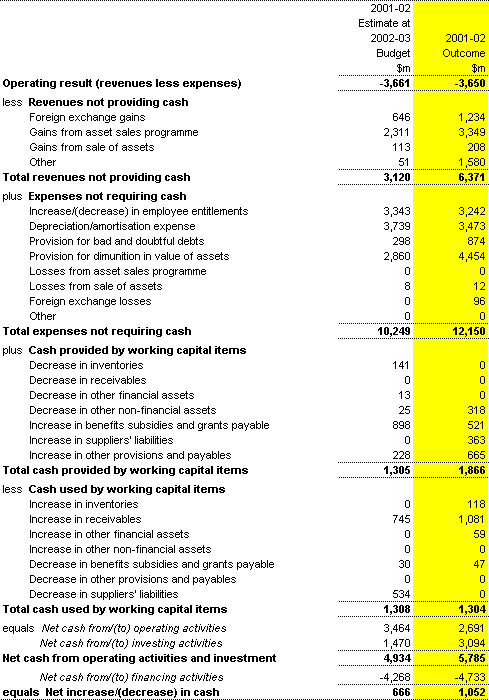
Note 2: Reconciliation of cash
Note 3: Income tax - accrual AAS31
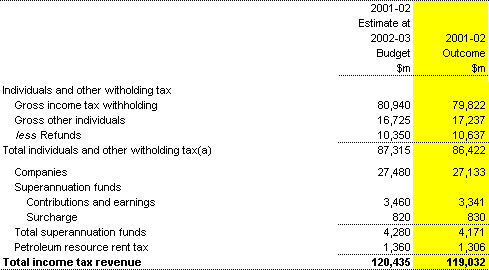
(a) Consistent with the treatment at Budget, the family tax benefit and private health insurance rebates are recorded as expenses.
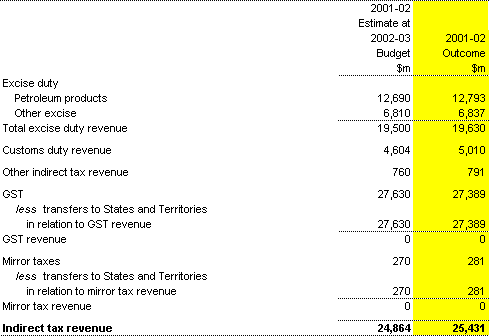
Note 4: Indirect tax - accrual AAS31
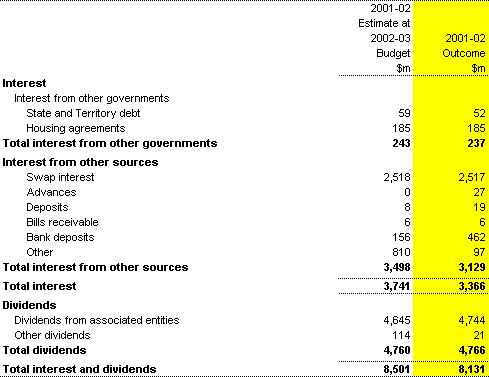
Note 5: Interest and dividends
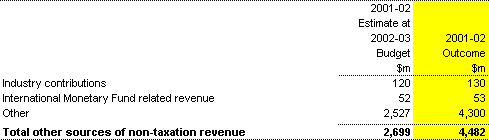
Note 6: Other sources of non-taxation revenue
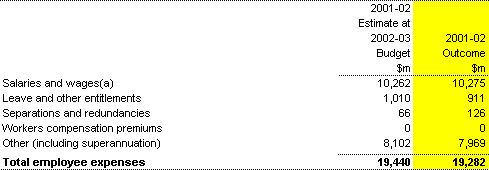
(a) Salaries and wages do not include superannuation.
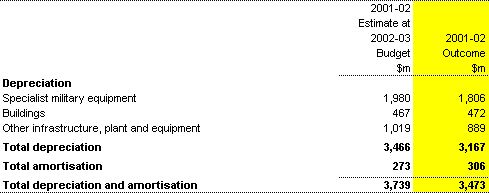
Note 9: Depreciation and amortisation
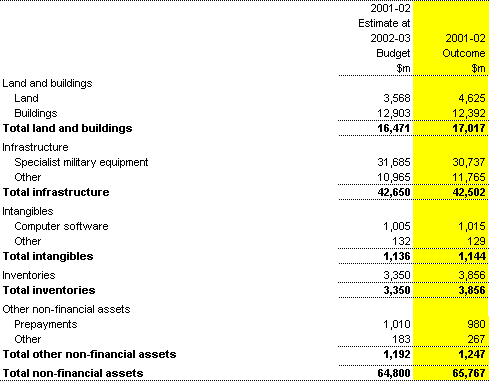
Note 11: Total non-financial assets
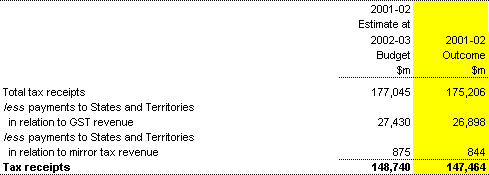
Note 15: Taxes - cash AAS31