With financial markets at their most stressed since the early 1930s, and economic activity falling simultaneously in economies around the world in an unprecedented manner, no country has been immune from the global recession.
The world economy is set to contract in 2009, for the first time in six decades. The worst global recession since the Great Depression is expected to be followed by a modest recovery in 2010.



A deep recession
Strong financial and real economy linkages have turned the global financial crisis into a global recession.
The world economy is now expected to contract by 1½ per cent in 2009.
Advanced economies are in the midst of a deep recession while growth in emerging economies has slowed dramatically.
Global fiscal positions have worsened, with advanced economy budget deficits projected to be 8.8 per cent of GDP in 2009.
Exceptional policy actions
Central banks have slashed interest rates to support economic activity and dramatically expanded their balance sheets to ensure adequate liquidity.
Guarantees and capital injections are working to stabilise the global financial system.
Major economies have agreed to inject large fiscal stimulus to support activity and jobs. Such stimulus, as well as the operation of the automatic stabilisers, is expected to raise G-20 GDP by up to 3¼ percentage points in 2009.
A modest global recovery
Notwithstanding these policy measures, the recovery is expected to be modest and gradual.
History shows that episodes of financial crisis have been associated with much deeper and longer recessions and much weaker recoveries.
Global economic growth is expected to remain below average until the end of 2011, with output in the US, euro area and Japan expected to remain below pre-crisis levels.
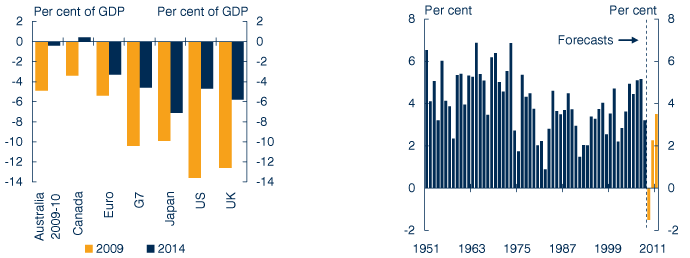
Expectations for 2009 fiscal positions deteriorate
Global economic growth