



Recognising skills — delivering trades
Chris worked helping in his father's mechanic workshop after leaving school. He then joined a mining company as an apprentice mechanic. As a result of prior experience, his fast learning, and the quality of his work, Chris was doing the work of an apprentice mechanic above his year level.
Under the competency‑based progression initiative, Chris' employer received assistance through his industry skills council to instil competency‑based progression in his workplace.
As a result Chris' previous skills were formally recognised and he completed his apprenticeship in under three years.
Recognising skills for faster completions
Competency‑based progression provides the opportunity for individuals to be recognised for their skills sooner (including progressing to higher wages), provided they meet relevant standards.
To this end, the Government is investing $100 million to support Accelerated Australian Apprenticeships based on the skills gained rather than time served. This includes funding for new projects to trial new apprenticeship models. For example, industry will be able to provide training customised to the needs of individual apprentices so that they can move more quickly through their training and advance to the next level of learning and pay. They will be supported by the development of model clauses in awards which could allow for apprentices to progress based on their skills, to receive higher first and second year wages.
Recognising the skills of mature age workers
A $30 million More Help for Mature Workers initiative will help employers take advantage of the experience of older workers, through skills assessments, recognition and gap training for workers 50 years and over who have trade relevant skills but no formal qualifications. This will acknowledge the valuable lifetime learning that many mature trade workers have accumulated but do not have formally recognised. It will also help eligible mature workers with job retention, progression and transition.
Most apprenticeships take over three years to complete and there has been little improvement over the past 10 years
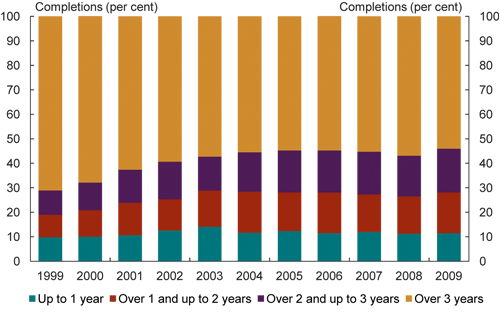
Source: NCVER, Apprentices and trainees, 2009 annual report.