



Building better skills for workforce participation
Around 40 per cent of working age Australians need improved literacy and numeracy skills to participate in society and meet the requirements of the jobs of the future.
Poor foundation skills can have significant negative impacts on individuals and the economy, resulting in lower wages, fewer job opportunities, reduced participation and constraints on productivity.
These are further steps towards building better skills for improved workforce participation and future changes will be informed by the National Foundation Skills Strategy.
Skills for workforce participation
In this Budget, the Government is investing $263 million to help people attain the basic skills such as reading, writing and numeracy needed to participate in the workforce, including:
- $143 million to provide 30,000 additional commencements for job seekers in the Language, Literacy and Numeracy Program
- $80 million for additional training places for single and teenage parents
- $20 million to expand the Workplace English Language and Literacy program to support businesses who want to boost the core skills of their workers
- $20 million to maintain the number of places in the Australian Apprenticeships Access Program to ensure apprentices have the basic skills they need.
These measures build on the $116 million investment in language, literacy and numeracy in the 2010‑11 Budget through the Skills for Sustainable Growth initiative.
National Foundation Skills Strategy
The Government is also developing a National Foundation Skills Strategy in consultation with states, territories and other stakeholders. The Strategy will provide a framework for provision of skills training, and will be released by the end of 2011.
Literacy and numeracy — Australians aged 15 to 74
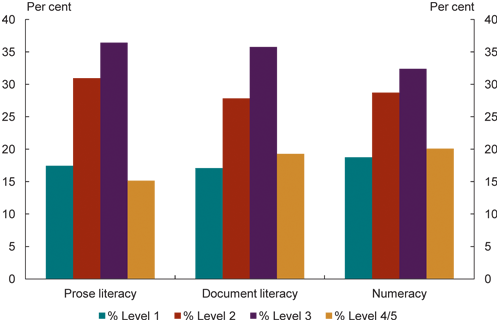
Source: ABS cat. no. 4228.
Note: Level 3 is defined as the 'minimum required for individuals to meet the complex
demands of everyday life and work in the emerging knowledge-based economy'.