Getting back in the black
This Budget delivers on our fiscal strategy and returns the budget to surplus in 2012‑13, despite the impacts of recent natural disasters.



The return to surplus
The Government is delivering on its fiscal strategy despite significant challenges posed by the recent natural disasters and the lingering effects of the global financial crisis on revenue.
The Government has maintained strict fiscal discipline to return the budget to surplus in 2012‑13. This is the fastest fiscal consolidation in at least 40 years.
The fiscal consolidation has required difficult choices and we have delivered $22 billion worth of savings and restrained government spending to help achieve this task. Two‑thirds of these savings are spending reductions.
A strong economy requires a strong budget
The budget is facing higher deficits in the early years because of slower economic growth due to recent natural disasters, spending to support the rebuilding of disaster‑affected communities and legacy issues from the global financial crisis which are holding back the recovery in revenue.
Tax receipts have been revised down by a total of $16.3 billion in 2010‑11 and 2011‑12.
However, Australia's economic prospects remain strong, with the economy expected to grow at above‑trend rates over the next
two years, supported by the highest sustained levels in the terms of trade in 140 years and an unprecedented mining investment boom.
This strong growth outlook, with already low unemployment means capacity pressures are expected to re‑emerge.
This outlook highlights the importance of the Government's fiscal strategy and our return to surplus.
Delivering surpluses is an important way of ensuring that the Government does not compound the capacity and price pressures that are expected to re‑emerge with the unprecedented mining investment boom.
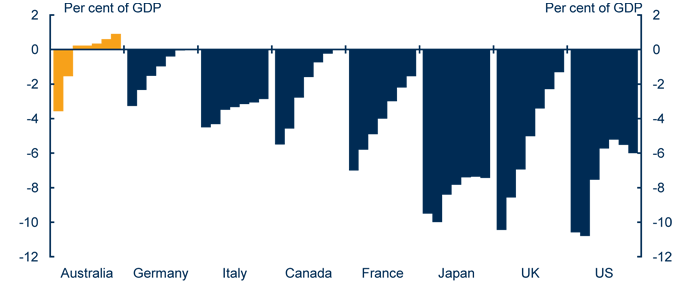
Budget Balance 2010‑2016