Strict fiscal discipline
The Government has delivered on its strict fiscal strategy through identifying significant savings to fund new priorities, meet the costs of recent natural disasters and strengthen the budget position.



Delivering sustained surpluses
The Government has taken the tough decisions necessary to ensure the budget returns to surplus in 2012‑13, while delivering on our priorities.
This return to surplus is occurring before any major advanced economy. Between 2009 and 2012, countries like the United States, the United Kingdom, France, Japan and Italy will not even halve their deficits as a share of GDP.
The fiscal consolidation required a disciplined approach to spending and identifying significant savings, which is reflected in surpluses from 2012‑13.
Major savings in the Budget
The Government has identified $22 billion worth of savings over the forward estimates, including:
- better targeting family payments ($2.0 billion);
- increasing the public sector efficiency dividend ($1.1 billion);
- reforming car fringe benefits ($954 million);
- phasing out the Dependent Spouse Tax Offset ($755 million); and
- removing access to the Low Income Tax Offset for unearned income of minors ($740 million).
Restrained spending
The Government has remained committed to its strict fiscal rules. Holding real growth in spending to 2 per cent per year has placed significant restraint on Government expenditure.
Real growth in spending averages 1 per cent a year over the budget years, the lowest five year period of growth since the 1980s.
Government spending as a share of GDP is projected to fall to 23.5 per cent of GDP in 2014‑15, below the average level for the ten years preceding the financial crisis.
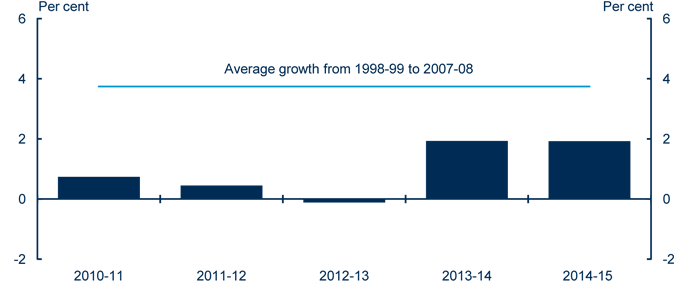
Real growth in payments