



The need for disability reform
Getting a better start
Cate has autism and requires early invention services and therapy to help her develop important skills to prepare her for school.
Under an NDIS, Cate and her family would work with a Local Area Coordinator to see if therapy would help her. If effective, these supports would be provided on an ongoing basis as part of an individual plan tailored to Cate's needs. As a result, Cate would learn and participate at school and require less care in the future.
The current system is underfunded, unfair, fragmented and inefficient
A shortage of support under current disability systems often means individuals and families reach crisis point before they get the help they need.
Families in crisis are prioritised by these systems, which in turn bumps other people down the list and increases the likelihood that they, too, will end up under extreme pressure.
This can mean that people spend time in hospitals or nursing homes when they could be living at home and participating or working in the community.
The Commonwealth will work with the States and Territories to build an NDIS that will give all Australians with severe and permanent disability access to reasonable and necessary supports over their lifetimes.
The Government is committed to an NDIS to ensure better lives for people with disability, their families and carers.
Unmet need for people with profound or severe disability requiring help with basic tasks
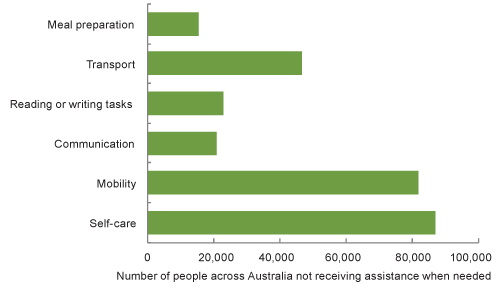
Source: Australian Bureau of Statistics, Disability, Ageing and Carers, Australia, 2009, as reported in the Productivity Commission Report into Disability Care and Support 2011.