
The current situation
The higher education system as it stands is unsustainable, remains highly regulated, and limits access for students
Unsustainable and rising costs
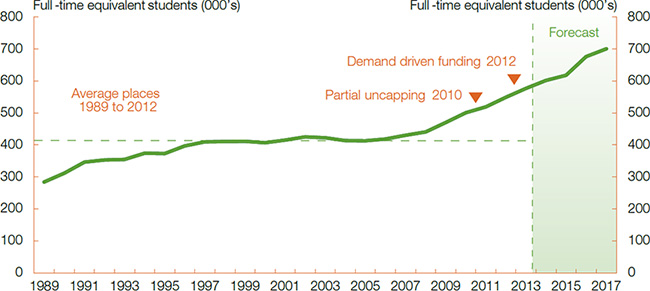
The uncapping of Commonwealth supported places has seen a sharp rise in student numbers, which has also led to increased costs for higher education incurred by the Government. Uncapped student places are now estimated to cost an additional $7.6 billion over thefive years from 2013‑14.
The cost of maintaining quality in ourhigher education institutions is rising at unsustainable rates.
The cost of student support needs to be sustainable.
Over their lifetime on average graduates earn 75 per cent more than school leavers. Graduates do not currently begin to pay back a dollar toward the cost of their degree until they earn over $51,309 a year.
Limited access
Current Government funding is limited to students in only one group of our higher education providers, with TAFEs, colleges and private providers generally not receiving funding.
This means limited access for students. Our plan is to change this.
More options are needed to make sure that less well prepared students as well as those from disadvantaged backgrounds can succeed at university and college, by providing access to alternative pathways to bachelor degrees, such as diplomas and advanced diplomas.
Constraints and uncertainty
Currently, our universities have limited prospects of competing with the best in Europe and North America and the fast developing universities of Asia.
Excessive regulation is constraining diversity, innovation and quality in the sector.
Critical research programmes have been left unfunded by the previous Government. Schemes like the National Collaborative Research Infrastructure Strategy keep high performing Australian researchers in Australia and allow universities to share high cost equipment that no one team can afford.