
Australia must not be left behind
In an increasingly competitive environment, Australia's universities cannot afford to stand still.
We need to do more now to keep up with the rest of the world
Australia's universities cannot compete with the best in the world with the current constraints of an outdated funding system.
The rest of the world is adapting to change, now its our turn.
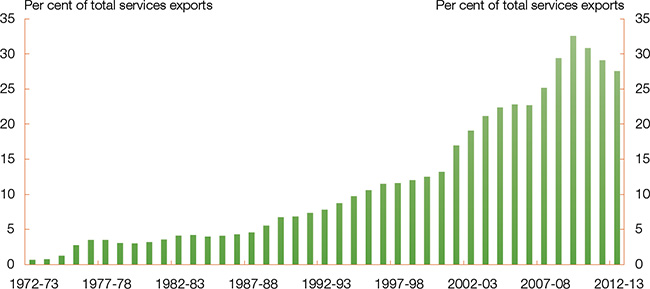
Higher education is one of the most successful new export industries in Australia. Higher education comprises two thirds of education exports. Education is now our fourth largest export earner.
Countries in our region are focussed on making rapid improvements to their universities.
We are vying for students in a fiercely competitive international market. Over the past decade, the number of foreign students worldwide has more than doubled.
| Year | No. of foreign students worldwide |
|---|---|
| 2000 | 2.1 million |
| 2011 | 4.3 million |
We are seeing rapid investment in the capacity of institutions in Asia to conduct sophisticated research.
The market for intellectual talent around the world is becoming tougher, with all countries seeking to secure top business leaders, innovators and researchers.
In 2014, The Times Higher Education Reputation Rankings listed only 5 Australian universities in the top 100, compared to 6 the previous year.
| Country/region | Universities in top 100 |
|---|---|
| United States | 46 |
| Asia | 16 |
| Europe | 16 |
| United Kingdom | 10 |
| Australia | 5 |
| Canada | 3 |
This is a timely reminder of the need for a relentless focus on the quality and impact of our higher education institutions so that they can compete with the established universities in the United States and Europe and the emerging universities in Asia.
We must now work to ensure Australian graduates are able to compete on the world stage.