

Strengthening the higher education system
From 1 January 2016 higher education providers such as universities, TAFEs and colleges in Australia will be able to set their own tuition fees for the courses that they offer.
Fees will remain the responsibility of higher education providers. With these changes, some course fees may rise and some course fees may fall, as education providers compete for students and as Government funding increases for some courses.
HELP loans will continue to be available to students to ensure that they don't pay a dollar upfront.
Commonwealth Scholarships
To keep things fair, higher education providers will be required to direct 20 per cent of the additional revenue raised to Commonwealth Scholarships, supporting access for disadvantaged students.
This will deliver participation initiatives including scholarships and bursaries.
It will also provide other support, including outreach activities, assistance with the costs of living and fee exemptions.
For students already studying, existing arrangements will remain until the end of 2020. This includes those who have commenced a course, or deferred commencement, on or before 13 May 2014.
Taxpayers will continue to fund upfront the entire cost of university courses. On average, students currently only pay back $4 out of every $10 after they begin earning a decent wage.
Changes in this budget rebalance the Commonwealth's contribution towards a new student's course fees with a reduction of 20 per cent on average with effect from 1 January 2016.
Over their lifetime graduates earn on average around $1 million more than school leavers
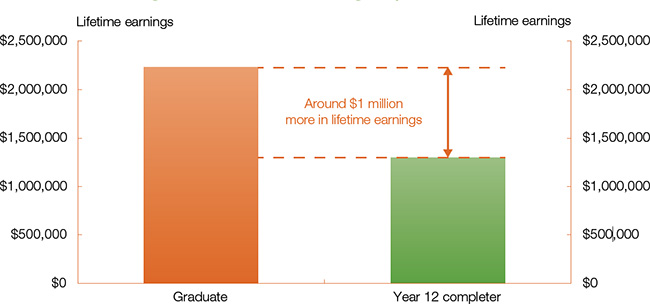
Source: Department of Education estimates, based on Graduate Winners, Grattan Institute, August 2012, p51
Australian university graduates on average earn 75 per cent more than school leavers.