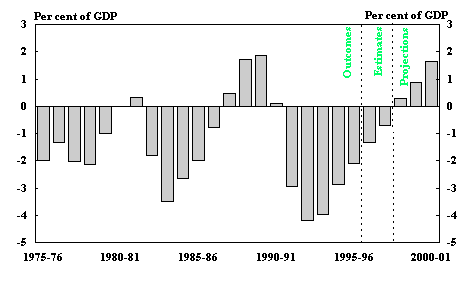
Sizeable asset sales in 1997-98 result in a large headline surplus despite the underlying deficit expected that year. The headline surplus improves in 1998-99 reflecting both an improvement in the underlying balance and some still significant asset sales in that year. Beyond 1998-99, movements in the headline balance reflect improvements in the underlying balance against a sharp fall in planned asset sales.
Table 3: Summary of Budget Aggregates
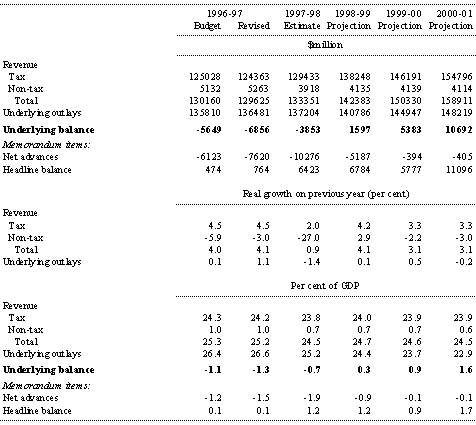
The improvement in the underlying balance over the forward estimates period is consistent with the Government's short and medium-term fiscal objectives set out in Statement 1. The improved fiscal outlook is the product of both a favourable economic outlook and savings measures announced in the 1996-97 and 1997-98 Budgets.
Table 4 presents the major economic parameters underpinning the budget estimates presented in the Budget documents. The economic forecasts and projections are discussed in detail in Part I of this Statement.
Table 4: Major Economic Parameters (percentage change from previous year)

(b) Average earnings (national accounts basis). Forecast earnings growth excluding the expected impact of above average Commonwealth Government redundancies is 4½ per cent in 1996-97 and 4 per cent in 1997-98.
(c) Headline Consumer Price Index.
A range of factors may change the budgetary outlook in future years. Appendix A sets out a Statement of Risks which details risks that may have a material effect on the fiscal outlook. One factor influencing the fiscal outlook will be variations in the economic parameters. A discussion of the estimated sensitivity of the outlays and revenue estimates to changes to the economic parameters is provided in Appendix B to this Statement.
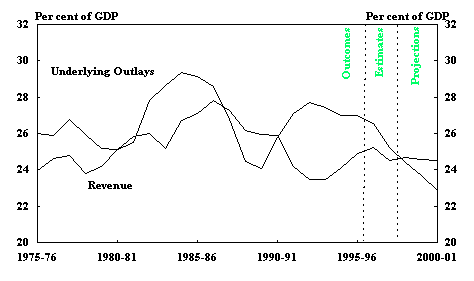
Outlays restraint makes a significant contribution to the expected improvement in the fiscal position. In real terms, underlying outlays are expected to fall in 1997-98 and remain broadly unchanged in the outyears. With strong economic growth projected over this period, underlying outlays as a proportion of GDP are expected to fall by over 3½ percentage points between 1996-97 and 2000-01.
Outlays savings from 1998-99 stem largely from the Government's decision to introduce a new savings rebate in place of the 'LAW' tax cuts (which were later proposed as Government superannuation contributions and shown on the outlays side of the budget). As the new savings rebate scheme is to be implemented through the taxation system, there is some offset to the lower outlays in the form of lower revenues. In net terms, savings from this measure amount to $729 million in 1998-99, rising to $1.9 billion in 2000-01.
Revenue as a share of GDP is expected to fall to 24½ per cent in 1997-98 and remain broadly around that level over the forward estimates period. This reflects the effects of steady economic growth, the absence of significant fiscal drag in a low inflation environment, the impact of the savings rebate, and the effects of new base protection measures.
The fiscal outlook and projected trend for outlays and revenues compare favourably with recent history. As shown in Chart 10, fiscal consolidation in the second half of the 1990s is being achieved by the steady reduction of underlying outlays as a share of GDP and the broad maintenance of the revenue to GDP share. By the end of the forward estimates period, underlying outlays as a proportion of GDP are projected to fall to their lowest levels in more than 20 years. Fiscal consolidation in the 1980s was achieved at a significantly higher revenue to GDP share than projected in the years ahead - and therefore with the Commonwealth Government absorbing a larger share of national income through taxation and other revenue sources. The trends in outlays and revenue in prospect are indicative of the declining relative size of the Commonwealth Government in the economy.
CHART 10: UNDERLYING BUDGET AGGREGATES
PANEL A: BUDGET SECTOR REVENUE AND OUTLAYS
PANEL B: UNDERLYING BUDGET BALANCES