



|
|
|
|
This part presents financial statements that have been prepared on an accrual basis in accordance with applicable Australian Accounting Standards, including Australian Accounting Standard No. 31 Financial Reporting by Governments (AAS31), except where departures from the standard are identified in Note 1.
Table 8: Statement of revenues and expenses for the Commonwealth general government sector - AAS31
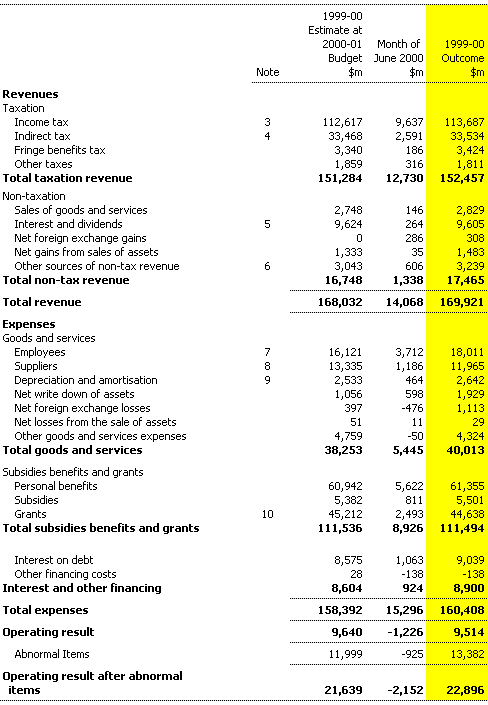
Table 9: Balance sheet for the Commonwealth general government sector - AAS31
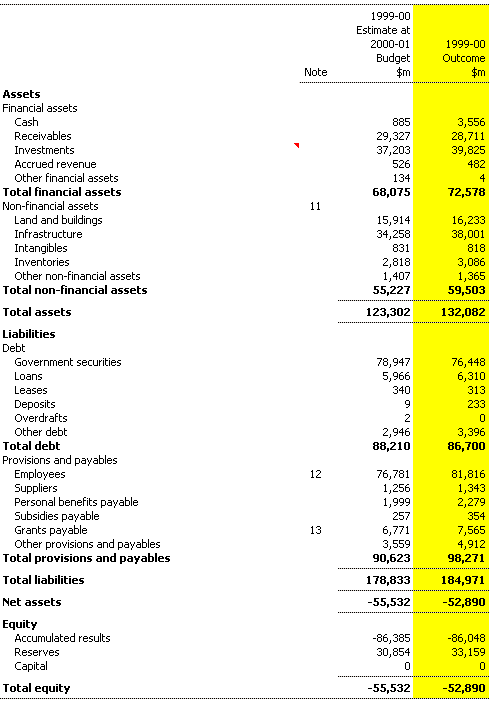
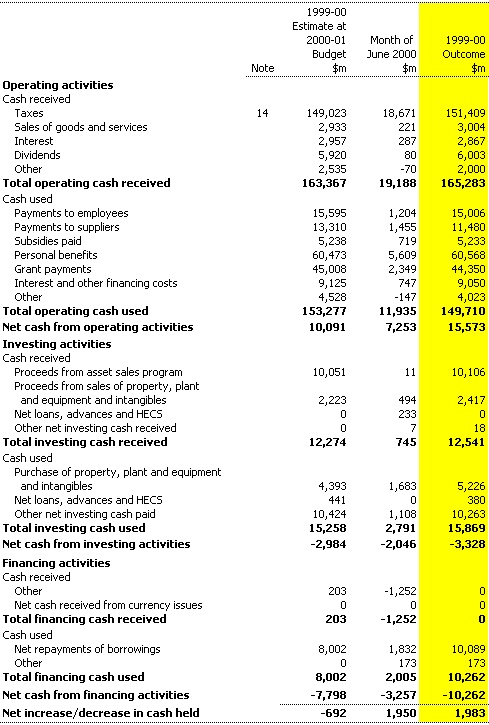
Table 10: Statement of cash flows for the Commonwealth general government sector - AAS31
Note 1: External reporting standards - AAS31
The financial statements included in the Final Budget Outcome have been prepared on an accrual basis in accordance with applicable Australian accounting standards, including Australian Accounting Standard No. 31 Financial Reporting by Governments (AAS31). AAS31 is the relevant accounting standard for financial reporting by governments.
AAS31 requires adoption of the full accrual basis of accounting. This means that assets, liabilities, revenues and expenses are recorded in financial statements when they have their economic impact on the government, rather than when the cash flow associated with these transactions occurs. Consistent with AAS31, a statement of revenues and expenses, a balance sheet and a statement of cash flows have been prepared using results for 1999-2000.
The accounting policies in the Final Budget Outcome are generally consistent with the accounting policies in AAS31. While the scope for financial reporting recommended in AAS31 is the whole of government (that is, the Commonwealth public sector), in accordance with the Charter of Budget Honesty Act 1998, the presentation of financial results covers the general government sector only.
In relation to taxation revenue, AAS31 suggests revenue be recognised at the time the income (or economic activity) giving rise to a tax liability occurs, where this can be measured reliably. At this stage, the Commonwealth does not consider its taxation revenues can be reliably measured on this basis for Final Budget Outcome reporting purposes. Taxation revenue in the Final Budget Outcome is therefore recognised at the time a taxpayer makes a self-assessment or when the Australian Taxation Office (ATO) or the Australian Customs Service (ACS) raises a tax assessment.
The Commonwealth collected a number of taxes on an agency basis for the states and territories, principally `safety net' surcharge collections until 1 July 2000 (which replaced business franchise fees). The revenue from these taxes was passed to state and territory governments (with an adjustment for administration costs in the case of safety net revenue). Estimates of taxes collected by the Commonwealth and passed to state and territory governments are provided in Note 4.
Non-accounting standard classifications have been used in different sections of the Final Budget Outcome. Functional classifications used in some tables are based on standards maintained by the ABS, but have been extended in some cases to provide greater detail.
Note 2: Reconciliation of cash
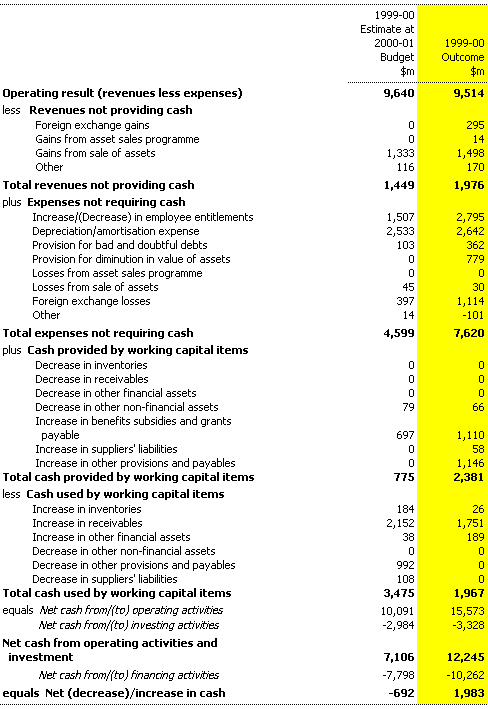
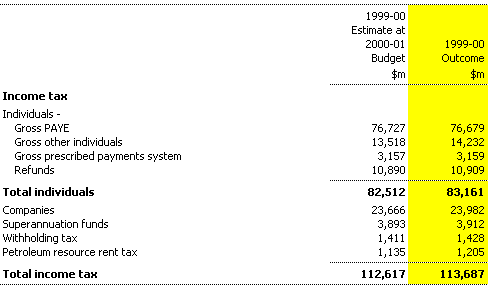
(a) On a GFS basis (Part I), it was reported that the companies tax revenue outcome for 1999-2000 was around $1.1 billion higher than the 2000-01 Budget estimate. However, on a AAS31 basis, the companies tax revenue outcome exceeded the estimate by only $0.3 billion. This reflects the inclusion of a technical accounting provision for credit amendment of around $0.8 billion in relation to a High Court ruling on the taxation of general insurers. A response to prevent this loss of revenue has been announced by the Government and will be introduced into Parliament during 2000-01. Upon passage of this legislation, the provision will be unwound. This treatment under AAS31 will give the effect of shifting revenue from 1999-2000 into 2000-01. However, under the GFS framework, these offsetting accounting entries for 1999-2000 and 2000-01 are not required.
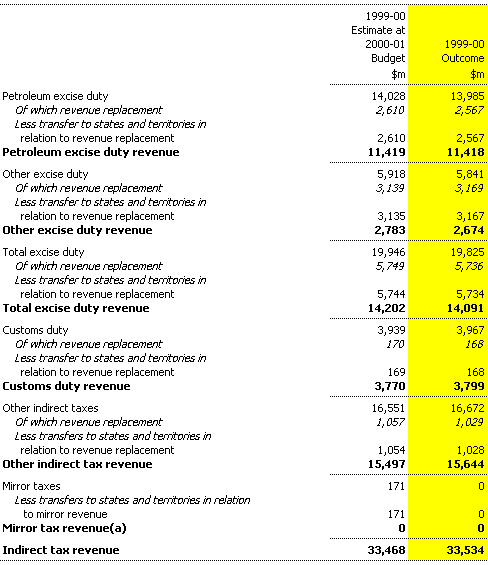
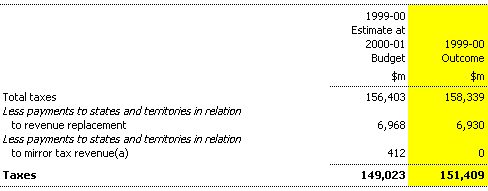
(a) There has to date been no mirror taxes paid to the Commonwealth because the States need to enter into arrangements with the Commonwealth for their State Revenue Offices to collect mirror taxes in order to bring the mirror tax regime into effect.
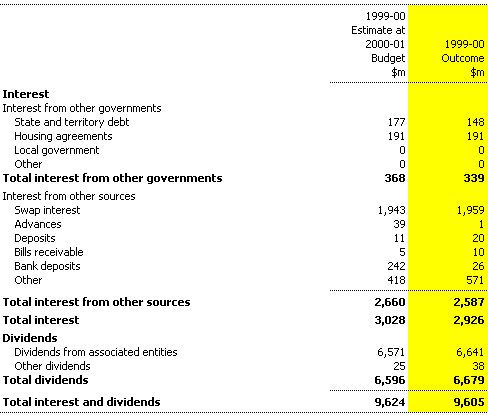
Note 5: Interest and dividends
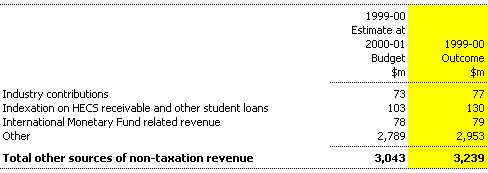
Note 6: Other sources of non-taxation revenue
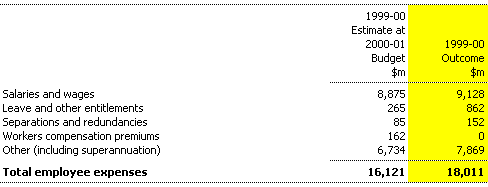
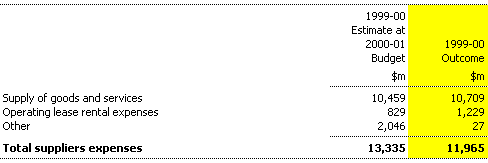
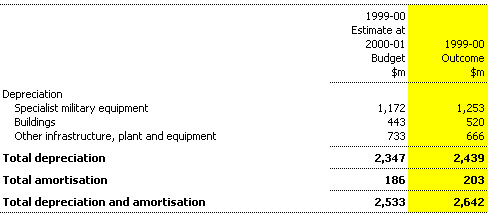
Note 9: Depreciation and amortisation
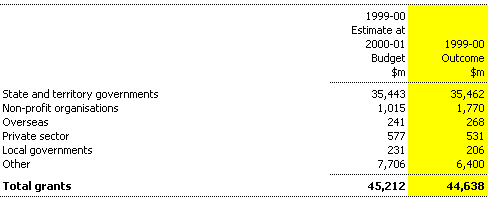
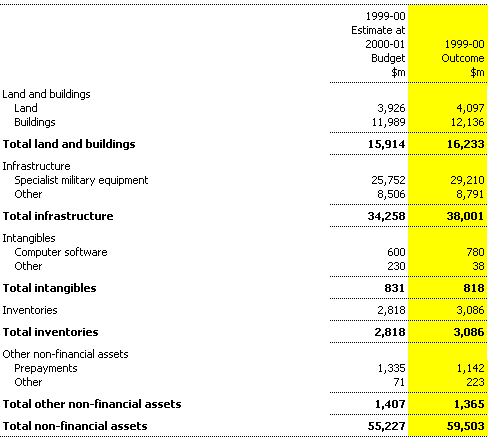
Note 11: Total non-financial assets
(a) There has to date been no mirror taxes paid to the Commonwealth because the States need to enter into arrangements with the Commonwealth for their State Revenue Offices to collect mirror taxes in order to bring the mirror tax regime into effect.
