



Priorities for Australia's international development assistance
Education
Context
At least 72 million children remain out of school worldwide, including an estimated 27 million in Asia and the Pacific.5 Progress towards increasing the number of children enrolled in primary school slowed as a result of the global economic crisis placing pressure on developing countries' budgets and pushing more people into poverty. Projections indicate that even if developing countries commit an appropriate portion of their own budget to education, at least 56 million children will remain out of school by 2015.6 This will result in a failure to achieve the MDG of universal primary education.
The United Nations Educational, Scientific and Cultural Organisation (UNESCO) estimates that an additional USD 16 billion annually is required to achieve basic education in developing countries. Of this, an estimated USD 3.7 billion must specifically target the most disadvantaged groups such as people with disability, girls, the very poor, ethnic minorities and those living in rural and remote areas or who are affected by conflict.7
Progress in gender equity at all levels of education (MDG 3) is mixed. Globally, 54 per cent of children excluded from primary schooling are girls.8 This represents a significant opportunity cost, as educating girls has strong positive effects on their life prospects and for their families and communities. Most Pacific Island Countries are on track to meet gender participation targets, and many countries in Asia have made good progress.9 Afghanistan, Pakistan and Papua New Guinea are the furthest from achieving gender parity in primary school.10
Developing countries face challenges in their efforts to provide education to the most disadvantaged, to improve education quality and learning achievement, to increase the transition to post-primary education, and to support livelihood opportunities. In the Pacific for example, only 10 per cent of people with disability have access to primary education.11 Quality issues often severely limit the benefits of education and poor quality basic education provides a weak foundation for further learning.
Australia supports the Education for All initiative which is a global commitment to provide quality basic education for all children, youth and adults by 2015. Achieving the Education for All12 goals requires efficient education systems, good governance in the education sector, and adequate resourcing, such as having sufficient teachers with the right incentives and support to perform. Around 1.9 million more teachers need to be recruited and trained for primary schooling alone.13
Response
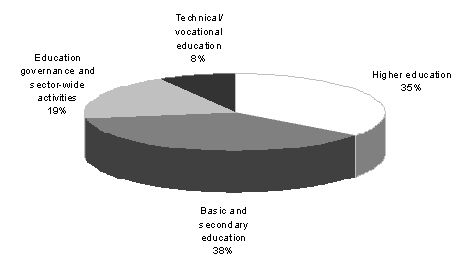
Australia is committed to being a global leader in education. Education is one of the highest impact development measures and is central to progressing the MDGs and Education for All goals. In 2010‑11, education will be a centrepiece of Australia's ODA strategy. The Government's investment in education will increase to over $744 million, or approximately 19 per cent of total ODA.
In 2010‑11, Australia's education assistance will contribute to efforts to get the last 72 million children into school. We will focus on ensuring that the most disadvantaged groups, such as those with disability, girls, the very poor and those in rural and remote areas, have access to a quality basic education. Australia will assist countries to improve learning materials and teaching quality at all levels of education, from early childhood through to post secondary vocational training and education. Australia will also support investments to improve post primary education and work to link training opportunities to jobs and livelihoods. Increasing education assistance will help partner countries progress towards achieving the MDGs and Education for All goals, and deliver on our commitments under the Cairns Compact and Pacific Partnerships for Development (see further details on page 35).
In 2010‑11, Australia's major investments will be in Indonesia, the Philippines, Papua New Guinea, Pacific Island Countries and Bangladesh. Education programs will be tailored towards partner country circumstances and priorities. Programs will include activities to improve curricula and increase access to learning materials; increase support for training and up-skilling of teachers; build and upgrade education facilities; and support partner countries develop strategies to monitor and manage educational outcomes.
Australia will use its two-year position on the Education for All Fast Track Initiative (FTI) Board of Directors to champion the FTI reform agenda. The FTI reform agenda will work to reshape and revitalise the Education for All FTI based on lessons learned and will be informed by recommendations of an independent evaluation. Australia is committed to improving the Education for All FTI to effectively support developing countries and to provide greater flexibility in how funding is delivered. In 2010‑11, Australia will support basic education in Africa and the Caribbean through the FTI.
Development awards
Context
Good leaders and strong human resources are crucial to development — high‑quality, well educated leaders and skilled human resources in politics and government, civil society and business greatly assists poverty reduction. Developing countries need highly trained leaders in a range of fields to accelerate progress towards the MDGs. Education is the foundation for supporting strong leadership and building skills and knowledge.
Scholarships to study in Australia build leadership and promote stronger and more effective societies. It is the highly educated who provide the skills and knowledge that strengthen economies, develop civil society, teach children, provide health care, lead effective governments, and make the important decisions that contribute to functioning and equitable societies.
It is in Australia's national interest to ensure that developing countries have leaders capable of dealing with development challenges. Advances in trade, technology and the movement of people are strengthening Australia's ties in our region and collaboration is vital to managing this interconnectedness. Improving the quality of leaders in developing countries will increase the impact of the Australian aid program. Security, stability, law and order, economic growth and social development are directly influenced by the quality of leadership.
By studying at Australian universities or undertaking short work placements within Australian industry and organisations, current and emerging leaders from developing countries are able to build closer ties with Australia, each other and the region's centres of learning. Development awards provide opportunities for the best and brightest individuals from developing countries to hone their skills and increase their knowledge, while developing global networks to tackle development challenges, drive reform, and promote cooperative work practices.
Response
AusAID provides development awards under the new Australia Awards initiative announced by the Prime Minister in November 2009. As the Prime Minister said, these awards will allow recipients to maintain their links to Australia through a strong alumni plan and ensure that beneficiaries of Australian scholarships have a better experience of Australia during their period of study through enhanced student support services. Under this initiative, an additional 2,400 development and short course awards will be made available over four years.
Development awards provide opportunities for tertiary study at Australian education institutions, helping build the skills and knowledge required to lead and drive developing countries' economic and social development. Development awards are important to help build people to people links between Australia and developing countries in our region and further afield and for responding to global and regional challenges.
Development awards focus on the development priorities of our country partners and build knowledge and leadership in the areas of most need. Recipients of these awards return home to contribute to their home country's social and economic development. Returning awardees are highly valued for their technical, language and analytical skills and are sought after by employers. Some former awardees have gone on to hold positions of major influence, including at the vice president and ministerial level in countries such as Indonesia and Vietnam.
Australian support will include development award opportunities in a range of developing countries across Asia such as Indonesia, Bangladesh, Pacific Island Countries and, from 2010‑11, the Caribbean and Latin America. Australia's program in Africa will expand to provide up to 1,000 new development awards and fellowships by 2012‑13. Australia will seek to increase the number of women in the next generation of leaders by promoting gender parity in the provision of development awards.
The Australia Awards initiative will consolidate Australian Government scholarships programs under a single brand and encourage Australia Award recipients to maintain their links to Australia through a strong alumni plan. A high profile board will provide advice to the Government on how this can best be implemented. Board members will be drawn from the government, corporate and academic sectors.
In 2010‑11, the Australian Government will also provide support for short course awards. These will provide increased flexibility to respond quickly to the needs of developing countries.
The Government will invest $303.7 million over four years to assist developing countries progress towards achieving the MDGs by supporting developing country partners improve their service delivery and leadership capacity, particularly through the provision of development awards. This initiative will build on existing Australian investments in Asia and the Pacific and extend linkages into Africa, the Caribbean and Latin America.
The first component of this initiative will provide quality education for all and target technical training. Assistance will support global efforts to achieve MDG 2 by getting the remaining 72 million children throughout the world into school by 2015 with a particular focus on reaching girls and the most disadvantaged. This will support developing country partners increase the number of children who complete primary school with reading, writing and numeracy skills and provide more people with training and internationally recognised technical qualifications that prepare them for work.
The second component will strengthen individual and institutional skills and knowledge and support long-term linkages and partnerships. It will develop awards that align with country program strategies to address critical human resource needs and include traditionally marginalised groups such as women and people with disability. The development awards program will also be expanded to provide a flexible mechanism to respond effectively to foreign policy, security and other issues by increasing exposure to Australian expertise and knowledge through internationally regarded educational institutions.
Diagram 3: Education — estimated ODA by sub-sector 2010‑11
Health and HIV
Context
Progressing the health MDGs (reducing child mortality, improving maternal health and combating HIV, malaria and other major diseases) is a high priority for the Australian aid program. In the Asia Pacific region, five countries (Nepal, Bangladesh, Cambodia, Indonesia and Burma) significantly reduced their maternal mortality ratios from 1990 to 2008, however, the ratios remain very high.14 Afghanistan, Fiji and Laos reported increased rates of maternal mortality in the same period.15 In Papua New Guinea, maternal death rates remain persistently high — a woman in Papua New Guinea is 90 times more likely to die in childbirth than a woman in Australia.16 The causes of maternal mortality are well known and most could be prevented or treated through seeking health care services earlier, improved transport to health facilities, access to family planning, antenatal care, skilled health workers assisting at birth, and access to emergency obstetric care.
There has been progress in reducing child mortality across Asia and the Pacific but more work needs to be done. In some countries where Australia supports health activities such as in Indonesia, Nepal and Bangladesh, mortality rates for children under five years of age have reduced by two thirds compared with 1990.17 However, child mortality remains unacceptably high in a number of developing countries with at least one in every 20 children not surviving to five years of age in 11 Asia and Pacific countries such as Burma, Cambodia, Pakistan and Papua New Guinea. Major causes of deaths among children under five include pneumonia, diarrhoea and malnutrition, with Asia having the highest proportion of malnourished children globally.18
With around 3.9 million people living with HIV in South and South East Asia, and Oceania, the epidemic remains a serious threat to the region.19 Papua New Guinea is home to 99 per cent of HIV cases in the Pacific20 with an estimated 54,000 people living with HIV. In Papua New Guinea and the Indonesian provinces of Papua and West Papua, prevalence is increasing and has spread to the wider population.
Non-communicable diseases are the leading cause of death in Pacific Island Countries and territories, accounting for approximately 78 per cent of deaths annually.21 Cardiovascular diseases, cancer, chronic lung diseases and diabetes have emerged as major public health problems and the increasing incidents of non-communicable diseases among poor and vulnerable groups is widening health inequities within and between countries.22
Response
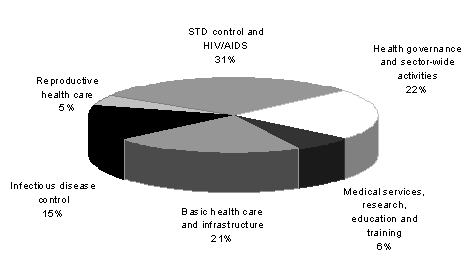
Support for health and HIV will increase to over $555 million in 2010‑11, or approximately 14 per cent of total ODA. In 2010‑11, Australia will provide assistance to priority areas such as addressing the health needs of women and children, tackling regional threats such as HIV and emerging infectious diseases and addressing country specific and regional health problems such as malaria and non-communicable diseases in the Pacific. Australia will work with developing countries to improve the performance of health systems such as health financing, procurement systems and health workforce development.
Australia will provide support to health programs with a focus on maternal, neonatal and child health in Papua New Guinea, East Timor, Cambodia, Nepal, the Pacific, Indonesia, the Philippines, Bangladesh and Pakistan. Australia will provide increased contributions to the World Health Organisation (WHO) and the United Nations Population Fund (UNFPA), the lead UN agencies dealing with maternal health.
Australia will respond to the different nature of the HIV epidemics in the Asia Pacific region. Given the severity of the epidemic in Papua New Guinea, Australia will continue to provide support for the national HIV response including care and treatment as well as prevention. In Asia, Australia will provide support for the most at risk groups including men who have sex with men and injecting drug users through the HIV/AIDS Partnership in Indonesia and the HIV/AIDS Asia Regional Program in Burma, Cambodia, China, Laos, Philippines and Vietnam. The Pacific Regional HIV/STI Program will also continue in 2010‑11.
Non-communicable diseases will be a focus of health programs in the Pacific, supporting activities such as that in Samoa, where Australia will support communities in promoting healthy lifestyles. In Nauru, Australia has supported the development of legislation to address non-communicable disease risk factors, including a new Tobacco Bill.
Australia will provide strong leadership in global health. This will include approaches to help bridge the financing gap and accelerate developing countries' progress towards the health MDGs by 2015. In response to a recommendation of the High-Level Task Force on Innovative International Financing for Health Systems, Australia has committed $250 million over 20 years to the International Financing Facility for Immunisation to support health systems in developing countries.
In order to support developing countries achieve the health MDGs, the Government will invest $173.4 million over four years to improve health services for the poor and vulnerable. Australia will increase its contributions to regional programs and developing country partners.
This measure will strengthen the capacity of developing country partners to achieve health MDG targets by increasing health investments in the Asia Pacific region.
Diagram 4: Health — estimated ODA by sub-sector 2010‑11
Environmental sustainability
Context
Natural resources provide the foundation on which national economies are built, and they sustain the health and livelihoods of many of the world's poor. Pressures on natural resources such as climate change, growing populations, urbanisation, changed land use patterns and increased pollution levels threaten the livelihoods of poor communities as they are the most reliant on natural resources. Environmental degradation and the threat of climate change are critical challenges for the aid program.
Many rural and coastal communities in the Asia Pacific region require assistance to sustainably manage their sources of food and income or adopt new technologies. Many large Asian cities with expanding populations struggle to manage waste and pollution at the same time as maintaining economic growth, and this is threatening the health of their populations. Africa, a continent of increasing priority for Australia, is facing more droughts, desertification and food shortages.
The role of the natural environment in supplying essential goods such as food, fuel and clean water is being highlighted during 2010, the International Year of Biodiversity. Forests, for example, can prevent soil erosion and flooding, insects pollinate food crops, wild crop varieties can provide options for farmers in adapting to climate change and reefs and mangroves can both support fish populations and protect coastal areas from extreme weather events.
Climate change has the potential to destabilise economic growth, exacerbate food shortages and erode recent gains in poverty reduction, all of which can negatively impact progress towards achieving the MDGs.
Australia strongly supports the Copenhagen Accord,23 which was negotiated at the UN Climate Change Conference in December 2009. The countries associated with the Accord agreed that the world should work to keep global temperature increases to within two degrees Celsius; take action to reduce greenhouse gas emissions over the period to 2020; and provide support for the mitigation and adaptation needs of developing countries, with priority to those most vulnerable. The Conference saw developed countries collectively agree to provide resources for developing countries' action on climate change approaching USD 30 billion for the period 2010 to 2012. In the context of meaningful mitigation action and transparency on implementation, developed countries further committed to a goal of mobilising USD 100 billion annually by 2020 from a range of funding sources.
Developing countries will benefit from assistance to build resilience to climate change and participate in emerging carbon markets, increase their knowledge base and bridge financing gaps in areas such as reducing deforestation and forest degradation, renewable energy and energy efficiency, transport and urban waste management.
Response
It is in Australia's national interest to support an effective international response to climate change. Australia is committed to addressing climate change and other environmental challenges through its efforts to reduce poverty in developing countries. In 2010‑11, Australia's support will continue to focus primarily on adaptation to climate change in East Timor and the Pacific and reducing deforestation and forest degradation in Indonesia and Papua New Guinea. Australia will also work to address environment and climate change challenges globally through supporting multilateral environment funds including the Global Environment Facility (GEF) and the Climate Investment Funds.
In 2010‑11, Australia will further assist small island developing states of the Pacific to adapt to the unavoidable impacts of climate change and will extend assistance to vulnerable nations in the Caribbean and to additional initiatives in the Mekong region. Support will include community-based adaptation programs and development and implementation of adaptation strategies.
Australia will continue its engagement with the multilateral Clean Technology Fund, providing $100 million over three years from 2008‑09. The Clean Technology Fund works with key developing countries to support lower carbon growth and catalyse 'transformational' investments in renewable energy, energy efficiency and sustainable transport. Fund participants include key partners in the Asia Pacific region, including Vietnam, the Philippines, Thailand and Indonesia. Australia also promotes lower carbon growth through its energy programs, including a four year $25 million commitment, from 2009‑10, to improve access to clean and affordable energy services in the Pacific region.
Australia, as a Coral Triangle Initiative Partner, is supporting the development of measures to protect and enhance the livelihoods of some 240 million people who depend on coastal marine resources for food and livelihoods. Coral Triangle countries — Indonesia, the Philippines, Malaysia, East Timor, Papua New Guinea and the Solomon Islands — recognise the critical need to build the resilience of productive coastal ecosystems to the impacts of climate change through reducing over-fishing, maintaining habitats and addressing destructive fishing practices.
Australia also supports a range of energy programs through development partnerships and bilateral programs, focusing primarily on the Mekong and Pacific regions. Promoting less greenhouse gas intensive development through renewable energy is an important focus of this support, alongside progressing national energy sector reforms and extending reliable energy services to poor and remote communities.
Addressing the Challenges of Climate Change
The Government has extended funding for the International Forest Carbon Initiative to a total of $273 million, of which $56 million is new funding in the 2010‑11 Budget. This initiative is working to help build the capacity of developing countries to reduce emissions from deforestation and forest degradation (REDD+) and support the inclusion of REDD+ in a global climate change agreement. Key activities in 2010‑11 will include building forest carbon measurement capacity in developing countries and progressing two large-scale demonstration activities in Kalimantan and Sumatra, Indonesia.
Australia will extend its funding for the International Climate Change Adaptation Initiative, which commenced in 2008, by $178.2 million to enable the continuation of programs in the Asia Pacific region and expansion into other priority areas. Australia's assistance in adaptation to climate change gives priority to the most vulnerable countries, such as least developed countries and small island states. It provides practical support, underpinned by research, to these countries as they plan for and respond to the impacts of climate change.
Collaboration with multilateral organisations enables financing at the scale required to help countries transition to lower carbon economies and address the impacts of climate change. Australia will continue its support for the multilateral Climate Investment Funds and work with other effective multilateral mechanisms that build the capacity of developing countries to participate in global carbon markets, address market failures that impede climate change mitigation efforts in developing countries and help to integrate climate change adaptation into national development planning. A further $101.2 million over the period 2011‑12 to 2012‑13 will be provided for these purposes.
Through the provision of policy and analytical support, Australia has developed productive partnerships with countries in the Asia Pacific region, such as Indonesia, that wish to respond effectively to the challenges of climate change. Australia will expand this assistance through an additional $15.0 million to help developing countries prepare national low-carbon development plans with a focus on the energy and transport sectors, and to support participation in carbon markets.
Economic growth
Economic growth remains the most powerful long-term solution to reducing poverty. Rural development, investment in infrastructure, improvements in the business enabling environment, expansion of trade opportunities and development of human resources are some of the important foundations for promoting growth. The Government is committed to helping developing countries ensure that the benefits of this growth are equitably distributed, environmentally sustainable and contribute to progressing the MDGs. In response to the global economic crisis, there is an even greater need for Australia to support a sustained recovery and build long-term resilience by helping developing countries achieve progress towards the MDGs. This will build developing countries' resilience to global shocks in the future.
Rural development
Context
Despite an easing in commodity prices due mainly to the global recession, food prices are higher today than they were in the 1990s and early 2000s, and forecasters expect them to stay higher on average over the next 10 years.24 This has a dramatic effect on low-income countries as it increases global demand for food aid and undermines the significant poverty gains of the last decade.25
With over one billion people hungry globally, the effects of previous and potential future economic and natural shocks on the poor requires ongoing commitment across the developing world. Australia strongly supports coordinated global action as detailed in the Rome Principles for Sustainable Global Food Security agreed to at the World Food Summit in November 2009.26
The importance of reversing historic decreases in investments in agriculture and agricultural research and development is now well recognised. This will be of even greater priority as countries look to address the links between food security and climate change. Adaptation measures are required to enable the agricultural sector to meet global food demand while responding to climate change.
Response
Direct spending on rural development is estimated to be $292 million in 2010‑11, or approximately 7 per cent of total ODA, progressing the initiative to address food security through rural development announced in the 2009‑10 Budget. Australia will continue to support short to longer-term efforts with partner governments, regional and multilateral organisations.
In 2010‑11, Australia will promote the expansion of food security through rural development in Africa, East Asia, South Asia and the Pacific. A multi-country market development facility will be established to support sustainable increases in employment and incomes for the poor in rural and urban areas of East Timor, Fiji and the Solomon Islands, with expansion to other countries likely to occur in the future. Consistent with Australia's increased support for social protection measures for the vulnerable, additional assistance will be provided in Bangladesh to deliver economic, health and social support to women to build small businesses and support their families.
The role of the Australian Centre for International Agricultural Research (ACIAR) will expand, including through support for agricultural research and development in partner countries and Australia's involvement in the reformed Consultative Group on International Agricultural Research (CGIAR).
Microfinance and financial services
Context
Recent estimates suggest that as many as 2.7 billion adults in the developing world have no access to financial services despite the increasing efforts by donors and private investors globally.27 Through the provision of financial services, including savings, credit, insurance and transfer and remittances products, the poor can manage their money, plan for the future and be more financially resilient when shocks hit. The provision of financial services to the poor is an important factor in achieving progress towards the MDGs.
Response
Australia has long supported microfinance initiatives and is committed to broadening its focus on access to financial services to further break down the barriers to economic participation by the poor. By 2012‑13, Australia will double its microfinance expenditure on 2007‑08 levels to between $18‑20 million per annum. From training women entrepreneurs in Peru to building the capacity of financial institutions to serve poor people in Afghanistan, Australia will support the expansion of financial services across the world, including in the Pacific, West Asia, Latin America, and Africa. We will build the capacity of financial institutions to offer quality, affordable and fair financial services to the poor, assist governments to create an enabling policy and regulatory environment and support financial literacy programs to help clients understand their finances and the services offered to them to make informed decisions for their future.
Australia is also working with the international community by drawing on its experience and expertise. Australia remains a long-standing member of the Consultative Group to Assist the Poor and, with Brazil, co-chairs one of two sub-groups undertaking work under the auspices of the G-20 Financial Inclusion Experts Group. The sub-group will focus on branchless banking and other innovative delivery mechanisms which have the potential to reduce transaction costs and reach people who do not have access to banking services.
Infrastructure
Context
Investment in economic infrastructure, including transport, energy and information communication technology, and in water and sanitation has a positive impact on economic growth and can help progress towards the MDGs. Reliable transport infrastructure improves people's access to services and markets, encourages entrepreneurial activity and promotes economic integration. Information and communication technology promotes broad-based growth through the integration of markets and economies. Reliable and affordable energy supplies promote agricultural and private sector development and improve living standards in poor households. Functioning water and sanitation services help reduce the spread of diseases, improving people's health and their ability to participate in education and employment.
In the Asia Pacific region and Africa, governments face significant challenges in the provision of infrastructure. In East and South Asia, seven out of ten people still do not have access to a telephone.28 In some Pacific Island Countries up to 85 per cent of the population have no access to electricity and many Pacific Island Countries are highly dependent on imported fuel for energy generation, making them vulnerable to changes in the price of oil.29 In Africa and South Asia only one in three people have access to basic sanitation and only half of the population of the Pacific has access to an improved water source.30
Response
Direct spending on economic infrastructure, water and sanitation will increase to $562 million in 2010‑11, or approximately 14 per cent of total ODA. Australia will provide assistance to help partner governments maintain and enhance investments in essential infrastructure across the Asia Pacific region and increasingly, in Africa.
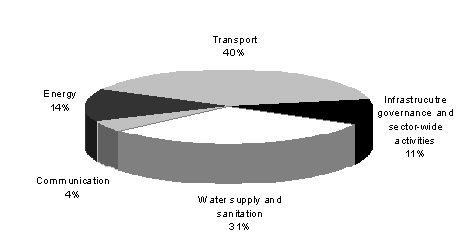
Major components of infrastructure assistance in 2010‑11 will comprise support for transport (estimated 40 per cent of total infrastructure expenditure), water and sanitation (estimated 31 per cent) and energy development (estimated 14 per cent).
Australia's support for transport will focus on contributions for the development of the Central Mekong Delta Connectivity Project, in particular the design of the Cao Lanh Bridge, which will deliver significant economic and social benefits by improving transport access for residents in the densely populated central Mekong Delta region of Vietnam. Major programs are also underway to improve transport infrastructure in Indonesia, the Philippines, East Timor, Papua New Guinea and the Pacific.
In 2010‑11, Australia will provide increased assistance to the energy sector in the Pacific through the Pacific Region Infrastructure Facility. This includes continuing Australia's commitment of $25 million over four years, from 2009‑10, to improve access to clean and affordable energy services. A focus of this support is on energy sector planning. For instance, Australia will assist the Government of Tonga to more efficiently manage its energy resources, explore options, such as renewable energy, to broaden its energy base and expand access to quality energy services.
In the water and sanitation sector, Australia will assist countries to increase access to basic sanitation and water supply services and increase hygiene promotion. In Indonesia, for example, Australia will extend existing support for rural sanitation and water supply services. Australia will also support a new program that will connect up to 10,000 households to improved sanitation facilities in two cities in Indonesia. In Africa, Australia will support regional policy development and research and contribute to improving sanitation and water supply in Mozambique and Malawi.
Diagram 5: Infrastructure — estimated ODA by sub-sector 2010‑11
Governance
Context
Good governance is central to the operations of an effective state, which is one of the most important factors determining whether or not development takes place. Successful governance means better delivery of health, education and other services, stronger and more equitable economic growth, stability and security, and a population that has an open and responsive government.
Government and the public sector — the institutions and people within them — need to be capable and willing to deliver results for their countries' growth and development. Building public sector capacity is important to ensure the delivery of basic services, particularly at levels of government closest to and of greatest relevance to citizens.
Providing assistance in the law and justice sector makes an important contribution to promoting effective states, including improving accountability and combating corruption and enhancing economic growth, human rights and the rule of law.
Responsive, legitimate, and accountable governments are more robust, make better policy decisions, and are better able to withstand and respond to external shocks. Responsive, accountable and participatory governments lead to better long-term development outcomes because they encourage the alignment of government activity with the interests of citizens. Enhancing engagement between government, civil society and citizens is critical.
The political processes within which leadership operates at all levels of society directly influences the type and quality of governance institutions. Leaders, institutions, and the people who influence and are influenced by leadership decisions all make an important contribution to the vision, pace and effectiveness of a country's development.
Response
Governance cuts across all aspects of people's lives including services in those areas closest to their personal well being, such as health and education and is important to promote economic growth and social stability.
In 2010‑11, it is estimated that governance related ODA will total approximately $845 million or 21 per cent of total ODA. Australia's governance support will focus on enhancing government effectiveness, building accountability, supporting democratic institution and processes and understanding leadership.
Australia will support efforts to improve public sector management; economic management including public financial management; human resources development such as public sector improvement strategies and workforce planning; and improving the collection and analysis of public sector data. Support will be provided regionally, for example through the Pacific Islands Centre for Public Administration, as well as bilaterally through such activities as the PNG — Australia Partnership for Development on Public Service.
The Australian aid program is continuing to help strengthen law and justice systems, addressing the causes of instability and conflict, and investing in peace. As part of these efforts, work will include a range of police and legal institutional reforms, regional security initiatives, customary and community-based justice mechanisms and crime prevention.
Australia will continue to support developing countries tackle anti-corruption at the country level and through multilateral partnerships. Australia will dedicate effort to improving transparency and social accountability, increasing opportunities for civic engagement. In the Solomon Islands, the RAMSI initiative has assisted with the establishment of an Anti-Corruption Taskforce to develop a national anti-corruption policy and to make recommendations on anti-corruption reform. The taskforce has begun a series of consultative workshops to facilitate community feedback to promote a responsive reform agenda for Solomon Islanders.
The Australian Government is working to increase accountability in the extractive industry sector. This includes supporting the World Bank's Extractive Industries Transparency Initiative for the full verification and publication of company payments and government revenue from oil, gas and mining.
In 2010‑11, Australia will continue to support democratic institutions and processes. Australia will work with partner governments, and their citizens, to support parliaments, develop effective accountability mechanisms, provide civic education, strengthen electoral processes, and facilitate greater participation of women and other disadvantaged groups in political processes. Australia will provide support to enhance democracy in the region through the Centre for Democratic Institutions and the Indonesian-led Bali Democracy Forum. At a global and multilateral level, Australia will continue to contribute to the work of the United Nations Democracy Fund and the International Institute for Democracy and Electoral Assistance.
Successful reform of governance will be driven by leaders, communities and countries themselves through local institutions and processes. Australia will work to increase understanding of the role leadership plays in the political processes of building effective institutions and states. Through activities such as the Pacific Leadership Program, Australia will continue to support organisations which are in positions of leadership, whose members are leaders, and which can influence change in leadership practice.
Performance-linked aid
Performance-linked aid is the provision of additional assistance to partner governments and agencies to recognise progress in implementing mutually agreed reforms or for achieving specific development outcomes. In 2010‑11, Australia will continue its four year $336.1 million commitment to assist partner countries in Asia and the Pacific to implement performance-linked aid initiatives.
Early evidence suggests performance-linked aid is assisting governments to implement their own reform agenda and provides a robust basis for measuring development results. To date, performance-linked approaches under the Pacific Partnerships for Development are being implemented in Kiribati, Papua New Guinea, Samoa, the Solomon Islands and Tonga with further activities planned for Vanuatu and in the Cook Islands. Performance-linked aid initiatives are also planned for Asia.
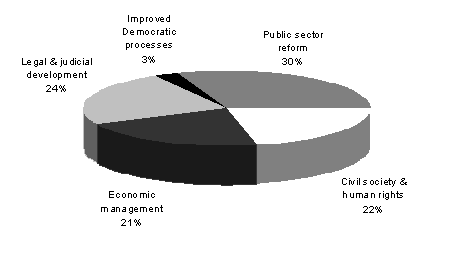
Diagram 6: Governance — estimated ODA by sub-sector 2010‑11
Equitable development
Gender equality
Context
The Australian Government continues to build on its internationally recognised commitment to promote gender equality and support women's full participation in economic, social and political life. Progress on advancing gender equality and empowering women (MDG 3) lags behind the progress of other MDG targets yet is necessary to the achievement of all MDGs.
While increasing numbers of women are participating in processes of governance, significant challenges remain. Women hold an average of 2.5 per cent of seats in national parliaments in Pacific Island Countries, and an average of 17 per cent of seats in South East Asia.31
Women continue to lag behind men in workforce participation globally (they earn on average 17 per cent less than men).32 It is more common for women to have unequal access to, and control over, economic and financial resources. The global economic crisis has disproportionately impacted women and girls. Maximising women's incomes by expanding economic opportunities for women and ensuring social protection measures (including social safety nets and food security programs) are important. Of equal importance is improving access to benefits, and supporting governments to maintain expenditure on social services, particularly on health and education.33
Improving maternal health (MDG 5) is a priority of the Australian aid program. Over 500,000 women die annually from complications during pregnancy — 99 per cent of them live in developing countries and many are adolescent girls.34 Women and girls represent two thirds of the almost one billion people globally who lack basic literacy skills.35 According to the World Bank, investing in the education of girls may yield a higher rate of return than any other investment.36 An educated girl will use 90 per cent of her future income within her family, while boys will invest 35 per cent.37 Educated girls go on to earn better wages, marry later in life and have fewer and healthier children, leading to improvements in MDG 4 (reduce child mortality) and MDG 5 (improve maternal health).
Violence against women is a serious global problem, affecting all countries (as many as two in three women have experienced physical or sexual violence in some countries in the Pacific). It traumatises women, their families, and communities. Addressing violence against women leads to better development outcomes,38 and significantly progresses achievement towards promoting gender equality and empowering women (MDG 3).
Response
Australia is committed to addressing gender inequality globally, both to improve the lives of women and men, girls and boys, and inequality leads to more effective, sustainable development.
Efforts to address violence against women have gained significant momentum globally. Australia has a zero tolerance to violence against women. Reducing violence against women is crucial to achieve equality between men and women and deliver good development outcomes.
Australia has made important gains in helping increase women's participation in governance. In Papua New Guinea, for example, the number of female village court magistrates has increased from 10 in 2004 to 384 by the end of 2009, leading to better access to justice and greater representation of women at the village level. The Australian Government is providing $150 million over five years from 2009‑10 to 2013‑14 to improve law and justice services at local and national levels through the PNG — Australia Law and Justice Partnership.
In response to the global economic crisis, Australia has worked with the World Bank and the International Finance Corporation to assess gender barriers to women's economic participation, particularly in trade and in the private sector. Australia will support the World Bank's pilot Adolescent Girls' Initiative in Papua New Guinea and Laos to assist the transition of young women aged 16‑24 from school to productive employment. In the Pacific, Australia supports the improvement of Pacific women's economic participation in private sector development.
Australia's support for education development assistance includes a focus on promoting equity (providing education for all girls and boys). Australia's education assistance including technical and vocational education and training is provided through bilateral and regional programs, focused in the Asia Pacific region. Through gender parity in development awards and technical and vocational programs, Australia seeks to increase the number of women in the next generation of leaders.
The Australian Government will promote gender equality and empower women through its multilateral partnerships. The AusAID — UNFPA agreement, signed on 4 December 2009, will provide UNFPA with $42.5 million over four years to advance UNFPA's work to eliminate gender-based violence, promote gender equality as well as improve maternal and child health. Similarly, through its Partnership Framework with the United Nations Development Fund for Women (UNIFEM), signed in August 2009 and worth $17.7 million over four years (to 2012), the Australian Government will work to reduce violence against women by increasing the capacities of law and justice bodies and civil society organisations.
Including people with disability
Context
People with disability make up 20 per cent of the poor in developing countries and are the world's largest and most disadvantaged minority.39 To progress the achievement of all MDGs, people with disability need to be included in the development process. Of all the children of primary school age that are out of school, around one-third are children with disability.40
The cost of excluding people with disability and carers from economic activity is high, between USD 1.71 trillion and USD 2.23 trillion or between 5.35 and 6.97 per cent of total global GNI.41
Under the United Nations Convention on the Rights of Persons with Disabilities, Australia has committed to supporting developing countries to protect and promote the rights of people with disability, including through its aid program.
Response
In line with Australia's Development for All strategy,42 in 2010‑11 the Australian Government will support initiatives to improve the quality of life of people with disability and build leadership in, and increase understanding of, disability and development.
Australia will support multilateral partners, such as the United Nations Children's Fund (UNICEF), to ensure children with disability have improved access to education and will promote action on the Convention on the Rights of Persons with Disabilities through supporting organisations such as the Disability Rights Fund.
Aid activities will be designed to ensure education and infrastructure initiatives, such as water and sanitation, roads and public buildings, are accessible to all people.
Australia will improve provision of disability services and facilities including investing in rehabilitation, assistive devices, technologies and equipment, initially in the Pacific region. Australia will also support the Pacific Disability Forum to build the capacity of Disabled Peoples' Organisations in the Pacific to be effective advocates and leaders for people with disability.
In 2010‑11, the Government will continue to provide support for reducing avoidable blindness by improving access to quality eye health services, including training eye health workers in the Pacific, East Timor and Papua New Guinea, preventing childhood and diabetes-related blindness in Pakistan, and supporting the implementation of the Government of Vietnam's national blindness prevention and eye care plan.
Australia's aid program is also investing in road safety programs to reduce preventable impairments, including road safety audits in Indonesia and Papua New Guinea, and initiatives to increase helmet-wearing in Vietnam.
The Government will invest $30.2 million over four years to support developing country partners improve the quality of life of people with disability and improve access to social and economic opportunities.
The initiative will strengthen leadership on disability and development by ensuring that disability is recognised internationally as a development priority. It will also focus on supporting leadership development and the efforts of people with disability to be advocates and leaders in their own right.
Human security and stability
Context
Natural disasters, wars, internal conflicts and poor governance pose significant challenges to global and regional security and threaten progress towards achieving the MDGs. Natural disasters and conflicts can reverse years of development gains, heightening human insecurity and disproportionately affecting poor and displaced populations. The increasing frequency and ferocity of natural disasters and greater public awareness of their impact is leading to greater efforts to mitigate and prepare for disasters before they happen.
The consequences of natural disasters and conflict can have widespread impacts as vulnerable populations are forced to move within a country or seek safety across borders. These displaced populations may be prevented from returning home for long periods due to destroyed infrastructure, inadequate livelihoods and instability.
Over 57 per cent of AusAID's major bilateral programs operate in countries that are considered fragile or affected by conflict. In these settings, government and state structures often lack the capacity to provide public safety, security and basic services for their citizens.
Response
In 2010‑11 humanitarian, emergency and refugee-related expenditure is estimated to be $400 million or approximately 10 per cent of total Australian ODA.
Through its leadership role as the chair of the United Nations Office for the Coordination of Humanitarian Affairs (UNOCHA) Donor Support Group in 2009‑10, Australia will continue to take an active leadership role in humanitarian policy and enhancing international humanitarian preparedness and response systems.
The Australian Government will continue to assist countries with disaster risk reduction activities in over 30 countries including Indonesia, Vietnam, the Philippines and Pacific Island Countries. Disaster risk reduction aims to mitigate the devastating humanitarian, economic and environmental impacts of natural hazard events. This includes providing support to governments and communities to reinforce critical infrastructure such as schools and hospitals, planting drought or flood resistant crops, improving weather forecasting and developing evacuation plans.
When disasters do strike, Australia is committed to helping those impacted to rebuild communities and livelihoods. This includes identifying the structural and social causes of damage and ensuring that the recovery and reconstruction will make people safer in the future.
Australia will continue to improve the effectiveness of humanitarian action through better donor coordination, greater engagement across Government agencies and increased accountability and support for key humanitarian agencies such as the World Food Programme (WFP) and the Office of the United Nations High Commissioner for Refugees (UNHCR).
The Australian Government responds to humanitarian emergencies through a range of mechanisms including providing supplies to affected countries; deploying medical teams and urban search and rescue teams under the Government's AUSASSIST Plan; RedR Australia and the Australian Red Cross; and rapidly disbursing funding to partner governments, the UN, Australian non-government organisations (NGOs) and the Red Cross Movement. The Government will add to its humanitarian response capability by deploying qualified Australian relief workers through the Australian Civilian Corps (see the box below).
Australia will continue to contribute to international responses to humanitarian crises and take a leadership role in response operations in the Asia Pacific region where we have the proximity and experience to be among the first and most effective responders. When circumstances require, the close relationship between AusAID and the Australian Defence Force (ADF) enables the rapid deployment of Australian humanitarian assistance into often remote and challenging post disaster environments. This relationship has improved coordination and resulted in a decrease in deployment times for Australian humanitarian assistance using ADF means. Australia was the only donor country to provide a large international response, through deploying relief personnel and emergency stores, to the simultaneous disasters in Samoa and Tonga (tsunami) and in Padang Indonesia (earthquake) during October 2009.
In April 2009, AusAID created the Crisis Prevention, Stabilisation and Recovery Group to respond more effectively to the Australian Government's national security policy agenda and lead AusAID's policy and program development in situations of conflict and fragility. Key areas of focus for the Group in 2010‑11 will be to strengthen AusAID's engagement with international and whole of government stakeholders in the areas of stabilisation, early recovery, peace building and state building. The Group will deliver a range of training programs to AusAID and partner organisation staff to increase their skills in working in situations of conflict and fragility and support AusAID's, the ADF's and the Australian Federal Police's (AFP) programs working in complex operating environments in the Middle East, Africa and South Asia.
The Australia‑Indonesia Facility for Disaster Reduction was announced by the Australian Prime Minister and Indonesian President at the November 2008 Asia Pacific Economic Cooperation (APEC) Leaders' Meeting. In 2009‑10 technical experts built models to better inform disaster management response planning and assisted with reconstruction efforts in West Sumatra following the September 2009 Earthquake. In 2010‑11, the Facility will enhance its regional links, primarily through the ASEAN Secretariat and support to the UN, including WFP.
Australian Civilian Corps
The Australian Civilian Corps will enable the deployment of civilian specialists to countries affected by natural disaster or conflict. These civilian specialists will contribute to Australia's efforts to assist stabilisation and recovery in affected countries to start the recovery process earlier.
The Australian Civilian Corps will comprise a register of civilian specialists, chosen for their skills in areas such as stabilisation and recovery, public administration and finance, law and justice, agriculture, engineering, health administration and community development. Personnel will be sought from all levels of Government and the broader Australian community. The Australian Civilian Corps established an interim deployment capacity in 2009‑10 and will become fully operational in 2010‑11.
In 2010‑11, the Government will increase support for development in Afghanistan with an additional $141.0 million over two years. Australia will support the Afghanistan Development Assistance Program and joint stabilisation efforts with the ADF, the AFP and the Afghan Government.
AusAID and the AFP will increase the Australian civilian effort in Afghanistan, working alongside the ADF and other civilian agencies in Kabul, Kandahar and Tarin Kowt. The Government will support international efforts to build the capacity of the Afghan Government and link the capital Kabul with provincial level government, particularly in Oruzgan, to ensure that basic services are delivered to the Afghan people. Increased support will focus on health, education, agriculture, rural development and humanitarian assistance.
Strengthening the effectiveness of development assistance
Context
The 2009 Australian National Audit Office (ANAO) performance audit report, AusAID's Management of the Expanding Australian Aid Program,43 noted that since 2006, AusAID has strengthened its monitoring and evaluation of aid. The report noted that Australia's position as a signatory to the international aid effectiveness agenda, as articulated in the 2005 Paris Declaration of Aid Effectiveness and the 2008 Accra Agenda for Action, demonstrates a strong commitment to use partner country systems, reduce aid fragmentation, and increase the predictability of aid flows. AusAID's implementation of a robust performance assessment system for aid investments is an important part of meeting these commitments.
The ANAO report noted that this system will require continued improvement in monitoring and evaluation of aid if the agency is to meet the challenges of the coming years. In addition, the report identified the need for country strategies to provide a basis for assessment and to raise compliance with design and review requirements for aid activities.
Response
AusAID continues to build on the strengths of its quality reporting system and the principles outlined in its Performance Management and Evaluation policy. AusAID's Office of Development Effectiveness reviews and contributes to the broader development effectiveness agenda of the agency through thematic evaluations, strategy reviews, spot checking of the robustness of internal quality processes and overall analysis of results. The separation of monitoring and evaluation functions more closely aligns with a strategic use of performance information as identified in the ANAO report.
To effectively respond to ANAO recommendations, AusAID will focus on rolling out a comprehensive operational policy and management framework to reform business systems, operational guidance on new country strategy and planning architecture, updating the quality of reporting systems, and providing guidance on working through partner country systems in aid delivery. AusAID will showcase significant achievements and best practice approaches to aid delivery to promote continuous improvement. In addition, supporting systems will be established to foster more effective relations with whole of government partners. Internal capacity will be built to equip the workforce to take on the challenges of a changing operational environment and to improve agency compliance with design and review requirements.
AusAID is investing in strategic workforce planning and developing policies and practices aimed at attracting and retaining a skilled, knowledgeable and motivated workforce, including locally engaged staff.
In 2010‑11 AusAID will undertake a review, together with partner governments, of advisers working in the aid program. The review will ensure that each adviser is the most effective, value-for-money response to meeting agreed needs and priorities. The review will also aim to provide a basis for more substantive changes to the way aid is delivered to increase aid effectiveness.
The review will be undertaken in selected partner countries and involve representatives of partner government central and line agencies. The Pacific Partnerships for Development offer a key framework within which this dialogue can occur in Pacific Island Countries. Papua New Guinea, the Solomon Islands, Vanuatu and East Timor, which have the highest proportion of advisers in their development assistance programs, will be reviewed first.
Policy and guidance on the use of advisers and alternative approaches will be developed following the review. The information will also inform the design of future programs and the development of new country and regional strategies.
If www.budget.gov.au responds slowly or you are having trouble downloading a document, try one of the Budget Website Mirrors
Note: Where possible, Budget documents are available in HTML and for downloading in Portable Document Format(PDF). If you require further information on any of the tables or charts on this website, please contact The Treasury.