Budget overview
This Budget is the next stage in the Government's economic plan, building on commitments from the 2016-17 Budget and the 2016 election.
Respecting future taxpayers
The Government is investing in a stronger economy and living within its means so that the burden of today’s spending is not simply passed on to future generations.
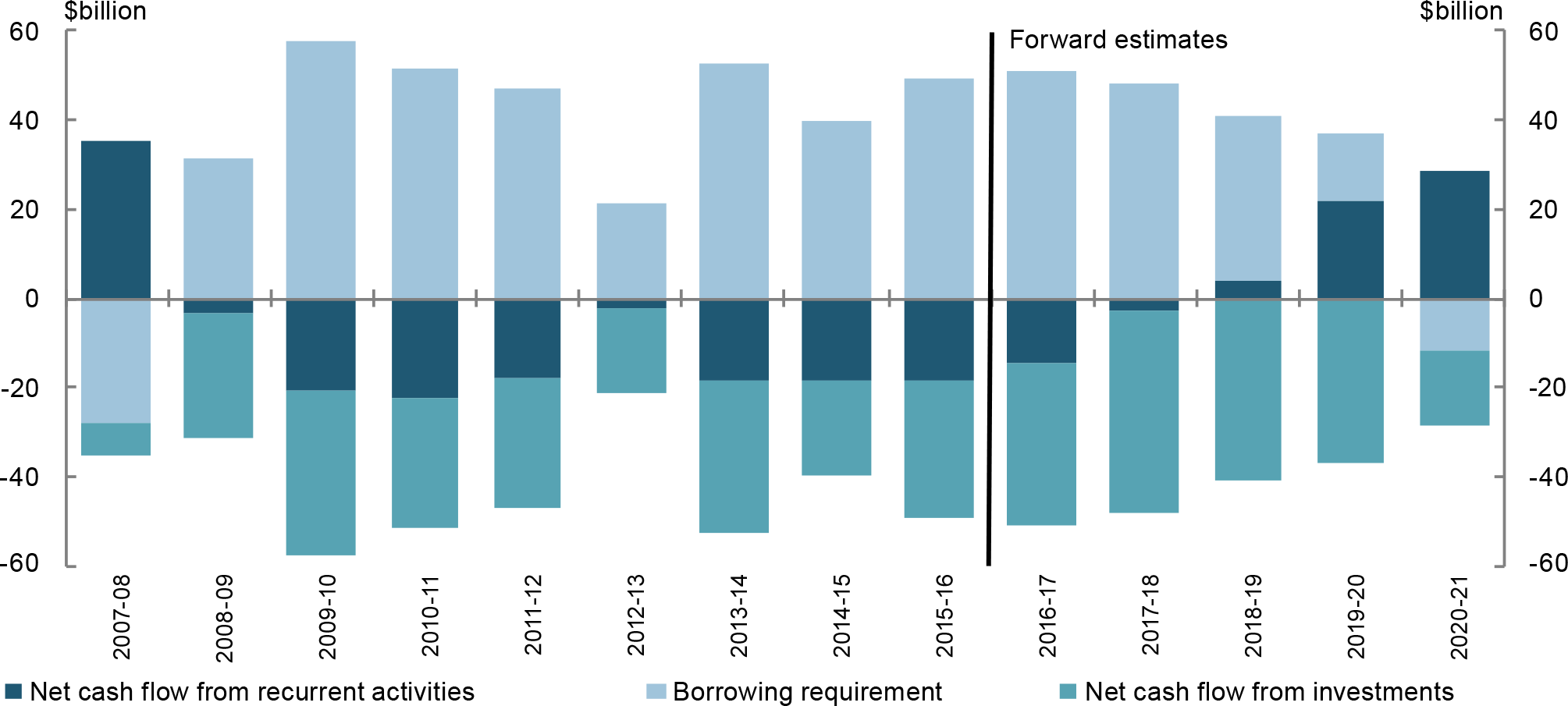
It is making significant investments, amounting to around $50 billion in 2017-18, including:
- investments in infrastructure, buildings and equipment.
- grants to the States and others for capital investments.
- equity contributions and loans for infrastructure (for example, Western Sydney Airport and Inland Rail) and other spending on financial assets.
Australians know that while it can be wise to borrow for investment, it is generally not a good idea to borrow to meet everyday expenses.
The Government is committed to paying its own way for the services it provides, so that the burden of today’s spending is not simply passed on to future generations.
From 2018-19, and for the first time since the Global Financial Crisis,the Government will not need to borrow to fund its day-to-day expenses.
Reflecting this improvement, the net operating balance will move into a projected surplus of $7.6 billion in 2019-20.
The Budget also assigns government debt across individual areas of spending to provide better information about what the Government is borrowing for.